
Review · YOGA AND WELLNESS RETREATS
Meditation & Yoga Retreat in Nature
The most appealing part of this Chiang Mai outing is its mix of quiet practice and local life. You begin with mindful walking and seated meditation, then move into yoga, a homemade Thai lunch, rice fields, a temple, and a nearby market. It feels less like a standard sightseeing circuit and more like a gentle reset.
I especially like the small six-person limit and the instructor’s flexible approach to yoga. Amori adjusts the practice to your comfort and physical limits, which matters if you are new to yoga. I also like that the temple visit comes with explanations about Buddhism and the paintings, rather than being a quick photo stop.
The main consideration is the pace and purpose. This is a half-day wellness experience, not a full Chiang Mai sightseeing tour, and the practices are central to the day. If sitting quietly or moving slowly is not your thing, the $73 price may feel high for five and a half hours.
Key points to know before booking
- Two one-hour practices: Start with mindful walking and guided sitting meditation, then take part in yoga at the studio or in the garden.
- A small, personal group: No more than six participants makes it easier to ask questions and receive adjustments.
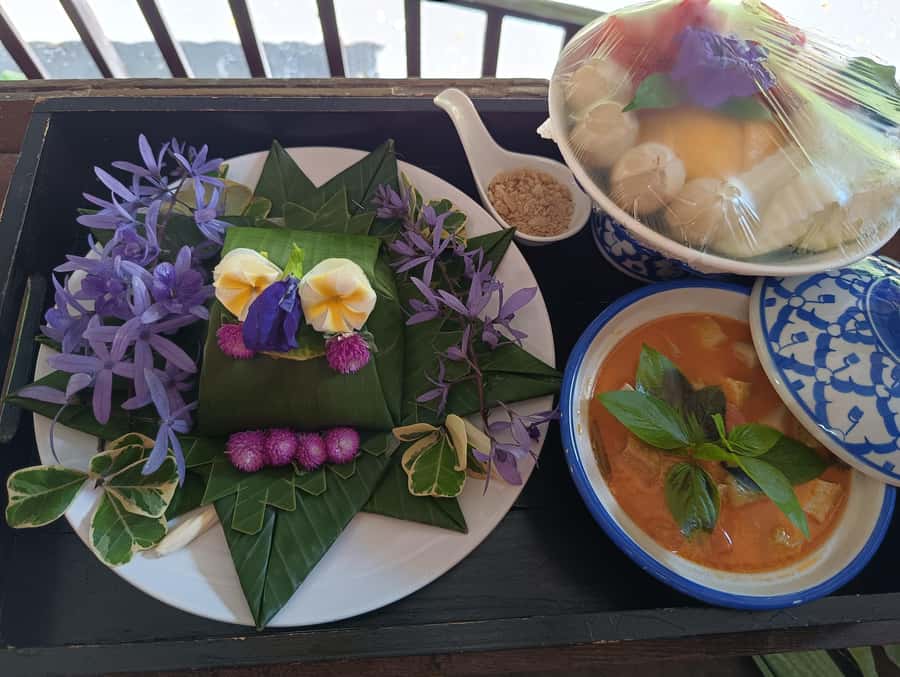
- Homemade Thai lunch: Amori prepares the meal, adding a personal food experience to the wellness program.
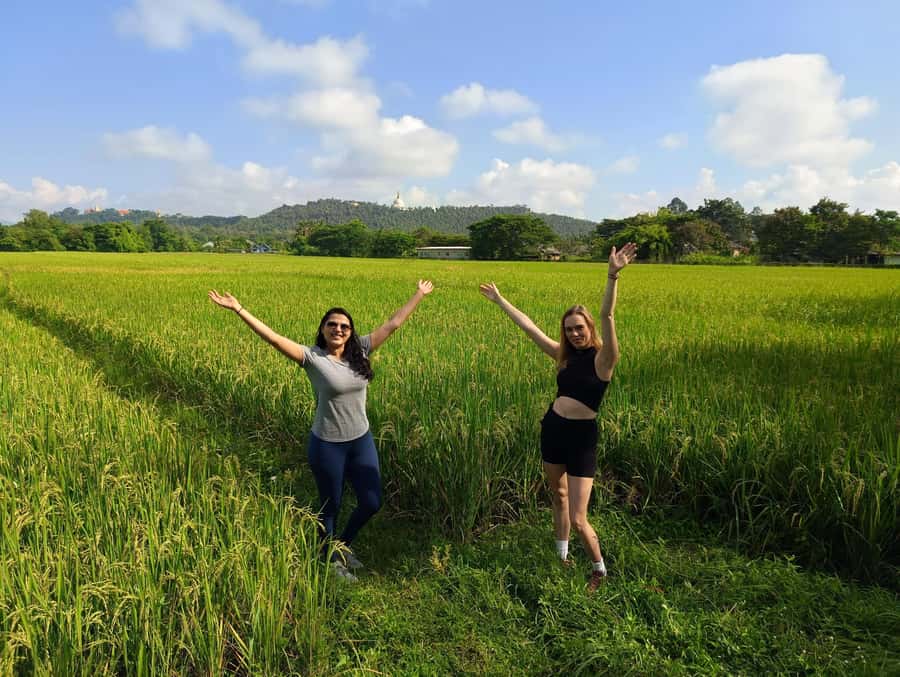
- Rice-field context: You visit a neighboring rice field and learn about the rice cycle.
- Temple and market visit: Wat Phra That Doi Saket is about 10 minutes by bike from the property, with a local market nearby.
- Flexible booking: You can cancel up to 24 hours ahead for a full refund and reserve without paying immediately.
A quiet start with walking and meditation
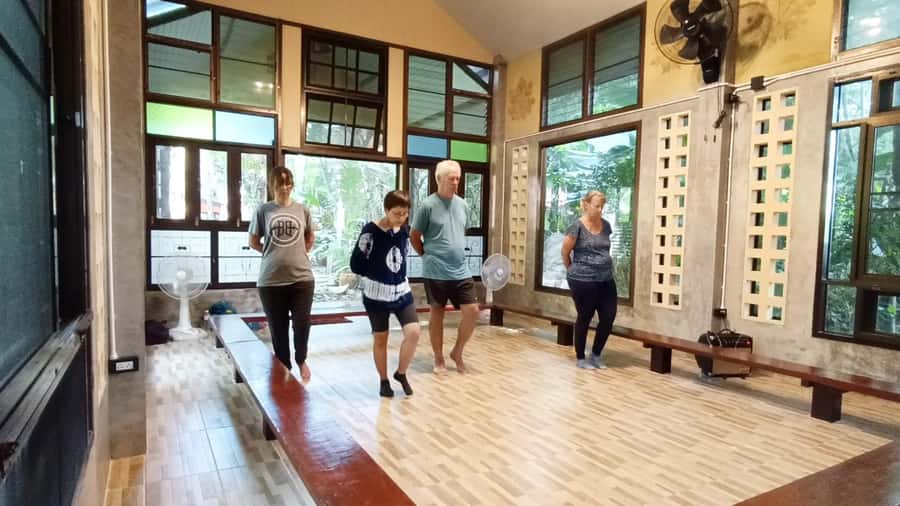
The day opens with about 60 minutes of mindful walking and guided sitting meditation. The order and length can depend on how comfortable you feel, so you are not being asked to force yourself through a rigid program.
That flexibility is important. Meditation can be awkward when you are new to it, especially if you expect your mind to become quiet right away. A guided session gives you something practical to follow, while mindful walking lets you begin with movement instead of sitting still from the first minute.
I would approach this part as a lesson in attention, not a test of serenity. You may notice the pace is slower than your normal morning. That is the point. The activity asks you to pay attention to walking, breathing, and the setting around you before the day fills with sightseeing.
The meditation instruction has received especially strong praise. One participant who practiced alone said the experience changed their attitude toward meditation. That is a useful clue about the teaching style: you are not simply left on a mat with vague advice. You receive guidance that can help make meditation feel more approachable.
Still, keep your expectations realistic. This is an introduction or practice session, not a formal meditation course. If you already have an established routine, you may find the value in having time and space to practice rather than learning a large amount of new technique.
More Yoga and Wellness Retreats in Chiang Mai:
- Fah Lanna Traveler’s Retreat Spa Package in Chiang Mai
★ 4.5 · 15 reviews - Guided relaxation and sound bath
★ 5.0 · 172 reviews - Bath: Guided Relaxation and Sound Bath
★ 4.8 · 108 reviews
Rice fields and the cycle behind the food
The morning also includes a look at a neighboring rice field and an explanation of the rice cycle. This is a modest but meaningful addition, since it connects the calm of the retreat to everyday life in Chiang Mai Province.
You do not simply eat Thai food later in the day as an isolated restaurant experience. You also get a small window into the agricultural work behind a basic part of Thai cuisine. The activity does not promise a long farming lesson, so think of this as a short local introduction rather than a working farm visit.
I like this stop because it keeps the day tied to its setting. The program takes place in nature, and the rice field helps you notice the rural surroundings instead of spending the entire morning indoors. It also gives the outing a cultural angle without turning it into a lecture-heavy tour.
The description does not specify the season, crops beyond rice, or the exact field conditions. The view and the amount of activity may vary with the time of year. You should see this portion as a chance to learn about the rice cycle and local surroundings, not as a guaranteed photo stop with a fixed presentation.
Yoga in a studio or garden
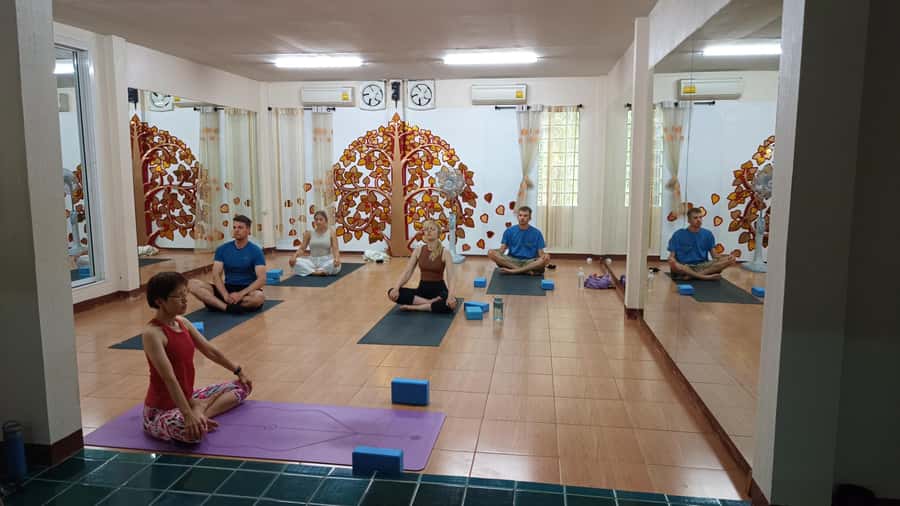
After the walking, meditation, and rice-field visit, you practice about 60 minutes of yoga. The class takes place either in the studio or in a garden large enough for up to 20 people, although your actual group is limited to six.
The setting can change the feel of the class. A studio may offer a more focused space, while the garden connects the movements with the surrounding nature. The important point is that you are not locked into one difficult sequence. Amori adapts the class to your level and any physical limitations you may have.
That makes this suitable for beginners and for people who are cautious about joining a class while on holiday. You should still communicate your limits clearly before the session begins. The information promises adaptation, but it does not provide a detailed list of medical accommodations or equipment.
The yoga is also not presented as a performance. You do not need to arrive with advanced flexibility. The stated emphasis is on self-care, comfort, and practice. If your goal is an intense workout, this may feel gentle. If your goal is to slow down and reconnect with your body, the pace should suit you better.
One practical point: the activity description says the yoga session lasts 60 minutes depending on comfort. The total experience is listed as 330 minutes, so the day has room for transitions, lunch, the field visit, and temple time. Do not expect every minute to be a tightly scheduled class.
A homemade Thai lunch with Amori
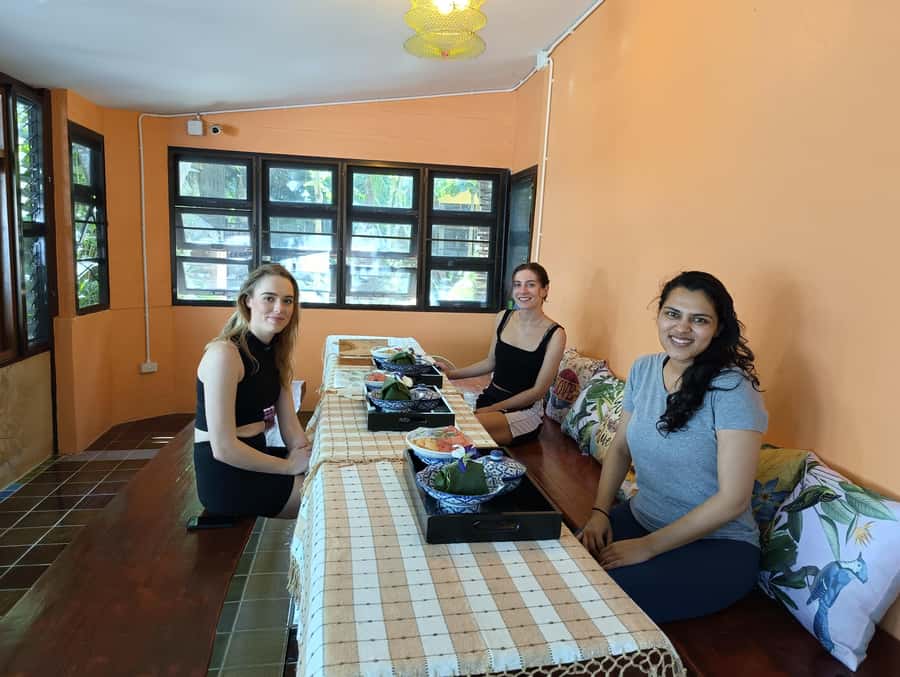
Lunch is prepared by Amori, the instructor, and served after yoga. This is one of the most personal parts of the experience. Instead of stopping at an unrelated restaurant, you eat a meal connected to the place where you have spent the morning.
The food has earned special praise, with comments describing the Thai meal as tasty and giving the lunch particular thanks. That matters because food is often where a cultural activity becomes memorable. A homemade meal can offer a more direct sense of hospitality than a quick meal between attractions.
The provided details do not list the exact dishes, ingredients, or options for dietary restrictions. If you have allergies or follow a particular diet, ask before booking or before the meal is prepared. Do not assume the menu can be changed unless you receive confirmation.
Lunch also gives the day a natural pause. After two substantial practice sessions, you will likely appreciate sitting down rather than rushing directly to the temple. The meal helps keep the outing from feeling like a string of disconnected activities.
At $73 per person, the lunch adds value because the price covers more than instruction. You are paying for two guided practices, a personal meal, cultural explanation, and a nearby temple and market visit. The value is strongest if you want a small-group day with a local host. It is less compelling if you only want a cheap yoga class or a quick temple transfer.
More ways to unwind around Chiang Mai:
- Chiang Mai: Chiang Rai Temples, Karen Tribe and Hot Springs
★ 4.7 · 5,401 reviews - Chiangmai to Chiangrai: 3 Temples, Hot Springs& Lalitta Cafe
★ 4.5 · 659 reviews - Red, Blue, White Temples & Hot Spring Trip from Chiang Mai
★ 4.4 · 143 reviews - Chiang Mai: Chiang Rai Famous Temples & Hot Springs Day Trip
★ 4.0 · 129 reviews
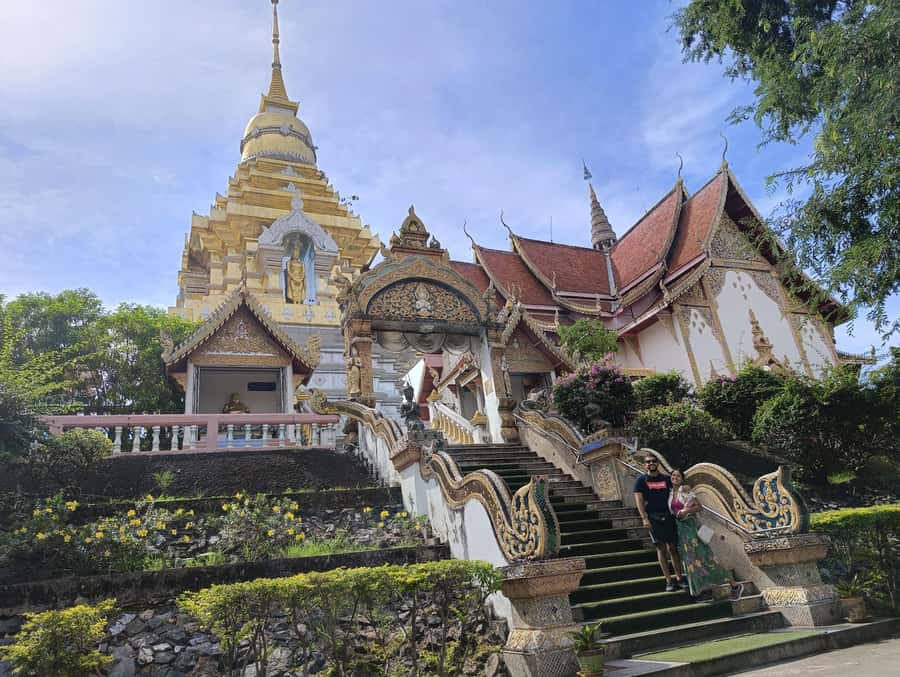
Wat Phra That Doi Saket and its Buddhist art
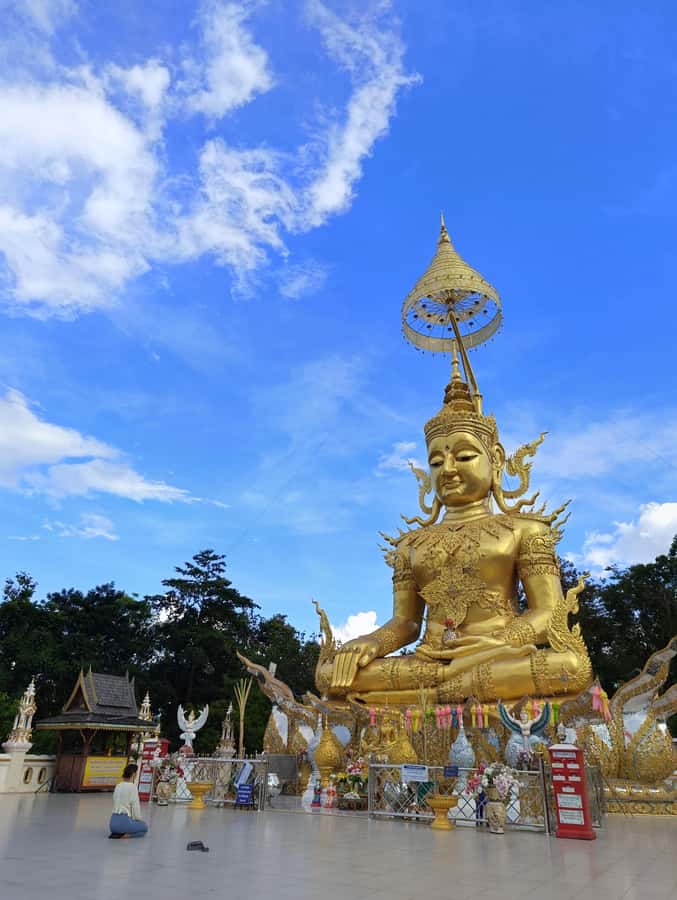
Later, you visit Wat Phra That Doi Saket, described as about a 10-minute bike ride from the property. The temple is the cultural heart of the second half of the day.
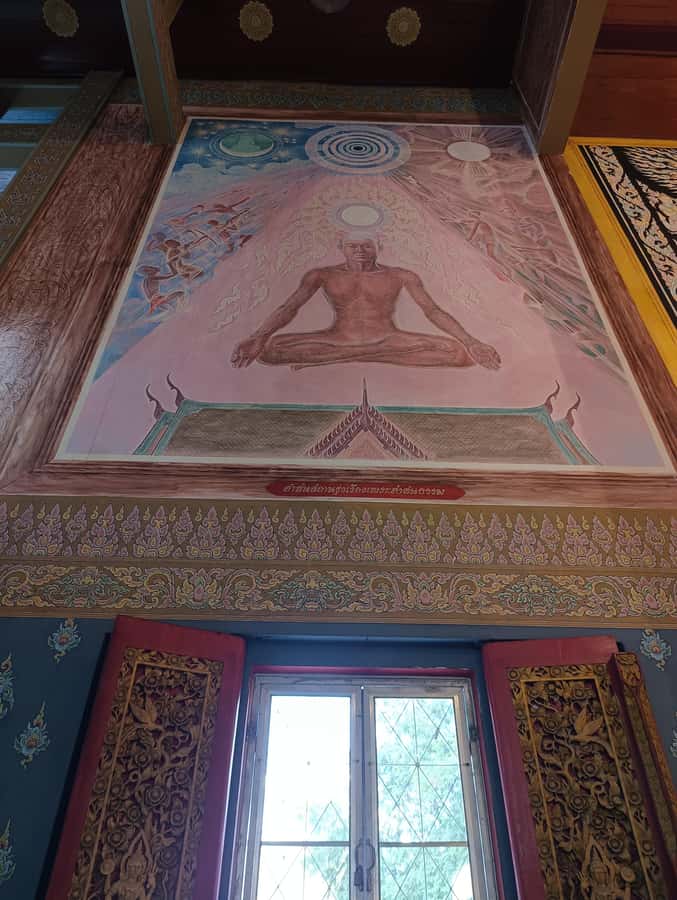
The useful feature here is the explanation. Amori shares information about Buddhism and points out the meaning of paintings inside the temple. That gives you a way to read the site instead of simply walking through, taking a few pictures, and leaving.
A temple visit can be hard to interpret on your own. Architectural details, painted scenes, and religious symbols may look attractive without making much sense. The guide’s explanations give the stop more weight, especially if you have little background in Thai Buddhism.
One participant specifically appreciated learning what some of the paintings meant. Another praised the temple commentary and Buddhist information. I would consider this a key reason to book the full experience rather than arranging an independent visit to the temple.
The wording says the temple is reached by bike, but it does not explain whether bicycles are provided, exactly where you meet for the ride, or what happens if you do not cycle. Confirm those details before booking if the bike portion is important to you. The ride is described as short, but the activity does not provide a full transport plan.
Remember that a temple is a place of worship. Dress and behavior should be respectful, though the supplied information does not state a specific dress code. Since the visit is part of a Buddhism-focused experience, you will get more from it if you treat it as a cultural and religious site, not only as a scenic stop.
A local market near the temple
The temple visit is paired with a nearby local market. This gives you a quick look at daily commerce and adds a less formal counterpoint to the religious site.
The market is described as authentic, but no details are provided about its size, opening hours, products, or food stalls. I would not book this experience expecting a large market tour or a dedicated shopping session. Instead, think of it as a short chance to see local life near the temple.
That limited information is worth noting. Market conditions can change by day and time, so what you find may be different from what you imagine. The real value is in the combination: practice in a garden, a rice-field explanation, a temple, and a market, all in one compact outing.
What the six-person limit changes
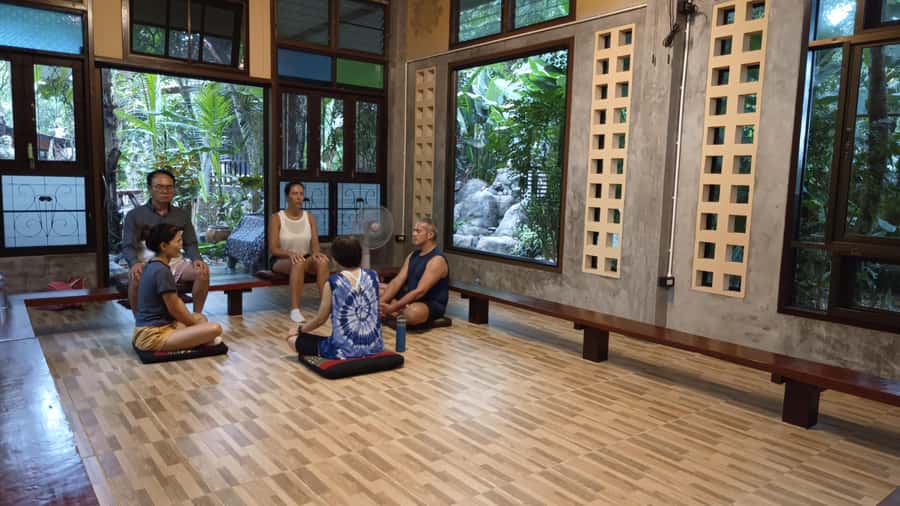
The group size is capped at six participants. That is a major advantage for this type of activity.
In a large yoga group, it can be difficult for an instructor to notice your form or adjust a movement for your needs. With six people or fewer, you have a better chance to ask about meditation, yoga, Buddhism, or the lunch. The guide can also respond to different comfort levels without making the whole class wait.
A small group does not guarantee a private tour. Other participants may have very different interests or levels of experience. One person may want to focus on yoga, while another is more interested in Buddhism or food. The compact format simply gives the guide more room to work with the group.
The experience can also run with only one participant, as one booking did. That makes the day potentially quite personal, though you should not assume a private session unless the booking conditions confirm it.
Timing, price, and practical value
The full duration is 330 minutes, or five and a half hours. That is long enough to make the day feel substantial without taking over an entire vacation day.
The schedule includes roughly one hour of meditation and mindful walking, one hour of yoga, lunch, the rice-field visit, the temple, the market, and travel between nearby points. Since the practices are adjusted to comfort, the exact rhythm may vary.
At $73 per person, I see this as a midrange cultural wellness experience rather than a budget activity. You receive instruction, food, a small group, and a guided cultural visit. The price makes sense if you value personal attention and a slower pace.
The value is weaker if you already have free access to yoga, want a strenuous fitness session, or plan to visit Wat Phra That Doi Saket independently. The strongest case for booking is that the day links several pieces that would be harder to arrange together: meditation, yoga, a Thai meal, rice knowledge, Buddhist interpretation, and a market visit.
Booking is flexible, with cancellation allowed up to 24 hours before the activity for a full refund. You can also reserve and pay later, which helps if your Chiang Mai plans are still shifting. Starting times are subject to availability.
Who should book this retreat
I would recommend it most strongly to you if you want:
- A gentle introduction to meditation and yoga
- A small group rather than a large class
- A guide who can explain Buddhist ideas in English
- A homemade Thai meal
- A slower cultural experience outside the usual city checklist
- A half-day activity that leaves room for other Chiang Mai plans
Beginners should feel comfortable with the format because the yoga is adapted to ability and limitations, while meditation is guided. You do not need to treat the practice as a test of fitness.
You may want to skip it if you want constant sightseeing, a hard physical workout, or a detailed market and temple tour. The outing is built around stillness and self-care. The sightseeing supports that aim, rather than replacing it.
Should you book the Chiang Mai meditation and yoga retreat?
Book it if you want a personal, calm day that connects wellness with Thai culture. The best parts are the small group, adaptable yoga, clear meditation guidance, homemade lunch, and Buddhist explanations at Wat Phra That Doi Saket.
Before booking, confirm the bike arrangements and mention any dietary needs or physical limitations. If you are hoping for a packed sightseeing schedule, this will feel too slow. If you want to step away from ordinary holiday routines and spend five and a half hours practicing, eating, learning, and walking at an easy pace, $73 is a fair price.
FAQ
Where does the meditation and yoga retreat take place?
The experience takes place in Chiang Mai Province, Thailand. The yoga is held in the instructor’s studio or in a garden, and Wat Phra That Doi Saket is about a 10-minute bike ride from the property.
How long does the experience last?
The listed duration is 330 minutes, which is five and a half hours.
How many people can join the group?
The group is limited to six participants.
Who leads the experience?
The instructor is identified as Amori from Flow Yoga Chiang Mai. One supplied review spells the name Amauri, so you may see both spellings associated with the guide.
Is the yoga suitable for beginners?
The yoga is adapted to your level and any physical limitations you may have. The session lasts about 60 minutes, depending on your comfort.
Is food included?
Yes. A Thai lunch prepared by Amori is included after the yoga session.
Can I cancel for a refund?
You can cancel up to 24 hours in advance for a full refund. The activity also offers reserve now and pay later booking.
Newly listed around Chiang Mai
- Chiang Mai: Spa Experience at Oasis Spa★ 5.0 · 15 reviews
- Chiangmai: Cheeva Spa Packages Discounted E-Voucher★ 4.2 · 6 reviews
- Chiang Mai: Mae Kampong Village, Hot Springs & Bor Sang Tour★ 5.0 · 30 reviews
- Thai Luxury Spa Packages★ 4.9 · 6 reviews
- 2 Hour Relaxation Luxury Spa Package at Fah Lanna Spa – Old City Branch★ 4.5 · 10 reviews
- Fah Lanna Traveler’s Retreat Spa Package in Chiang Mai★ 4.5 · 15 reviews
- Chiang Mai Sunrise Balloon Flight and Luxury Spa Day★ 4.0 · 11 reviews
- Chiang Mai: Massage Treatments at Luxury Spa★ 5.0 · 25 reviews
Yoga and Wellness Retreats, compared.


Wellness Retreat with Massage, Yoga Class, and Lunch
Read our review →
Paddle Boarding and Meditation Wellness Experience in Las Isletas
Read our review →
5-Hour Family Retreat with Hot Springs and Mud Baths in Nha Trang
Read our review →
Blue Lagoon: Retreat Spa Experience & Private Changing Suite
Read our review →
21 days Himalayan yoga retreat in Nepal in Kathmandu
Read our review →
10 Days Ayurveda & Yoga Retreat in Kathmandu, Nepal
Read our review →Browse the lists this tour appears in