
Review · BANGKOK SPA EXPERIENCES
Mini Group: Authentic Thai Cooking & Wellness Experience
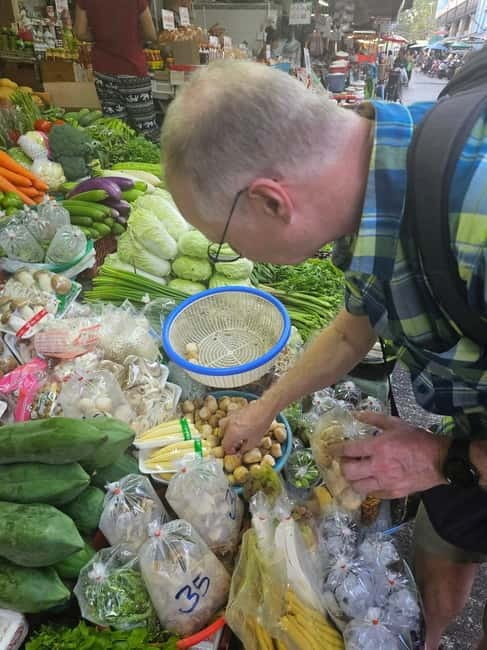
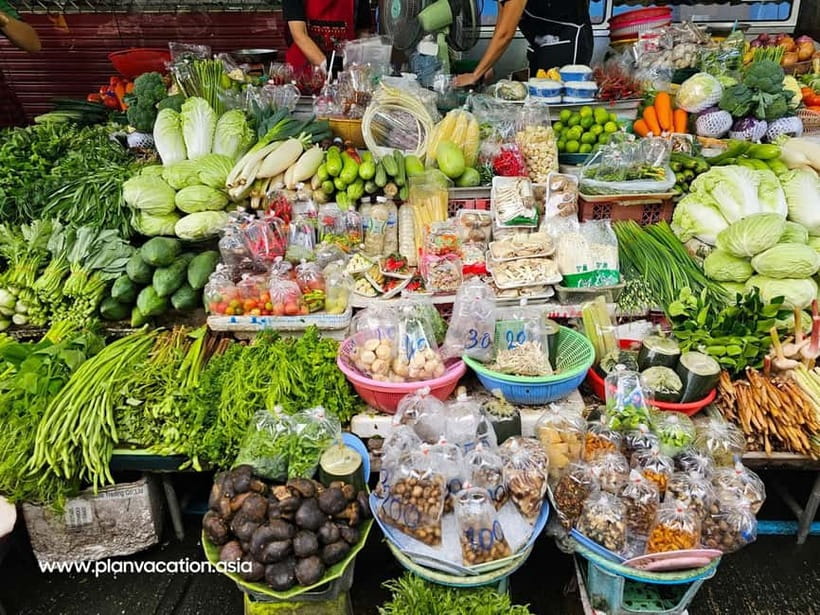
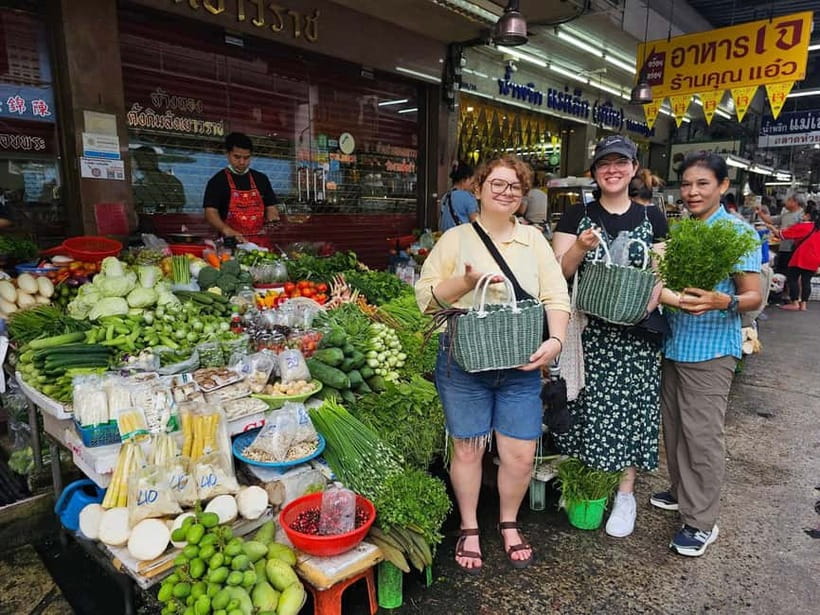
The best part of this experience happens before the cooking starts. You meet at Ganesha Shrine, walk 400 meters through Huai Khwang Market, and help choose the vegetables, herbs, fruit, and spices that will become lunch. That gives the class a useful link between Thai food and the ingredients behind it. The market visit and hands-on cooking are my two favorite features.
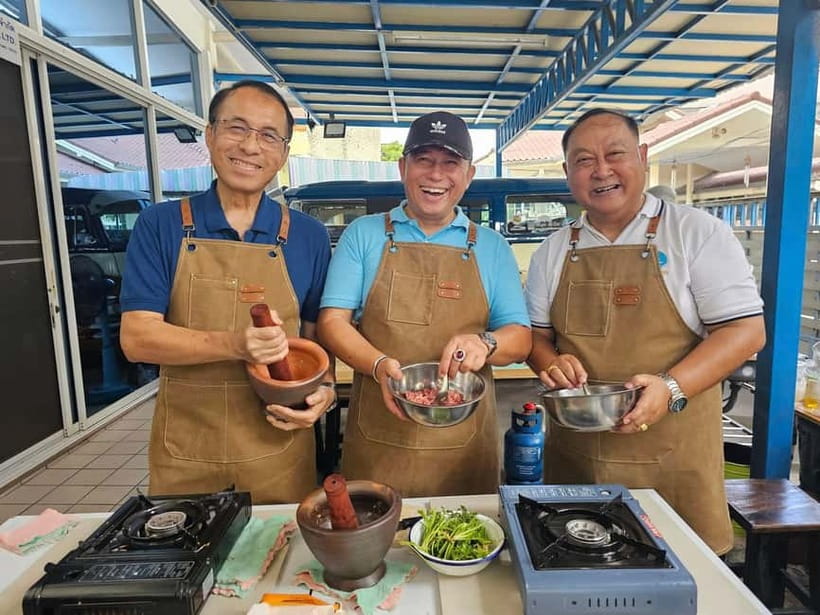
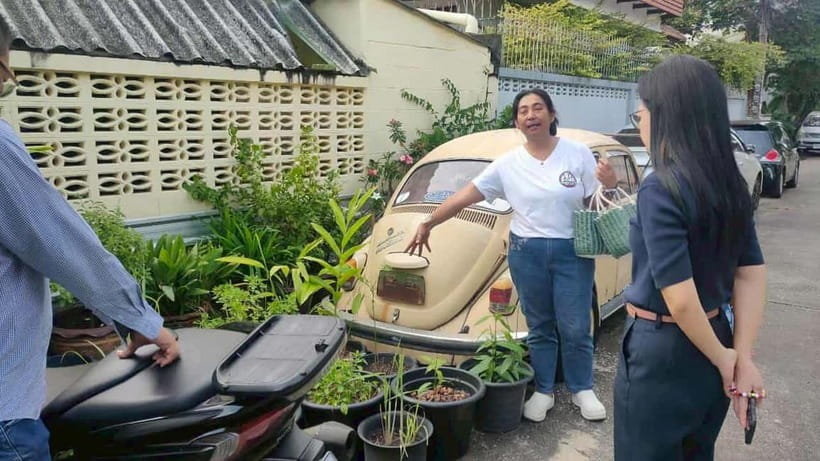
I also like the home setting. Sunee and her family run the class at Uncle and Aunty Cooking House, where you can see an herb garden, enjoy a welcome drink, and cook in a small group rather than in a large demonstration room. The main consideration is the schedule: the menu changes by day, so you should check the menu before booking if you have your heart set on green curry, Pad Thai, or mango sticky rice.
Key points to know before booking
- Market first, cooking second: You select ingredients at Huai Khwang Market before heading to the kitchen.
- Only eight people per group: The small size allows plenty of direct help while you cook.
- A different menu each day: Four dishes are prepared daily, with curry, soup, stir-fry, salad, and dessert appearing across the weekly rotation.
- A home kitchen and herb garden: The cooking takes place at Uncle and Aunty Cooking House, not in a formal culinary school.
- Useful take-home extras: You receive digital recipes and a cooking certificate after the meal.
- Good value at $44: The price includes food, equipment, local transfers between the meeting points, insurance, and instruction in English or German.
From Ganesha Shrine to Huai Khwang Market
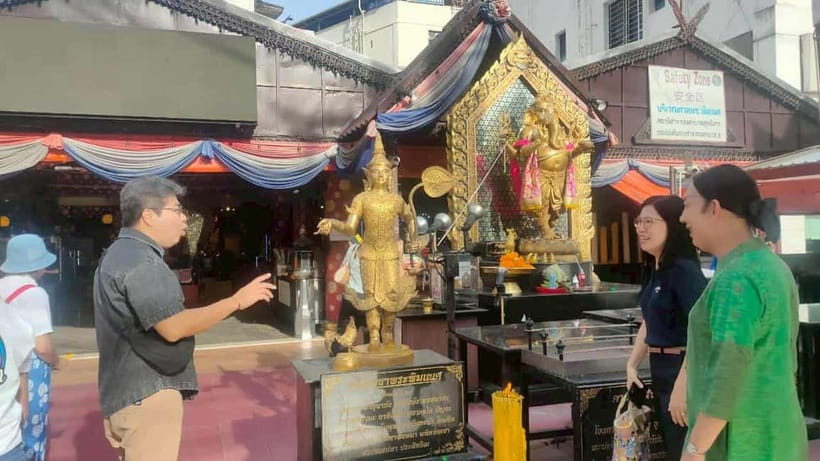
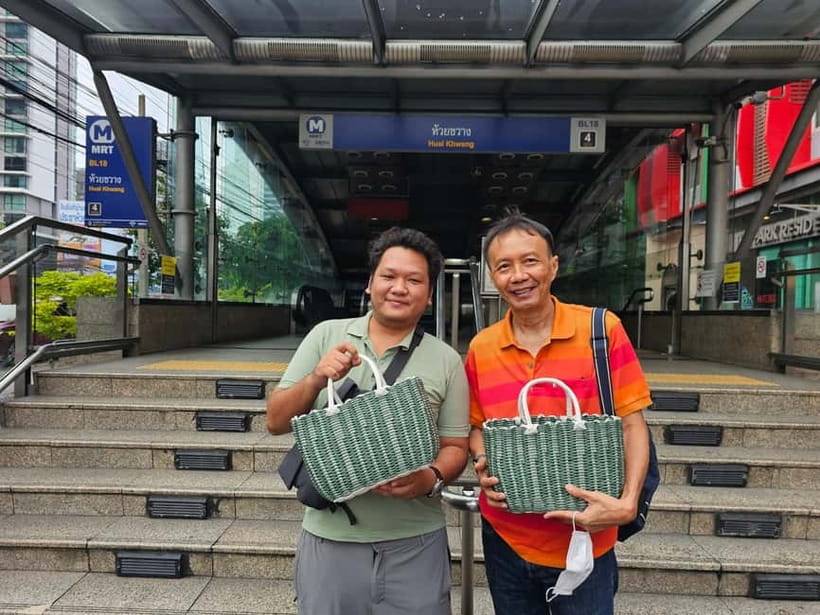
Your morning begins at MRT Huai Khwang Station, Exit 4, where the guide meets you. The first stop is Ganesha Shrine, a respected spiritual site where you can watch traditional offerings and rituals associated with wisdom and prosperity. It is a short cultural introduction before the food work begins.
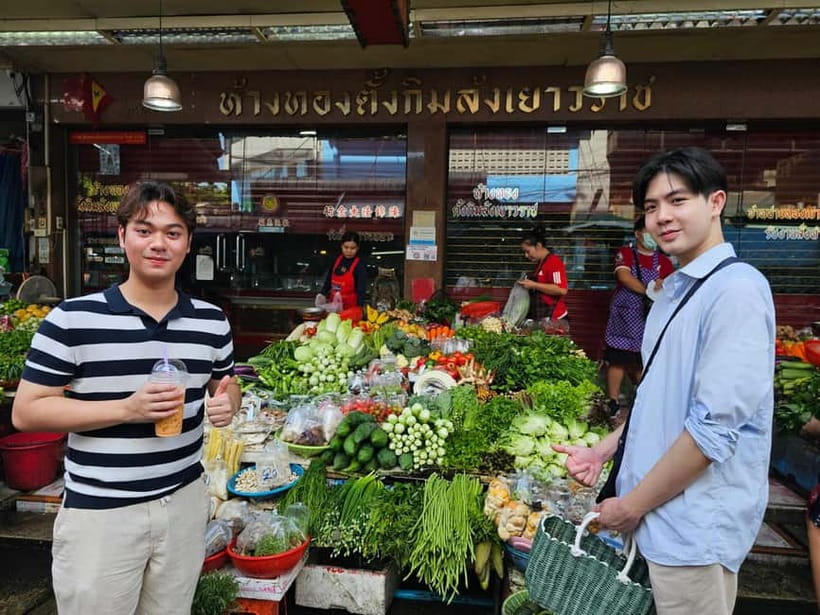
From the shrine, you walk about 400 meters to Huai Khwang Market. This is not just a quick stop to admire the stalls. You help look for the ingredients needed for the day’s recipes, including fresh vegetables, herbs, tropical fruit, and Thai spices.
I like this order. When you later see curry paste, coconut milk, or holy basil in the kitchen, you already know where the ingredients came from. You also get a better sense of how Thai cooking depends on fresh produce and herbs rather than a long list of packaged sauces.
The market walk does require some walking and standing. Wear comfortable shoes, and arrive on time so you do not miss the group at the station. You should also bring a passport or ID card, as requested for the activity.
Other ways people switch off around Bangkok:
- Bangkok: All-Day Pass to Yunomori Sathorn Onsen Bath and Spa
★ 4.6 · 103 reviews - Bangkok: Wat Pho Thai Massage in Your Hotel Room
★ 4.6 · 68 reviews - Bangkok: W Hotel Pool & Gym Experience
★ 4.8 · 66 reviews
A tuk-tuk-style transfer to a family kitchen
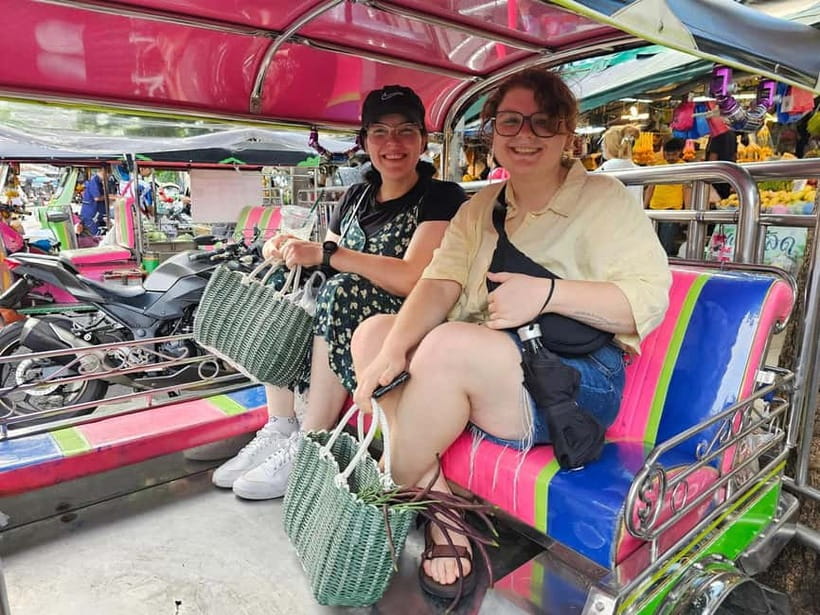
After the market, transportation takes you to Uncle and Aunty Cooking House. The transfer is included, and one account of the experience describes a short tuk-tuk ride, adding a little local character between the market and the kitchen. The exact transfer can depend on the day’s arrangements, but you are not expected to find your own way there.
The cooking house gives the class a more personal feel than a large commercial school. Sunee, her family, and the staff welcome you with a herbal drink before you walk through the garden. The space includes herbs and flowers used in Thai cooking, so this part helps connect the plants to the flavors you will work with later.
That garden stop is especially useful for cooks who know Thai food mainly from restaurant menus. You can learn how certain herbs are used and see them in a living setting. It is also a calm pause after the market, which can be lively and crowded.
Do not expect a long garden tour or a full botanical lesson. The available information describes a guided visit showing herbs and plants used in cooking. Its value is as a practical introduction, not as a separate sightseeing attraction.
Learning coconut milk and curry paste from scratch
Once inside, the instructor introduces the ingredients chosen at the market and gathered from the garden. You learn about their cooking uses and then work through two important foundations of Thai food: coconut milk and curry paste.
This is where the class moves beyond simply following a recipe. Curry paste carries much of a dish’s aroma, heat, and balance, while coconut milk changes the body and texture of many Thai soups and curries. Learning these basics helps you understand why a dish tastes the way it does.
The instruction is step by step and available in English or German. With a maximum of eight participants, you should have a better chance to ask questions and get help at the stove than you would in a crowded class. The exact amount of individual attention can vary with the group, but the format is designed for direct participation.
You prepare four dishes during the class. The menu changes daily, and the day’s schedule generally includes a soup or stir-fry, a salad, a curry or similar main dish, and a dessert. The dishes are made and served together, so you eat what you have prepared rather than watching someone else do all the work.
What you might cook on each day
The rotating menu is one of the most important things to check before you pay. It keeps the class fresh for repeat visitors, but it also means the dishes you want may not be offered on your chosen date.
Monday includes beef Panang curry, stir-fried morning glory with red chili, poached eggs, fried chicken with Thai herbs, and Khanom Tom, a traditional sweet made with coconut. This is a good day if you want a curry, greens, poultry, and a distinctly Thai dessert.
Tuesday features Tom Kha Gai, a chicken and coconut soup, stir-fried tofu with bean sprouts, deep-fried pork with herbs, fried rice, and steamed pandan layer cake. The coconut soup gives this menu a softer, fragrant profile.
Wednesday brings hot and sour shrimp soup with mixed vegetables, stir-fried chicken with holy basil, a Thai omelet, Thai-style fried noodles, and Kanom Tuay, a steamed coconut milk custard. Holy basil and hot and sour soup make this one of the stronger choices for people who want familiar Thai flavors with heat.
Thursday includes stir-fried bamboo shoot with curry paste, clear tofu soup, deep-fried pork belly with herbs, Chinese-style fried noodles, and steamed banana cake. This menu offers a useful contrast between a light soup and richer fried dishes.
Friday is the green curry day. You also cook stir-fried kale with salted fish, fried chicken with garlic and pepper, stir-fried rice noodles with soy sauce, and a soft mung bean crepe. If green curry is your priority, Friday is the obvious date to choose.
Saturday centers on Som Tum, or papaya salad, spicy minced meat salad, hot and spicy soup, fried chicken with Thai herbs, and banana in coconut milk. This is a lively menu with several spicy and fresh elements.
Sunday includes Tom Yum Gai, stir-fried Napa cabbage, stir-fried beef with red curry paste, stir-fried rice noodles with chicken, and poached pumpkin in coconut milk. It offers a broad mix of soup, vegetables, noodles, meat, and dessert.
The description refers to four dishes, while each daily menu lists several preparations and a dessert. You should expect the class to organize the day’s recipes into a practical cooking session, with the exact division explained by the instructor. If you have allergies or dietary restrictions, notify the operator at least 48 hours ahead. Do not assume every dish can be changed on the day.
More ways to unwind around Bangkok:
- Bangkok: Let’s Relax Onsen Thonglor E-Voucher
★ 4.4 · 57 reviews - Hands-on Authentic Thai Massage Workshop
★ 5.0 · 45 reviews - Rest And Relax Massage – Traditional Thai Massage In Bangkok / Sukhumvit
★ 4.5 · 45 reviews - Bangkok: Yunomori Sukhumvit Onsen Hot Springs Spa Pass
★ 4.5 · 43 reviews
Cooking, eating, and learning in a small group
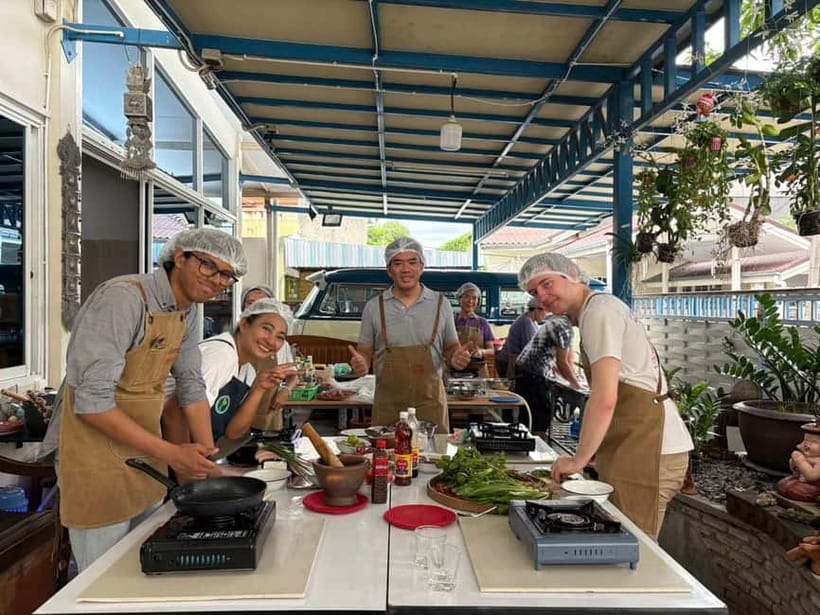
The cooking begins around 10:00 AM. You work through the recipes with supervision, preparing food in a friendly group of no more than eight. The small size is important here. Thai cooking often involves several steps at once, and beginners can benefit from someone checking the paste, heat, or timing before a dish moves on.
One particularly appealing detail is that the meal is shared after the cooking. You sit down with the other participants and eat the dishes together, rather than rushing away after the final recipe. The class has a family feel because it takes place at Sunee’s home, and that setting can make the meal more relaxed.
The cooking is not limited to one famous dish. Depending on your day, you might handle noodles, curry paste, soup, salad, fried chicken, coconut desserts, or steamed cakes. That variety gives you a wider view of Thai home cooking than a class focused only on Pad Thai.
The class runs from about 8:00 AM to 1:00 PM. The market portion starts in the morning, cooking follows at 10:00, lunch is around noon, and transport returns you to MRT Huai Khwang Exit 4 at about 1:00 PM. Plan the rest of your day with a little flexibility, since food preparation and group timing can take longer than a strict timetable suggests.
What the $44 price really covers
At $44 per person, this is a fair package for a five-hour activity. You are paying for more than a cooking lesson: the price includes the market tour, ingredients, kitchen equipment, herbal drink, garden visit, instruction, the meal, digital recipes, certificate, transfers between the market and cooking house, the return to the station, and travel insurance.
That list matters because independent cooking classes sometimes add charges for ingredients, transport, or printed materials. Here, the main out-of-pocket costs are your trip to the starting station, personal purchases, snacks, or alcohol, which is not included.
The best value comes from the combination of food and local context. You see where the ingredients are bought, learn how herbs are used, cook the dishes yourself, and leave with recipes you can use later. The certificate is a pleasant souvenir, but the digital recipes are the more practical benefit.
The price may be less attractive if you want a very short lesson or only care about learning one dish. It is also not the right fit if you prefer a private class, since this is a small group rather than a one-on-one session. For a half-day activity that includes food and transport, though, the cost is sensible.
Practical advice for a smoother morning
Start by checking the menu for your chosen day. The weekly rotation is broad, and the dish list changes enough that your date can shape the whole experience.
Wear comfortable clothing and shoes suitable for walking, standing, and cooking. The market and kitchen together involve moderate physical activity, even though this is not an intense outing.
Arrive at MRT Huai Khwang Exit 4 on time. The class begins with the shrine and market visit, so arriving late can mean missing the ingredient selection that gives the day its structure.
Tell the operator about allergies or dietary restrictions at least 48 hours before the class. Thai recipes often use seafood, meat, coconut, herbs, soy, or other ingredients, and advance notice gives the kitchen a chance to advise you.
The activity does not include alcoholic drinks, pets are not allowed, and personal purchases are your responsibility. Cancellation is free up to 24 hours before the start time, and you can reserve now and pay later if that option is offered when you book.
Who should book this Thai cooking class?
I would choose this experience if you want to cook rather than watch, prefer a small group, and like seeing a local food setting before sitting down to eat. It is also a strong choice for couples, friends, and solo visitors who enjoy meeting people around a shared meal.
The class suits beginners because the instruction is guided and the recipes are prepared step by step. You do not need to arrive with professional kitchen skills. The digital recipes also make it easier to repeat the dishes at home.
It may be less suitable if you have limited mobility, since the morning includes a market walk and standing during the cooking session. It may also disappoint you if you need a fixed menu, a private kitchen, or a class built around one signature dish.
The strongest praise has centered on the friendly family atmosphere, the small and cozy setting, the market shopping, the tuk-tuk transfer, and the chance to cook four dishes with supervision. Those are the features to value most when deciding.
Should you book it?
Book this class if you want a personal half-day introduction to Thai food that connects the market, the garden, the kitchen, and the shared meal. The $44 price covers a lot, and the eight-person limit should give you useful contact with the instructors.
Choose your date carefully, tell the operator about dietary needs, and do not book it expecting a fixed menu. If you are happy with that trade-off, this is a practical, warm, food-focused experience with enough cultural detail to make the recipes easier to understand and remember.
FAQ
Where does the Thai cooking experience begin?
It begins at MRT Huai Khwang Station, Exit 4. The guide waits there before taking the group to Ganesha Shrine and Huai Khwang Market.
Where does the activity finish?
The activity ends back at MRT Huai Khwang Exit 4 after the return transfer from the cooking house.
How long does the experience last?
The experience lasts about five hours, generally from 8:00 AM to 1:00 PM. Starting times should be checked when you select your date.
How many people are in the group?
The group is limited to eight participants, allowing for a small-group cooking format.
What languages are available?
The live tour guide is available in English and German.
Is transportation included?
Transportation from the market to the cooking venue and from the cooking venue back to the first meeting point is included. You must arrange and pay for your own transportation to MRT Huai Khwang Station.
What food will I cook?
The menu changes daily. Depending on the day, dishes can include Pad Thai-style noodles, green curry, Tom Yum or Tom Kha soup, papaya salad, stir-fries, fried chicken, rice dishes, and Thai desserts.
What should I bring and wear?
Bring a passport or ID card. Wear comfortable clothing and shoes suitable for walking and cooking.
Can I cancel or pay later?
You can cancel up to 24 hours in advance for a full refund. Reserve now and pay later is available, so you can keep your plans flexible.
Newly listed around Bangkok
- Bangkok: Dream House Thai Massage Langsuan Branch E-Voucher★ 4.1 · 4 reviews
- Bangkok: The Peninsula Spa At The Peninsula Hotel E-Voucher★ 4.7 · 2 reviews
- Bangkok: Urban Calm Spa E-Voucher★ 3.6 · 6 reviews
- Bangkok: Let’s Relax Spa Sukhumvit Soi 39 E-Voucher★ 3.6 · 3 reviews
- Bangkok: Spa Experience at Oasis Spa★ 4.7 · 14 reviews
- Bangkok: Mind n Matter Massage Spa E-Voucher★ 5.0 · 5 reviews
- Bangkok: Let’s Relax Bangkok Ploenchit Spa Experience★ 4.1 · 4 reviews
- Bangkok: Let’s Relax Spa Lumpini E-Voucher★ 3.7 · 3 reviews
Bangkok Spa Experiences, compared.
All-Day Pass to Yunomori Sathorn Onsen Bath and Spa
Read our review →



Rest And Relax Massage – Traditional Thai Massage In Bangkok / Sukhumvit
Read our review →
Browse the lists this tour appears in