
Review · WORKSHOPS
Local Ghanaian Cooking Class in Accra to help support wellness community center
The most memorable part of this Accra experience is the link between food and community. You begin at the Global Wellness Mission, ride to a local market for ingredients, then return to cook Ghanaian dishes with a host and family. Auntie Irene, Gifty, and Ms. Pat are among the hosts named by visitors, so your exact teacher may vary.
I like the chance to learn foods such as fufu, banku, jollof rice, and groundnut soup in a home-style setting. I also like that your $45 supports a wellness center offering nutrition education, health screenings, children’s programs, art, dance, and physical activity. The main caution is that the six-hour advertised duration does not always match the class itself. One account described a session lasting about two hours, and some preparation may already be done.
Key points to know before booking
- Your market trip comes first: Transportation by car takes you from the meeting point to a local market to buy cooking ingredients.
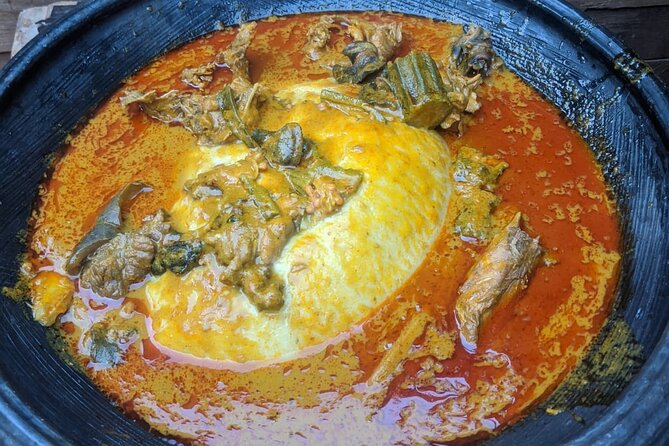
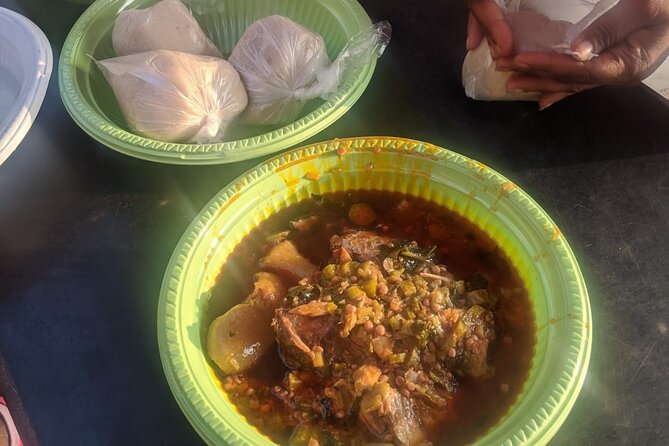
- The food choices are Ghanaian staples: Depending on the class, you may prepare fufu, banku, jollof rice, rice balls, fried fish, chicken, okra soup, or palm-nut soup.
- You may taste strong local spirits: Emergency, Hatso, and Uwuba are made from akpeteshie and soaked with local bark or tree leaves.
- The community benefit is part of the price: Your booking supports the Global Wellness Mission’s health, education, and youth programs.
- Hands-on time can vary: Some preparation may be finished before you arrive, so ask ahead if you want a full cooking role.
- The setting is personal: Small groups allow more contact with your host, though the activity can accept up to 20 people.
A market run before the cooking begins
Your day starts at Global Wellness Mission, at CM7, Third Oloti Street, in Accra. From there, transportation by car takes you to a local market to collect the ingredients needed for the meal.
This is a useful beginning because the food does not appear out of nowhere. You see the buying stage, then return with the raw materials and turn them into lunch. If you enjoy understanding how a dish comes together, this market stop gives the cooking a clearer purpose.
The supplied details do not name the market, so I would not book this expecting a formal market tour with a fixed list of stalls or a long lesson in Ghanaian commerce. Think of it as a practical ingredient run tied to the meal.
The car transfer also matters. You do not need to arrange a separate ride between the meeting point and market. Since the class ends back at the starting point, the day has a simple shape: meet, shop, cook, eat, and return.
More cooking classes around the world:
- Mini Group: Authentic Thai Cooking & Wellness Experience
★ 4.9 · 7 reviews
Cooking Ghanaian staples from the ground up
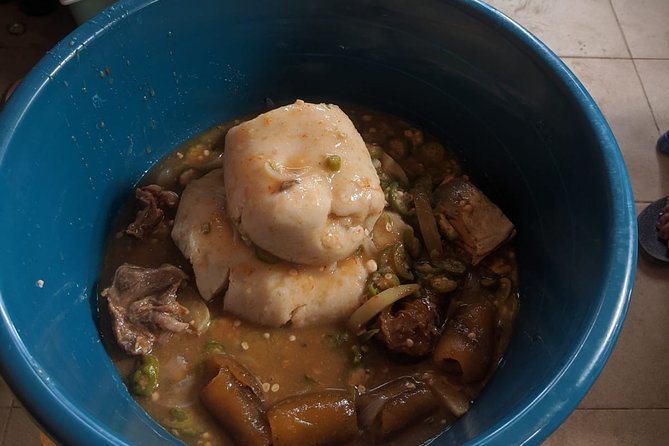
Back at the cooking location, you work on a selection of Ghanaian dishes. The choices listed include okra soup, groundnut soup, palm-nut soup, light soup, and plain soup. The accompanying starch may be fufu, banku, jiji, or rice balls.
The experience can also include fried fish, chicken, stew, and jollof rice. One particularly enthusiastic account singled out the jollof rice, while another described making fufu with soup. These details suggest that the exact menu is not rigid for every booking.
That flexibility is a strength if you already know what you want to taste. You may be able to choose a soup or starch that interests you most. Dietary requests can be accommodated upon request, but you should make those requests before the class rather than waiting until you arrive.
The work itself is part of the lesson. Pounding fufu, banku, or another starch gives you a better feel for the effort behind food that is often treated as a quick restaurant order. Still, keep your expectations measured. One person expected more hands-on work but found that some ingredients had already been prepared. If you want to chop, pound, stir, and season from the earliest stage, contact the provider in advance and ask exactly what will be ready when you arrive.
That point is important because cooking class can mean different things. Here, it may be a mix of demonstration, shared preparation, and eating together, rather than a formal culinary school session where every step is assigned to you.
A family-style setting with named local hosts
The experience is provided by Pat and Maggie, with several hosts named in individual accounts. Auntie Irene led one class covering banku, fried fish, stew, chicken, and jollof rice. Gifty was praised for explaining the process clearly and preparing the foods requested. Ms. Pat and her family were described as warm and welcoming.
You may not receive the same host each time, but these names give you a sense of the format. This is not presented as a large demonstration kitchen with a single professional chef at the front. It is closer to a personal home-style encounter, with local women and families involved in the food and conversation.
That setting is one of the best reasons to book. You get more than a recipe card. You have a chance to ask questions, laugh with the people helping you, and understand how a Ghanaian meal is put together in a social setting.
The small-group design should help. The maximum is 20 people, but the experience is described as a small-group activity, and the smaller the actual group, the more attention you are likely to receive. If you are booking as a couple or a small party, you may find the interaction easier than in a standard coach tour.
At the same time, do not assume the group will always be tiny. A maximum of 20 is still large enough to change the feel of the class. Ask about the expected group size if personal instruction is a top priority.
Local spirits made with akpeteshie
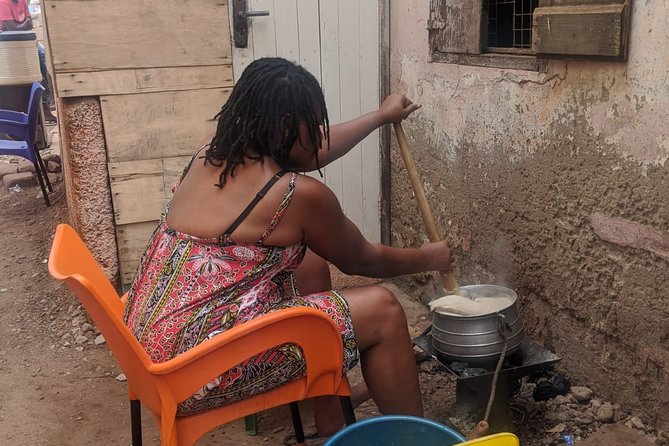
Before or during the cooking, you are offered locally made spirits called Emergency, Hatso, and Uwuba. They are made from akpeteshie and soaked with local bark or tree leaves.
This is an unusual cultural detail, and it gives you a taste of something you are unlikely to encounter in an ordinary restaurant meal. The spirits are included with lunch, so you do not need to buy a separate tasting.
The practical warning is simple: these are spirits, not soft drinks. Their strength and flavor may be unfamiliar, and the tour does not include soda, beer, or other nonalcoholic drinks. If you do not drink alcohol, have a dietary or health concern, or simply prefer water, ask what alternatives are available before booking. The supplied information confirms that alcoholic beverages are included, but it does not promise a substitute.
I would treat the spirits as an optional part of the cultural experience, not the reason to book the class. The cooking, food, and community connection are the main value.
More hands-on sessions around the world:
- Ubud: Wellness Retreat with Massage, Yoga Class, and Lunch
★ 4.8 · 93 reviews - Marrakech Hammam, Massage & Berber Carpet Weaving Workshop
★ 4.6 · 48 reviews - Hands-on Authentic Thai Massage Workshop
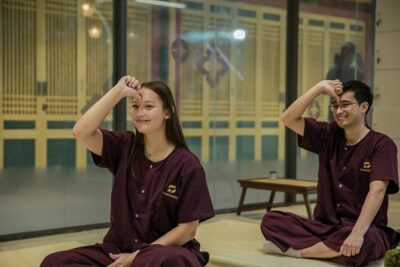
★ 5.0 · 45 reviews - Advanced Thai Massage Technique Workshop
★ 5.0 · 4 reviews
Lunch is the payoff

At the end, you eat the food prepared during the class. Lunch is included in the $45 price, along with the local spirits.
This makes the price easier to judge. You are not paying only for a meal, and you are not paying only for a cooking lesson. The fee covers transportation by car to the market, ingredient shopping, instruction, food, and a community contribution through the wellness center.
For Accra, the value depends on what you want from a food activity. If you only want an inexpensive plate of jollof rice, $45 may feel high. If you want a half-day cultural activity with transport, a market visit, local hosts, cooking, lunch, and a direct social benefit, the price is more reasonable.
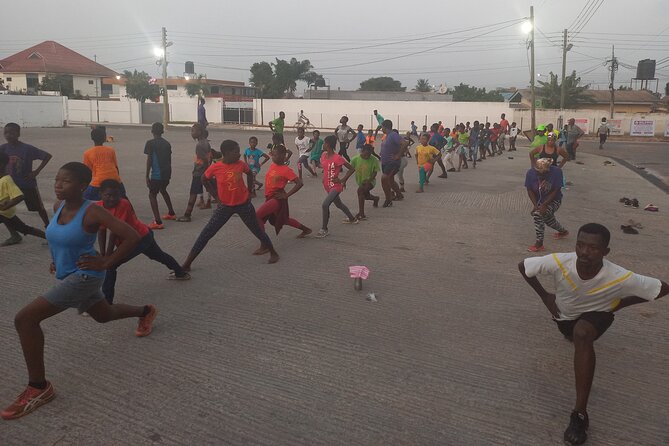
The community work adds meaning to the booking. The Global Wellness Mission provides physical activity programs, nutrition education, after-school lectures for children, health screenings, art programs, and dance programs. Your payment helps support that work, so the experience has a purpose beyond the meal itself.
Still, the advertised duration deserves a close look. The activity is listed at approximately six hours, with operating hours shown from 8:00 a.m. to 12:00 p.m., Monday through Saturday. One account described the class as about two hours, which was considered a good length for that particular group. Because the timing information does not line up perfectly, confirm the start time and expected duration before you book.
What the experience does especially well
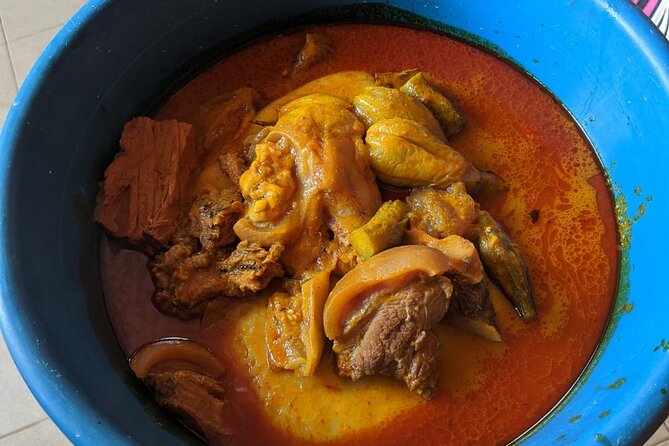
The strongest feature is the human contact. The food is prepared with local hosts, not simply presented by a guide who disappears after the explanation. Accounts describe warm family involvement, easy conversation, laughter, and helpful instruction.
The second strength is the food range. You are not limited to one famous dish. Depending on the menu, you may make a soup, a starch, fish, chicken, stew, or jollof rice. That gives you a better picture of how several parts of a Ghanaian meal work together.
The third strength is flexibility. A host was described as easy to communicate with, and dietary requests can be made in advance. Another person appreciated being connected with a local seamstress during the visit, though that connection should be treated as an added possibility, not a guaranteed part of the tour.
The class also works well for people who want a neighborhood setting rather than a polished cooking studio. One account placed the cooking in a neighborhood not far from the airport area. That can make the experience feel more connected to ordinary Accra life, though the precise neighborhood and home setting may vary.
Limitations you should consider
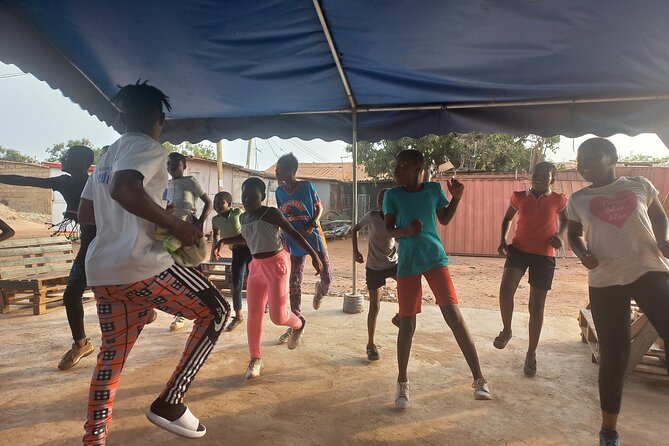
The main weakness is consistency. Most of the supplied ratings are very positive, with an overall score of 4.5 from 22 ratings, but there is also a serious complaint about a no-show and failed communication. That is not something to ignore.
I would confirm the booking shortly before the activity, especially if the class is important to your schedule. Keep the provider’s contact details handy, and do not build a tight airport or evening plan around the advertised end time.
The second limitation is the variable amount of work. If the ingredients are already prepared, you may spend more time watching, stirring, shaping, and tasting than doing every step from scratch. For some people, that is perfect. For others, it may feel less like a full cooking class.
The third issue is the unclear length. A six-hour listing suggests a substantial outing, but a two-hour account shows that actual class time may be shorter. That is not automatically bad. A shorter class can be ideal if you want lunch and a cultural activity without losing a full day. You simply need accurate timing before you commit.
Who should book this Accra cooking class
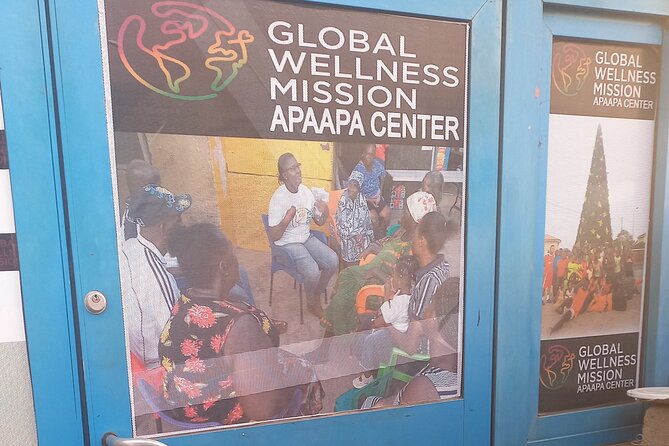
I would recommend it to you if you want food, conversation, and community contact in one activity. It suits couples, small groups, and curious eaters who want to try Ghanaian staples with local instruction.
It is also a good choice if you want your spending to support a local program. The wellness center’s work with children, nutrition, health, movement, art, and dance gives the experience a clear social purpose.
You may want a different activity if you need a tightly timed itinerary, a guaranteed six-hour program, or a formal lesson where every ingredient is measured and every guest cooks every stage. You should also ask questions in advance if you do not drink alcohol or have strict dietary requirements.
The class can work for first-time cooks because the hosts guide you through familiar Ghanaian foods. It can also suit experienced home cooks who want to compare techniques. Just do not expect a standardized restaurant school. The charm comes from the personal format, and that also means the experience may vary by host and group.
Booking advice and cancellation terms
The experience costs $45 per person and is often booked about 36 days ahead, so it is sensible to reserve early if your dates are fixed. Confirmation is received at booking, and mobile tickets are accepted.
You can cancel for a full refund up to 24 hours before the start time. Changes or cancellations inside that 24-hour window are not accepted for a refund. Since the class has had at least one serious communication complaint, I would also confirm the meeting details before setting out.
The meeting point is Global Wellness Mission, CM7, Third Oloti Street, Accra, and the activity ends there. It is near public transportation, service animals are allowed, and the maximum capacity is 20 people.
Should you book it?
Book this class if you value personal contact more than polished production. The best version gives you a market run, a family-style kitchen, Ghanaian staples, local spirits, a generous lunch, and conversation with hosts such as Gifty, Auntie Irene, or Ms. Pat.
Before paying, ask two direct questions: How much of the preparation will I do myself, and how long should I expect the full activity to last? If the answers suit you, $45 is a fair price for a food experience that also supports the Global Wellness Mission.
FAQ
Where does the cooking class meet?
The meeting point is Global Wellness Mission, CM7, Third Oloti Street, Accra, Ghana.
Where does the activity end?
The experience ends back at the meeting point.
How long does the experience last?
It is advertised as approximately six hours, but one account described the class as lasting about two hours. Confirm the expected timing before booking.
What food might I learn to prepare?
Possible dishes include fufu, banku, jiji, rice balls, okra soup, groundnut soup, palm-nut soup, light soup, plain soup, fried fish, chicken, stew, and jollof rice.
Is lunch included?
Yes. Lunch is included in the price.
Are alcoholic drinks included?
Yes. Local spirits are included. The listed spirits are Emergency, Hatso, and Uwuba, all made from akpeteshie and soaked with local bark or tree leaves.
Can dietary requests be accommodated?
Yes, dietary requests can be accommodated upon request. Make your request before the class.
How many people can join the activity?
The maximum group size is 20 people. The experience is described as a small-group activity.
Can I cancel for a full refund?
Yes. You must cancel at least 24 hours before the start time for a full refund. Cancellations or changes made less than 24 hours before the activity are not eligible for a refund.
Newly listed around the world
- Exfoliating Treatment Body Scrub + Moisturizing Body Wrap 60 min THAI SPA MASSAGE★ 5.0 · 7 reviews
- Body Scrub Exfoliation Treatment 50 min at THAI SPA MASSAGE BARCELONA★ 5.0 · 9 reviews
- 60 min Couple’s Massage to choose and 30 min Floral Bath at THAI SPA MASSAGE★ 5.0 · 16 reviews
- Balinese massage with essential oils 60 min at THAI MASSAGE ALURA★ 5.0 · 38 reviews
- Massage Fusion Thai-Ballines 90 min at THAI SPA MASSAGE BARCELONA★ 4.5 · 16 reviews
- 30 min Couple Massage and 30 min Floral Bath at THAI SPA MASSAGE★ 5.0 · 9 reviews
- 60 min Couple’s Massage to Choose and 30 min Floral Bath THAI MASSAGE ALURA★ 5.0 · 18 reviews
- 90 min Thai-Bali Fusion Massage at THAI SPA MASSAGE BARCELONA★ 5.0 · 40 reviews
Workshops, compared.

Wellness Retreat with Massage, Yoga Class, and Lunch
Read our review →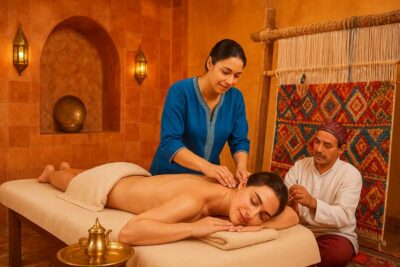
Marrakech Hammam, Massage & Berber Carpet Weaving Workshop
Read our review →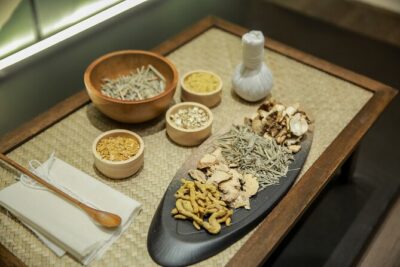
Browse the lists this tour appears in