

Review · HOT SPRINGS AND GEOTHERMAL POOLS
Osaka: Nara, Todaiji, Uji Matcha, and Hot Spring Tour
Nara’s free-roaming deer and Tōdai-ji’s enormous Great Buddha give this day its strongest moments, but the real appeal is the mix of temples, tea, and hot springs in one trip from Osaka. You also get time in Uji, known for matcha, with a visit to the peaceful Genji-no-Yu bathing complex.
I like the small maximum group of 15 and the fact that transport, a guide-driver, and the return trip are covered for $81. The drawback is pace: eight or nine hours is a long day, and the schedule may leave too little time at Tōdai-ji, Uji’s temple, or the matcha stop if traffic or delays eat into the day.
Key points to know before booking
- Nara Park includes about 80 minutes to see the sacred deer and walk through the park.
- Tōdai-ji and Kasuga-taisha each receive about 40 minutes, so visits are focused rather than leisurely.
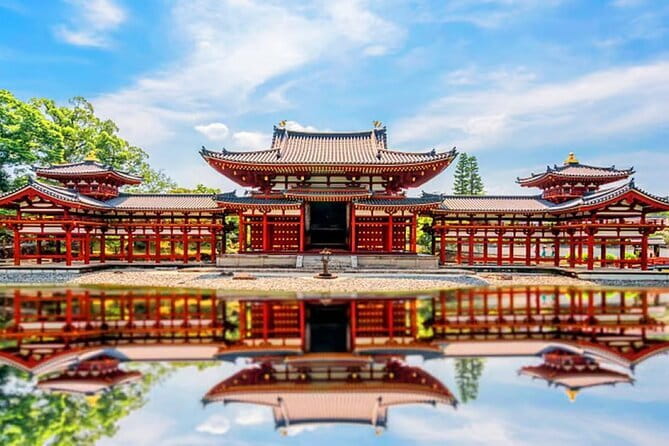
- Uji combines tea culture and relaxation, with matcha, Byodo-in, and a substantial hot spring stop.
- The day begins at 8:30 am at Nipponbashi Parking in Osaka and returns to the same meeting point.
- Admission fees, food, and drinks are not generally covered, so carry extra money for temple and museum visits.
- Tattoos are not allowed at the hot spring, and unaccompanied minors cannot join.
Why this Osaka day trip works
This tour packs three very different Japanese experiences into one day. You start with Nara’s old religious center, move to Uji’s tea culture, and finish with a hot bath. That variety is the main reason to consider it.
I especially like the contrast. Nara Park is open, social, and full of deer. Tōdai-ji is grand and solemn. Uji feels quieter and more tied to tea, literature, and river scenery. Genji-no-Yu then gives you a chance to slow down before the ride back to Osaka.
The price of $81 is reasonable if you want one organized day covering two destinations. You are paying for round-trip transport from central Osaka, an air-conditioned vehicle, and a multilingual guide-driver. Public transport could cost less, but it would require separate planning, transfers, and admissions. Here, the tradeoff is control of your time: the group follows one route and cannot linger freely at every stop.
The tour needs at least four people to operate and allows no more than 15. That is a useful middle ground. It is not a private outing, but it should be easier to manage than a large coach tour.
More Hot Springs in Japan
- Osaka: Solaniwa Onsen Hot Spring Visit
★ 4.6 · 51 reviews - Osaka: Tennen Onsen Naniwa-no-Yu, the famous hot spring spa
★ 4.7 · 19 reviews - Private Car Day Trip to the Kobe Mountains, Gardens and Hot Springs from Osaka
★ 4.5 · 16 reviews
Starting in Osaka at 8:30 am
The meeting point is 1-chōme-3 Nipponbashi Parking, 1-chōme-3 Nipponbashi, Chuo Ward, Osaka. The listed start time is 8:30 am, and the tour finishes back there.
Arrive early enough to find the parking area without rushing. Nipponbashi is near public transportation, but the exact walking route from your station will depend on where you begin. Keep the meeting address saved on your phone.
The total duration is listed as eight to nine hours, including the time spent driving. That matters because the day has several stops spread across Osaka, Nara, and Uji. You should expect a full day rather than a relaxed half-day outing.
Nara Park and its famous deer
The first major stop is Nara Park, with about one hour and 20 minutes allotted. This is the most flexible part of the Nara visit. You can watch the deer, walk through the park, and make your way toward the temple area.
The deer are considered sacred and protected as a national treasure. They are the reason many people remember Nara so clearly, but treat them with care. They are accustomed to people, yet they are still animals, not tame pets. Follow the guide’s instructions and avoid teasing or crowding them.
One practical warning comes from the food situation. A problem can arise if the local vendors run out of deer food, so do not build your entire visit around feeding the animals. The park itself is the attraction. The deer, paths, trees, and temple approaches provide plenty to see without a snack in hand.
Wear good shoes. Even though the park is not a wilderness hike, you will be on your feet for much of the day, and the full route includes temple grounds, shrine paths, and the hot spring facility.
Tōdai-ji and the Great Buddha
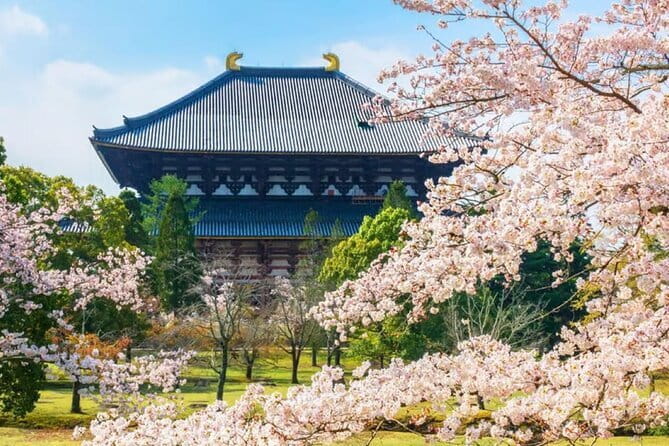
Tōdai-ji is scheduled for about 40 minutes, and admission is not included in the basic package. The temple is famous for the Great Buddha, a bronze Vairocana Buddha about 15 meters tall. The scale is difficult to grasp until you are inside the hall and looking up.
This is the stop where a short visit can feel frustrating. Forty minutes is enough for a purposeful look at the main hall and statue, but not enough for a slow examination of every detail. If the group arrives late, the available temple time can shrink further.
One particularly important point is that the schedule may be tight enough for the guide to advise skipping the Buddha temple. That possibility makes this tour less suitable if Tōdai-ji is your main reason for visiting Nara. If the Great Buddha is a must-see, ask at the start of the day how much time is protected for the temple.
Admission is listed separately, so budget for it. The provided information also lists several other possible admission charges, including Kasuga-taisha, Byodo-in Temple, the Tale of Genji Museum, and the hot spring. The details are not entirely consistent, since Genji-no-Yu is also shown with an included ticket. Confirm the exact admission arrangement before you go.
More Hot Springs in Osaka:
- Santorini: Volcanic Islands Cruise with Hot Springs Visit
★ 4.4 · 10,869 reviews - Bali: Mount Batur Sunrise Guided Hike and Natural Hot Spring
★ 4.8 · 9,284 reviews - Reykjavik: Sky Lagoon Entrance Pass With 7-Step Spa Ritual
★ 4.8 · 6,166 reviews - Chiang Mai: Chiang Rai Temples, Karen Tribe and Hot Springs
★ 4.7 · 5,401 reviews
Kasuga-taisha’s lantern-lined setting
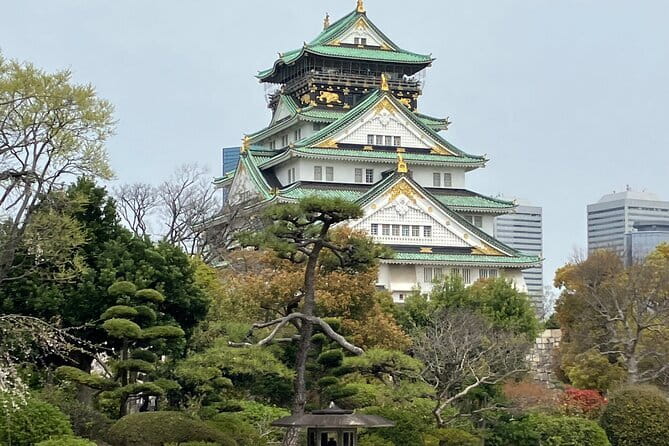
Kasuga-taisha receives about 40 minutes. Founded in the eighth century, the shrine is linked to the Fujiwara clan and dedicated to Futsunushi no Mikoto. It is known for its many stone and bronze lanterns.
This stop gives you a different side of Nara. Tōdai-ji is about monumental Buddhist architecture, while Kasuga-taisha offers a Shinto setting with forest paths, shrine buildings, and lanterns. Forty minutes is enough to get a sense of the place, but not to explore every corner.
If you prefer one deep visit over several brief ones, the schedule may feel hurried. If you enjoy seeing how Buddhist and Shinto traditions share the same region, the two Nara stops work well together.
Uji matcha and the Byodo-in area
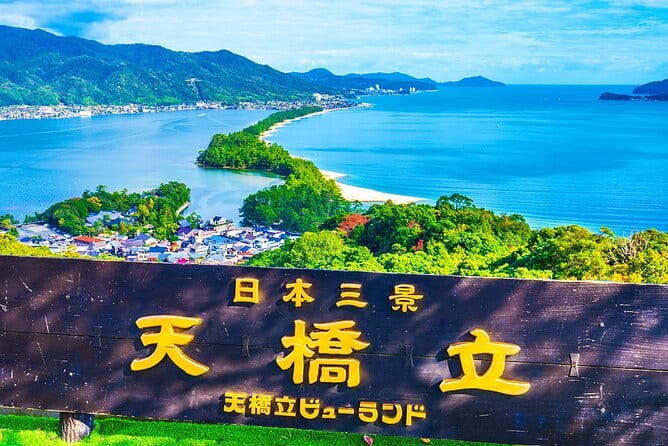
The Uji portion is the least clear part of the schedule. The tour description includes Uji matcha, a traditional tea house, and Byodo-in Temple, while the stop details give two hours and 20 minutes for the broader Uji segment. Byodo-in is famous for Phoenix Hall and is recognized as a UNESCO World Heritage Site.
Uji is a good change of mood after Nara. Its reputation comes from high-quality green tea, so this is the place to slow down over a cup of matcha rather than treat tea as a quick souvenir. The experience may include a tea stop, but the exact format and amount of free time are not specified.
The same applies to Byodo-in and the Tale of Genji Museum. They are listed among possible activities and separate admission costs, but the itinerary does not promise equal time at each one. If you want to enter Byodo-in, ask whether the ticket is included and how much time the group will spend there.
A serious scheduling issue has already affected this kind of day: delays in Nara can reduce time for the Uji temple and matcha visit. That does not make Uji unworthy, but it means you should see the day as an introduction rather than a detailed exploration.
A long, quiet finish at Genji-no-Yu
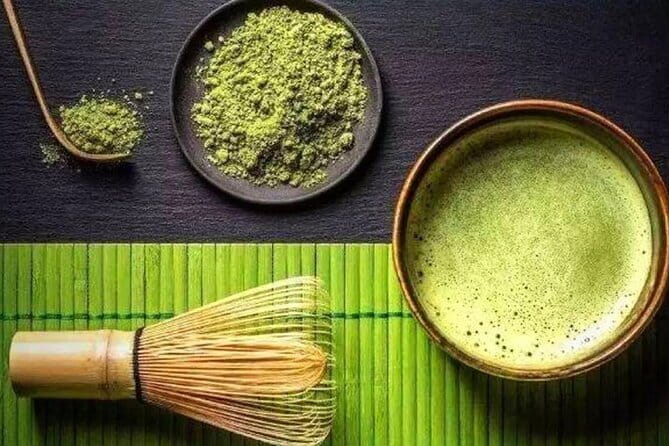
Genji-no-Yu is scheduled for about one hour and 20 minutes, with the wider Uji portion receiving two hours and 20 minutes in the stop details. The facility offers indoor and outdoor baths using natural hot spring water. Its name refers to The Tale of Genji, the classic work associated with Uji.
This is a smart final stop after several hours of walking. You can soak, rest, and let the day’s sights settle before returning to Osaka. The bath is not simply another sightseeing stop. It changes the rhythm of the tour from looking and walking to sitting quietly.
There are two important rules. Visible tattoos are not allowed, and unaccompanied minors cannot participate. The supplied information does not explain whether tattoo coverings or other exceptions are accepted, so do not assume an exception.
The admission information needs careful checking here. The inclusion list says the hot spring admission is included, while the additional-cost section lists hot springs among possible expenses at around $10. Ask the operator what your $81 covers before departure so you can bring the right amount.
Transport, group size, and the real value

The air-conditioned vehicle is useful because this route covers a lot of ground. You do not need to work out separate rail connections between Osaka, Nara, and Uji, and you return to the original Osaka meeting point.
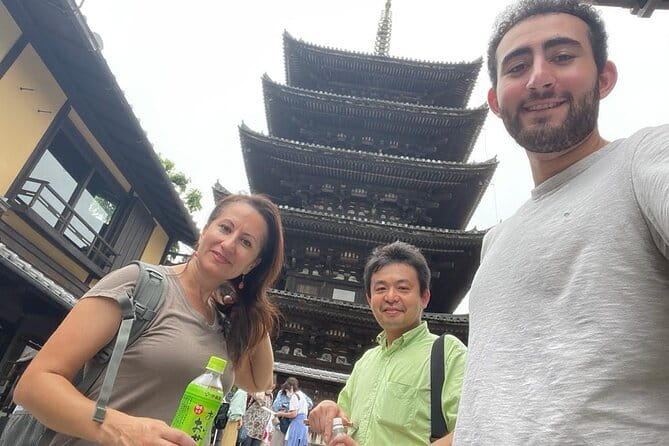
The guide is also the driver, and the service is multilingual. No guide names are provided, so you should not book this expecting a specific named escort. The quality of the day will depend partly on how well the guide manages the clock, explains the sites, and communicates changes.
With a maximum of 15 people, the group is small enough for basic questions and easier boarding. It is still a shared tour, so you will need to follow the timetable. Someone who wants to spend two hours inside Tōdai-ji alone or linger over tea may prefer independent travel.
Food and drinks are not included. Carry water and money for snacks, meals, tea, and admission fees. The listed price is strongest for people who value convenience and several destinations in one day, not for people seeking an all-inclusive outing.
Who should book this day trip
I would recommend it to a first-time visitor who wants a broad taste of Nara and Uji without managing transport. Families may like the deer and the mix of visual attractions, though children must remain accompanied. The hot spring finish also makes it appealing to adults who want a slower hour after temple visits.
It suits active people who can walk for much of the day and handle a fixed schedule. Good footwear is a practical requirement, especially in cold weather, when outdoor stops can feel long and uncomfortable.
I would hesitate to recommend it to anyone with one absolute priority. If you care most about the Great Buddha, Byodo-in, or a long tea session, the schedule may not give that stop enough time. A private guide or independent day trip would offer more control, though likely at a higher total cost.
The tour has a mixed overall rating of 4 out of 5 from seven submitted ratings. The strongest praise centers on the variety, the family appeal, and the enjoyable full-day format. The clearest criticism concerns missed or shortened visits and food availability in Nara. Those points tell you exactly how to approach the day: enjoy the range, but keep your expectations realistic.
Should you book it?
Book this tour if you want Nara deer, Tōdai-ji, Uji tea, and a hot spring in one organized day for $81. The combination is hard to arrange as neatly without doing your own route planning.
Skip it if you want an unhurried temple visit or if missing one listed attraction would spoil the day. Before paying, confirm the admission costs, the matcha stop, and whether Byodo-in is guaranteed. With those details clear, this is a practical introduction to two of Kansai’s most appealing cultural towns.
Free cancellation is available up to 24 hours before the 8:30 am start time. Changes or cancellations made less than 24 hours ahead are not accepted for a refund.
FAQ
How long does the tour last?
The tour lasts approximately eight to nine hours, including transportation time.
Where does the tour begin?
It begins at 8:30 am at 1-chōme-3 Nipponbashi Parking, 1-chōme-3 Nipponbashi, Chuo Ward, Osaka.
Where does the tour end?
The tour ends back at the same meeting point in Osaka.
Is transportation included?
Yes. Round-trip transportation from Osaka in an air-conditioned vehicle is included.
Is a guide provided?
Yes. A multilingual guide and driver are included. No individual guide name is specified.
Is Tōdai-ji admission included?
No. Tōdai-ji admission is listed as an additional expense.
Is food included?
No. Food and drinks are not included.
Can children join the tour alone?
No. Unaccompanied minors are not allowed. Children may participate when accompanied.
Can I join if I have a visible tattoo?
No. The tour information states that visible tattoos are not allowed at the hot spring experience.
Newly listed around Osaka
- Private Car Day Trip to the Kobe Mountains, Gardens and Hot Springs from Osaka★ 4.5 · 16 reviews
- Osaka:Bamboo Healing Massage at the Temple <90-min>★ 5.0 · 9 reviews
- Solaniwa Onsen: Osaka Bay Tower★ 5.0 · 4 reviews
- Kobe Night View Mt Rokko Kitano Ijinkan Arima Onsen Day Trip★ 5.0 · 5 reviews
- Osaka Reiki Healing and Aroma Massage At The Temple<120min>★ 5.0 · 2 reviews
- ZEN therapy | Shiatsu-style massage, EnergyTherapy & Japanese Tea★ 5.0 · 5 reviews
- Osaka Temple :Warm Bamboo Oil Massage – Deep Restore〈60min〉★ 4.9 · 19 reviews
- Osaka: Tennen Onsen Naniwa-no-Yu, the famous hot spring spa★ 4.7 · 19 reviews
Hot Springs and Geothermal Pools, compared.
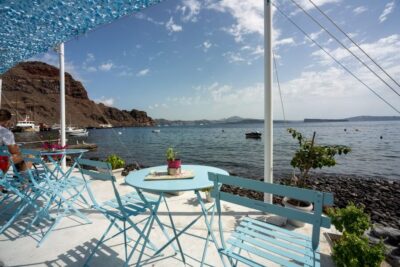
Volcanic Islands Cruise with Hot Springs Visit
Read our review →
Mount Batur Sunrise Guided Hike and Natural Hot Spring
Read our review →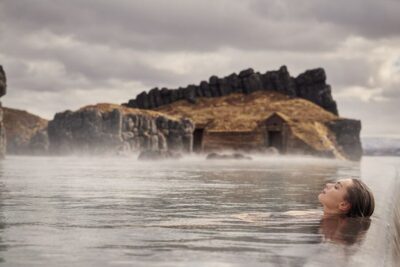
Sky Lagoon Entrance Pass With 7-Step Spa Ritual
Read our review →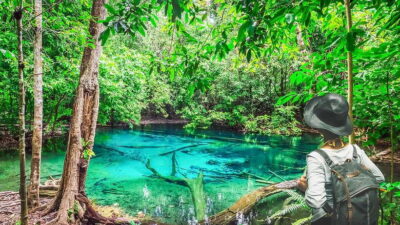
Tiger Cave Temple, Emerald Pool and Hot Springs Tour
Read our review →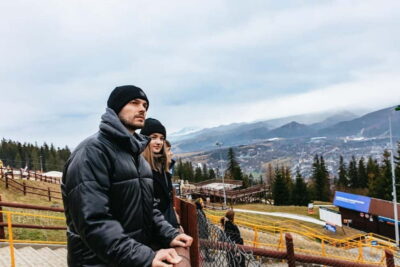
Zakopane Tour Local Tasting, Cable Car & Hot Springs
Read our review →
Mount Batur: Private Sunrise Jeep Tour & Hot Spring
Read our review →
Mount Batur Sunrise Hike and Natural Hot Spring Option
Read our review →
Mount Batur Shared Jeep Sunrise & Hot Spring Tour
Read our review →Browse the lists this tour appears in