
Review · HOT SPRINGS AND GEOTHERMAL POOLS
Kyoto: Hike and Hot Springs in Kurama
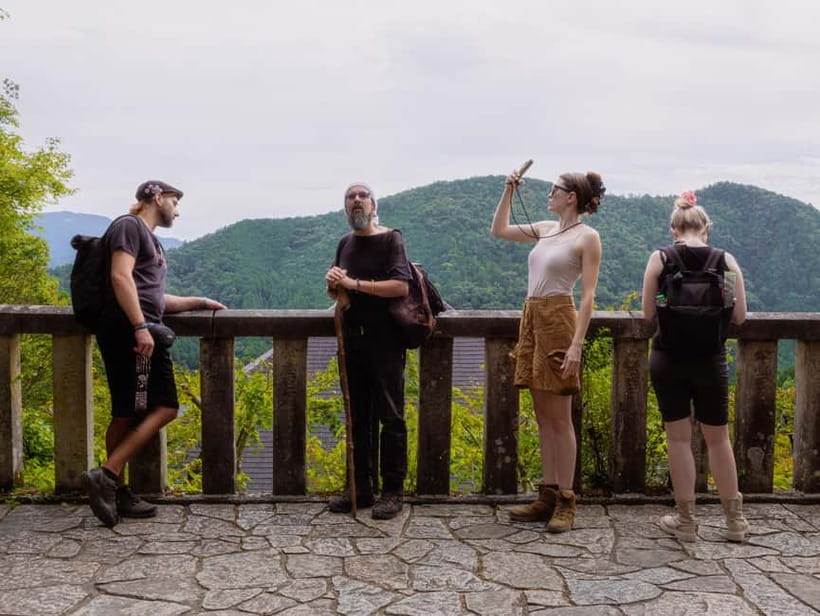
The best part of this half-day outing is the quick change from Kyoto streets to cedar forest, mountain air, and sacred sites. I like the train ride through the hills and the way the hike links Kibune Shrine with Kurama Temple, giving you nature, folklore, and religion in one compact trip.
I also like the flexible finish. You can eat in Kurama, stroll the village, take the train back, or pay extra for the outdoor bath at Kurama Hot Spring. The catch is the climb: steep steps and summer heat can make this a serious hike, not a gentle woodland walk.
Key points to know before booking
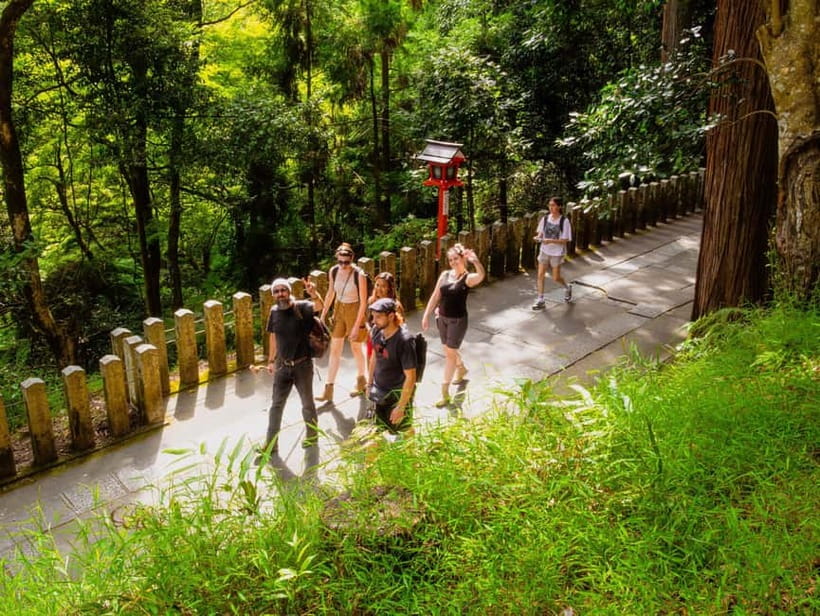
- The summit comes after roughly 30 to 40 minutes of climbing, with plenty of steps and rest stops.
- Kurama Temple is treated as a local power spot, with valley views and a setting tied to mountain legends.
- Kibune Shrine adds a relationship ritual to the outing, including a prayer for good relationships.
- The guides are a major part of the experience, with Philippe, Chris, Kevin, Salome, and others praised for history, legends, and local context.
- The hot spring is optional and not included, but it is a fine way to ease tired legs after the climb.
- The tour ends in Kurama village, not back at the meeting point, so you arrange your own return.
From Demachiyanagi Station to Kyoto’s mountain country
The tour begins at Exit 7 of Demachiyanagi Station, in front of the Eizan Railway. That starting point matters because the train is part of the pleasure, not just a way to reach the trail. You leave the city behind and ride toward the mountains, with the surroundings growing quieter and more rural.
Your guide handles the transportation included in the tour, so you can focus on the changing scenery and the day ahead. This is a useful choice for visitors who want to see northern Kyoto without working out every train connection themselves.
The entire activity lasts about four hours. That gives you enough time for the ride, shrine visits, the climb, and an introduction to Kurama village, but it does not leave much room for a long meal or an unhurried spa visit. Think of it as a focused mountain escape, not a full-day countryside outing.
The group may be private or small, and the available guide languages are English and French. Guides named in guest feedback include Philippe, Chris, Kevin, Salome, and Eric. The strongest praise goes to guides who explain the religious symbols, local customs, mountain stories, and the area’s connection with Reiki.
More Hot Springs in Japan
- Osaka: Nara and Uji Day Trip with Deer Park and Hot Spring
★ 4.4 · 302 reviews - Tokyo: Mt Takao Tour with Ramen and Tattoo-Okay Hot Spring
★ 5.0 · 69 reviews - [Seasonal Limited] Mt. Fuji 5th Station &Hot Spring Day Tour
★ 4.5 · 53 reviews
Kibune Shrine and the start of the sacred route
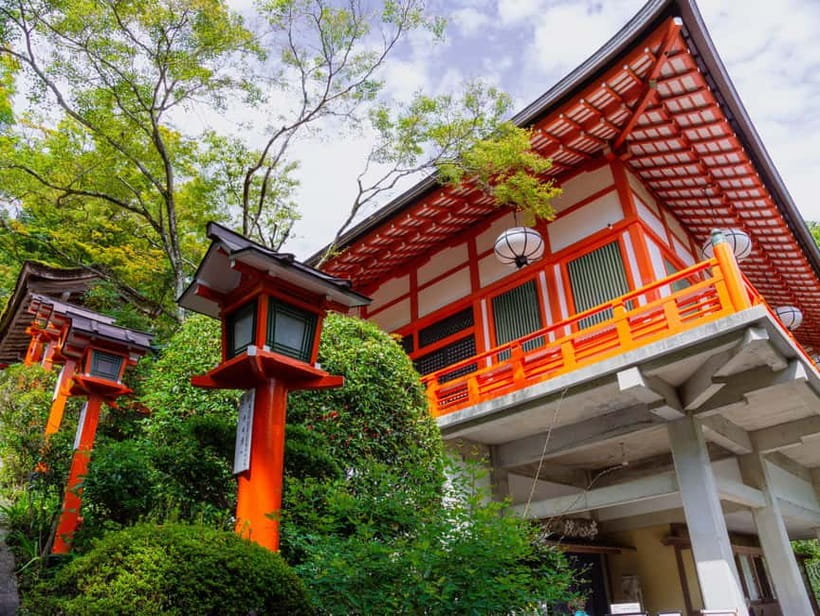
The route includes a visit to Kibune Shrine, a much more intimate experience than simply checking another temple off a list. You can make a prayer for good relationships here, which gives the stop a personal touch even if you are not deeply religious.
The shrine is tied to the Kibune area and its river valley setting. The route description presents Kibune and Kurama as places shaped by a legendary river and tall cedar trees. That combination of water, forest, and old religious sites gives the morning a calmer tone than central Kyoto’s crowded sights.
Your guide can add meaning to the details you might otherwise pass without noticing. The better guides on this experience are praised for explaining shrines, temples, deities, customs, and local stories in a friendly way. Philippe, in particular, is often singled out for making the cultural side easy to follow without turning the walk into a lecture.
This is also where the tour begins to feel different from a standard city visit. You are not only looking at a building. You are moving through a route that local tradition treats as spiritually important, with the forest itself forming part of the experience.
Climbing Mount Kurama through the cedar forest
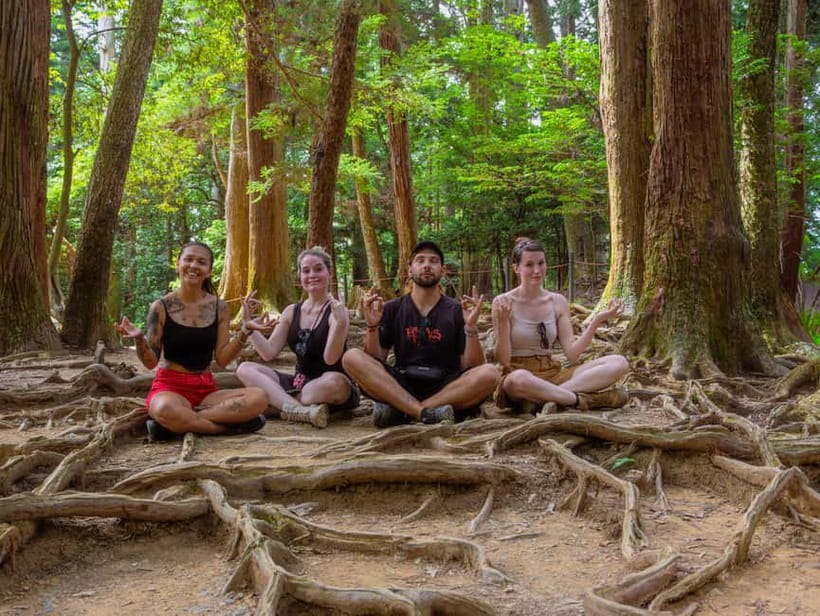
After the initial visit, the trail heads uphill toward the top of Kurama Mountain. The summit can be reached in about 30 to 40 minutes, but that time estimate should not fool you into expecting a flat stroll. The route uses steps, and the climb requires a decent level of fitness.
I would plan for a steady uphill effort, especially in warm weather. One August account describes the walk as harder in the heat, while another calls for the ability of a seasoned hiker. The official conditions also rule out people with mobility impairments, wheelchair users, children under 11, and people without hiking experience.
The good news is that the climb is not treated as a race. You can stop to catch your breath, look at the trees, and take in features along the path. Guides such as Philippe have been praised for setting a manageable pace and paying attention to the group’s needs.
Wear shoes with a firm sole. Bring water, and choose long pants if you want better protection from insects. The trail is in a forest, so comfortable clothing is more useful than anything stylish. A small bag is easier to manage than a large daypack on the steps.
The setting is the main reward during this section. You get crisp air, dense cedar forest, and occasional views toward the valley. You might also see wildlife. One outing included deer, and another guide made an effort to track down a monkey, though sightings are never promised.
Kurama Temple at the mountain top
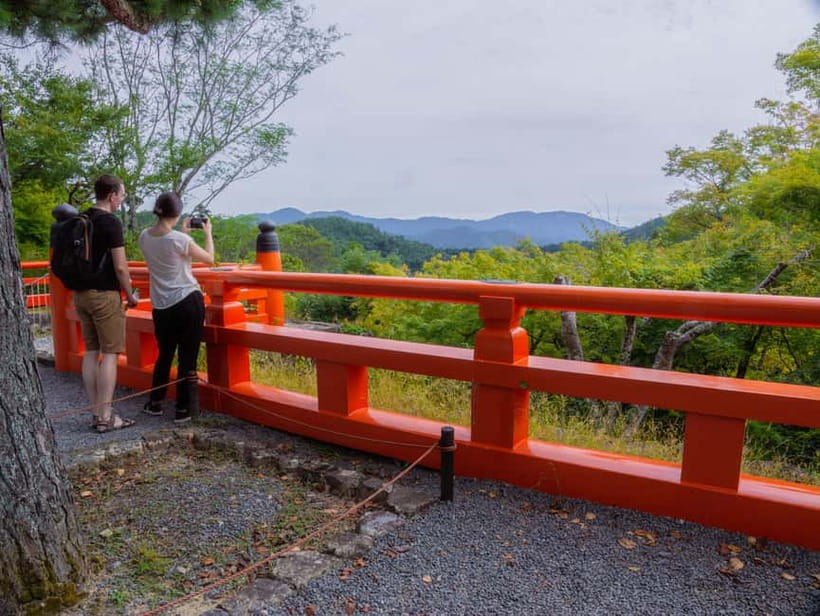
Kurama Temple gives the hike a clear destination. The temple sits high on the mountain and is regarded locally as a power spot, a place where visitors come to pray, pause, and feel a stronger connection with the surrounding nature.
At the top, you can rest after the climb and look down toward the valley. The views are a useful payoff because the temple visit does not feel like an isolated stop. You have earned the change in perspective, both physically and visually.
The guide’s role is especially valuable here. Kurama’s religious figures, symbols, and legends can be hard to understand if you simply arrive, take a photo, and leave. Guides including Kevin and Philippe have been praised for supplying historical and cultural context, while other visitors appreciated learning about the temple’s deities and the origin of Reiki.
Some departures may include less familiar areas around the temple, depending on the guide and the group. One private outing included a crypt and maze beneath the temple, and another guide led the group to lesser-known points on the mountain. These extras are not guaranteed, but they show why a small or private group can be worthwhile.
You should also check conditions on the day. One account found the main temple partly covered by scaffolding during maintenance, which reduced the view of the building. The temple grounds and surrounding route still offered a visit, but construction can affect what you see.
Same place, a different hour on the table:
- From Osaka: Himeji Castle, Arima Onsen & Mt. Rokko Day Tour
★ 4.6 · 339 reviews - From Tokyo: Private Tour to Fuji/Hakone – Onsen, Art, Nature
★ 5.0 · 116 reviews - Mt. Fuji, Hakone Private Tour from Tokyo – Onsen, Arts and Nature
★ 5.0 · 79 reviews - Tokyo: Mount Fuji 5th Station & Onsen Day Trip
★ 4.3 · 75 reviews
Downhill steps and Kurama village
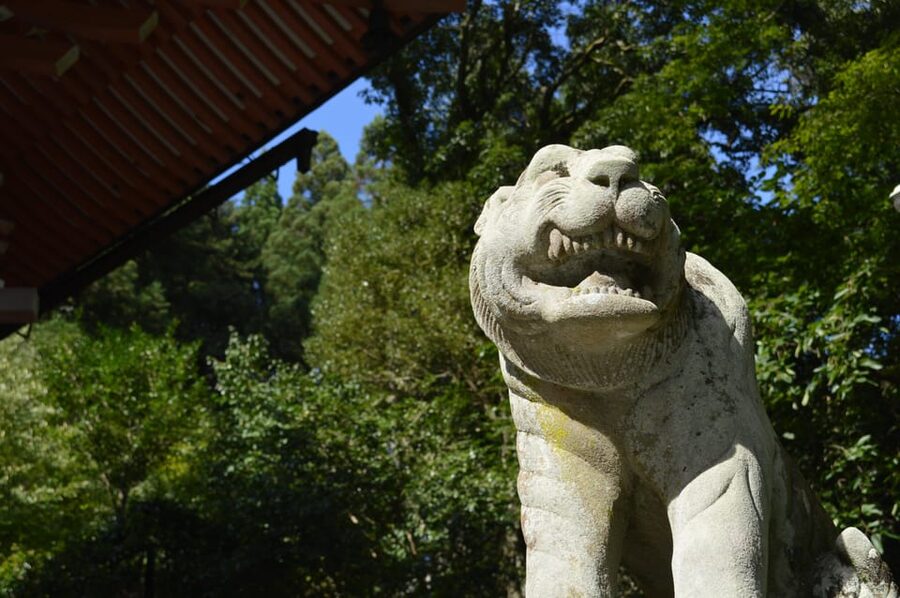
After the temple, the route goes down toward the small town of Kurama. The descent is easier for some people than the climb, but steps can still work your knees, especially after the uphill section. Take your time and use the stops to enjoy the trees and valley.
The tour concludes in the village rather than returning you to Demachiyanagi Station. This gives you choice, but it also means you need to understand what is and is not included. Transportation to the meeting point is covered, while transportation back to the meeting point is not.
In Kurama, you can choose from several simple endings:
- Have a late lunch at your own expense.
- Walk around the village.
- Take the train back toward Kyoto.
- Visit Kurama Hot Spring and pay the separate bathing fee.
The village is a pleasant place to slow down after the climb. Restaurants sit near the river, and the setting gives you room to recover before deciding what to do next. Since lunch is not included, you can choose your own pace and budget rather than being tied to a group meal.
Why the optional hot spring matters
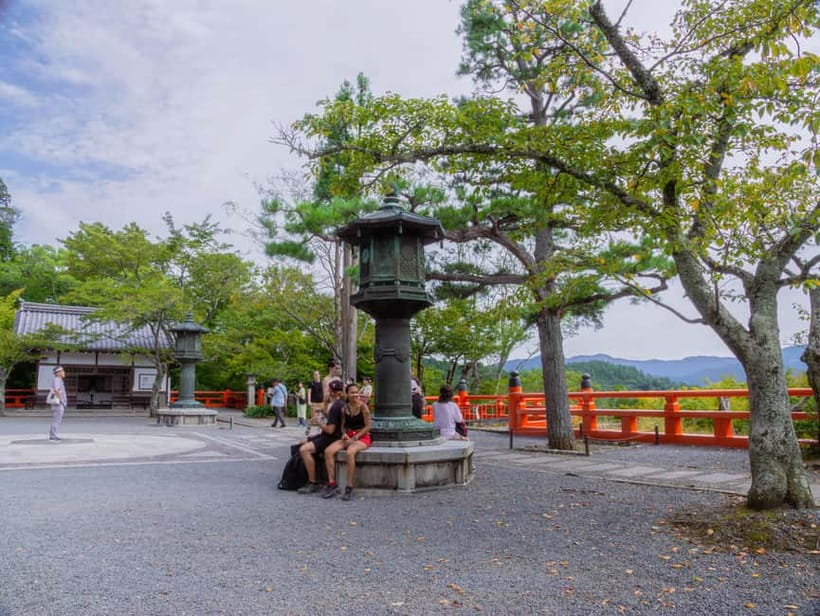
The hot spring is not part of the $80 price, but it is one of the most appealing add-ons. The bath is known for its outdoor setting and views toward the mountains, and the timing is practical: you reach it after the uphill and downhill sections, when warm water sounds better than another sightseeing stop.
The tour can offer a discounted ticket for the bath, but you should confirm the current price and availability when booking. Bring whatever is needed for your own comfort, and remember that the bath is optional, not an included feature.
I would choose the onsen if you have enough time and want the day to feel restorative rather than rushed. If you need to return to central Kyoto quickly, take the train instead. The four-hour tour includes guidance to the available options, but a leisurely soak and meal will extend your time in Kurama.
The bath also helps explain the appeal of this outing. You begin with a city train ride, climb through a forest to a sacred temple, then finish with mountain air and hot water. It is a satisfying change from Kyoto’s busy central sightseeing circuit.
What the $80 price covers
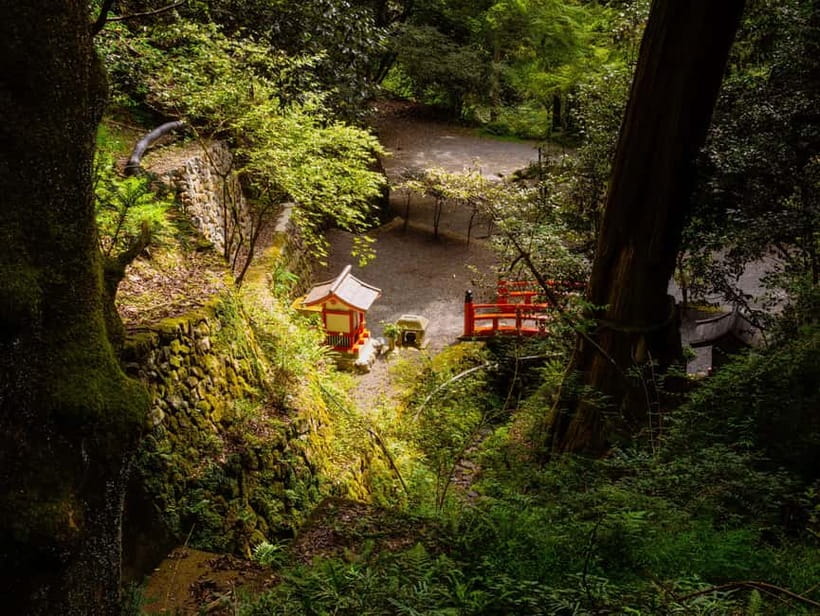
At $80 per person, the price is reasonable if you want a guide to handle the route and explain the cultural details. The fee includes the guide, temple admission, and transportation connected with the tour. It does not include your return transportation, lunch, or the hot spring.
The value depends on how much guidance you want. If you are comfortable navigating the train and trail alone, you could spend less by visiting independently. The paid tour earns its keep through the explanations, pacing, local stories, and access to a route that can feel confusing if you do not know the area.
A private or small group can add value for couples, families with older teenagers, or friends who want to stop often. It may also allow the guide to adjust the pace and spend more time on subjects you care about, such as Japanese religious traditions, Reiki, local legends, or the forest itself.
Keep a little extra money and time available for lunch and the bath. The tour price is not the full cost of the outing, but the add-ons are clearly optional, so you can keep the day inexpensive if needed.
Who should book this hike
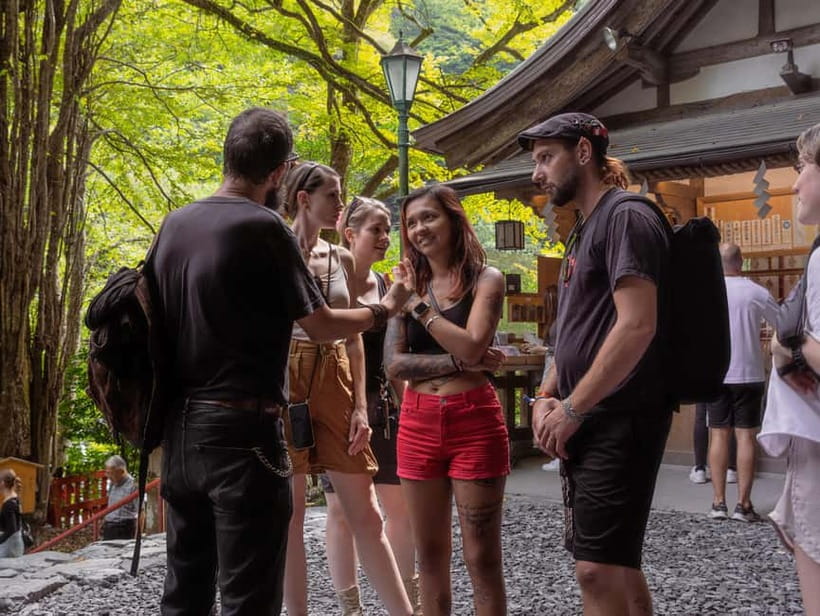
I would recommend this experience to an active visitor who wants a break from city streets and does not mind a real climb. It suits you best if you enjoy walking, cultural sites, mountain scenery, and a guide who can connect the pieces.
It is especially useful for a first visit to Kyoto when you want to see a quieter side of the region without sacrificing convenience. The train ride, forest trail, shrine, temple, and village create a good half-day mix.
I would not choose it for a relaxed sightseeing day, a stroller-friendly outing, or anyone with limited mobility. It is also a poor match if you dislike stairs, warm-weather exertion, or the idea of finishing away from the original meeting point.
The guide can make a large difference. Philippe is repeatedly praised for humor, patience, cultural explanations, and local knowledge. Chris, Kevin, Salome, and Eric also receive strong praise in individual accounts. One four-star experience raised serious concerns about a guide smoking on the trail and drinking beer before the finish, so guide quality may vary despite the high overall rating.
That single caution is worth keeping in mind, but the overall record is unusually strong: the activity holds a five-star rating from 49 reviews. The most consistent strengths are the guides’ explanations, the mountain setting, the flexible pacing, and the mix of nature with religious history.
Practical preparation for a better day
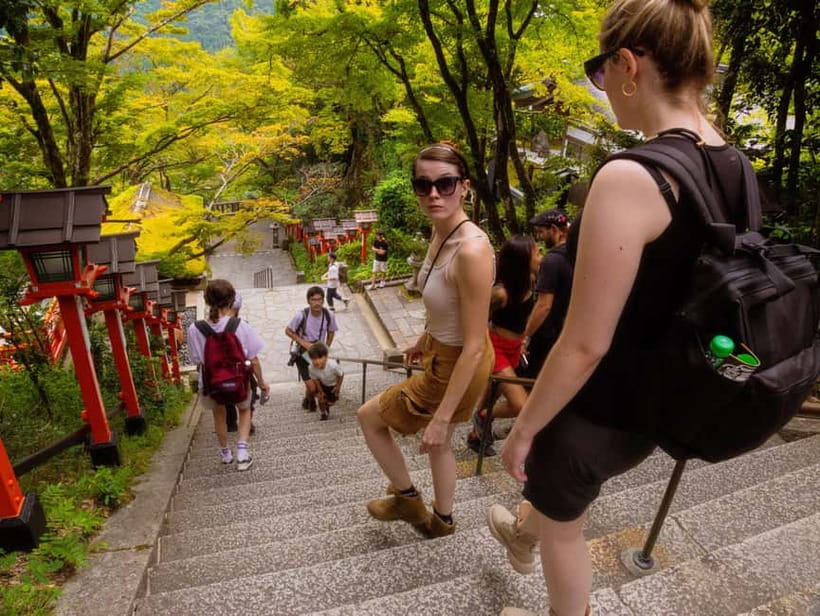
Wear comfortable walking shoes and carry water. Long pants are a smart choice if you want to reduce bug bites, and light clothing will help in hot weather.
Arrive at Demachiyanagi Station Exit 7, in front of the Eizan Railway. Since the tour uses a scheduled train and begins with group transportation, give yourself enough time to find the exact meeting point.
Expect the main climb to take about 30 to 40 minutes, with stops along the way. The tour lasts four hours, but lunch, the hot spring, and the train back to Kyoto can add time afterward.
Cancellation is free up to 24 hours before the start for a full refund. You can also reserve now and pay later, which is useful if your Kyoto schedule is still changing.
Final verdict: is Kurama worth half a day?
Yes, if you want an active and meaningful break from central Kyoto. I like the way this tour combines a mountain train, Kibune Shrine, a cedar forest, Kurama Temple, local legends, and an optional hot spring without demanding a full day.
Book it if you have decent fitness and want a guide to explain what you are seeing. Skip it if you need an easy walk, accessible paths, or a tightly timed return to Kyoto. For the best version of the outing, wear proper shoes, bring water, leave room for the onsen, and treat the climb as the main event rather than a short stroll between attractions.
FAQ
Where does the Kurama hike tour meet?
The meeting point is Exit 7 of Demachiyanagi Station in Kyoto, in front of the Eizan Railway.
How long does the experience last?
The tour lasts four hours. Lunch, the hot spring, and the train ride back to Kyoto can extend your day beyond the scheduled tour time.
How difficult is the Mount Kurama hike?
The climb requires a decent level of fitness and includes steps. The mountaintop can be reached in about 30 to 40 minutes, with stops along the way.
Is Kurama Temple admission included?
Yes. Temple admission is included in the tour price.
Is the hot spring included?
No. The hot spring fee is separate. A discounted bath ticket may be available through the tour.
Does the tour include lunch?
No. Lunch is not included. You can eat in Kurama village after the hike.
Does the tour return to the original meeting point?
No. The tour ends in Kurama village. You arrange your own transportation back, with guidance on the available options.
What languages are available?
The tour is available with live guides in English or French.
Who should not take this experience?
It is not suitable for children under 11, wheelchair users, people with mobility impairments, or people without hiking experience.
More walks and climbs around Japan
- Full Day Hiking Tour at Mt.Takao including Hot Spring
★ 5.0 · 52 reviews - Traverse Outer Rim of Hakone Caldera and Enjoy Onsen Hiking Tour
★ 5.0 · 30 reviews - Bali: Mount Batur Sunrise Guided Hike and Natural Hot Spring
★ 4.8 · 9,284 reviews - Mount Batur Sunrise Hike and Natural Hot Spring Option
★ 5.0 · 1,927 reviews
Newly listed around Japan
- Sauna experience with great view & tour to enjoy food, blue beer★ 5.0 · 2 reviews
- Snowshoe Adventures and Onsen Bliss Winter Escape in Furano★ 5.0 · 12 reviews
- 2 Hours Hiroshima Hot Spring Tour★ 5.0 · 3 reviews
- 2 Hour Onsen Calligraphy Experience★ 5.0 · 11 reviews
- Traverse Outer Rim of Hakone Caldera and Enjoy Onsen Hiking Tour★ 5.0 · 30 reviews
- Tokyo Ginza Head Spa Trial:Scalp Care 75★ 5.0 · 3 reviews
- Kyushu: Aso Vocano, Grassland,Onsen and Aso shrine 1-Day Tour★ 4.5 · 23 reviews
- Discover Beppu and Yufuin Nature and Onsen Trip★ 5.0 · 3 reviews
Hot Springs and Geothermal Pools, compared.
Volcanic Islands Cruise with Hot Springs Visit
Read our review →
Mount Batur Sunrise Guided Hike and Natural Hot Spring
Read our review →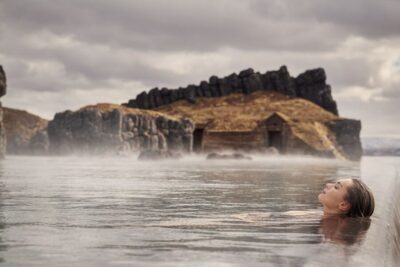
Sky Lagoon Entrance Pass With 7-Step Spa Ritual
Read our review →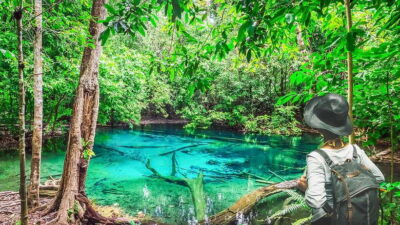
Tiger Cave Temple, Emerald Pool and Hot Springs Tour
Read our review →
Zakopane Tour Local Tasting, Cable Car & Hot Springs
Read our review →
Mount Batur: Private Sunrise Jeep Tour & Hot Spring
Read our review →
Mount Batur Sunrise Hike and Natural Hot Spring Option
Read our review →
Mount Batur Shared Jeep Sunrise & Hot Spring Tour
Read our review →Browse the lists this tour appears in