
Review · HOT SPRINGS AND GEOTHERMAL POOLS
Mount Rinjani: 3D/2N Trekking to Summit, Lake and Hot Spring
Mount Rinjani saves its biggest moment for the third morning. After two long days through rainforest, crater paths, and steep slopes, you climb before dawn to watch the sun rise over Lombok, Bali, the Gili Islands, Mount Tambora, and Segara Anak Lake. It is a serious mountain trek, not a casual nature walk.
I like the full mountain circuit: you begin in Senaru, cross the crater, visit the lake and hot spring, then finish through Sembalun. I also like that porters carry the cooking and camping gear, while meals, three liters of water per day, a tent, sleeping bag, mattress, gloves, and trekking poles are included. The main concern is stamina. Expect roughly eight to nine hours of walking per day, with steep, slippery sections and an early summit climb.
Key points to know before booking
- Three days on two sides of Rinjani: Start in Senaru and finish in Sembalun, seeing more of the mountain than a short out-and-back trek.
- Segara Anak Lake and a natural hot spring: Day two gives you time beside the crater lake and a chance to soak your tired legs.
- Sunrise from the summit: The final climb rewards you with views toward Lombok, Bali, the four Gili Islands, Mount Tambora, and the lake.
- Porters carry the camp equipment: You still need a small personal pack, but cooking gear and camping supplies are handled for you.
- A demanding route: The trek requires good health, strong fitness, and comfort with long walks on steep and slippery ground.
- $150 before the national park fee: The package has useful inclusions, but you should budget separately for the stated entrance charge and personal gear.
Why this Rinjani route is worth considering
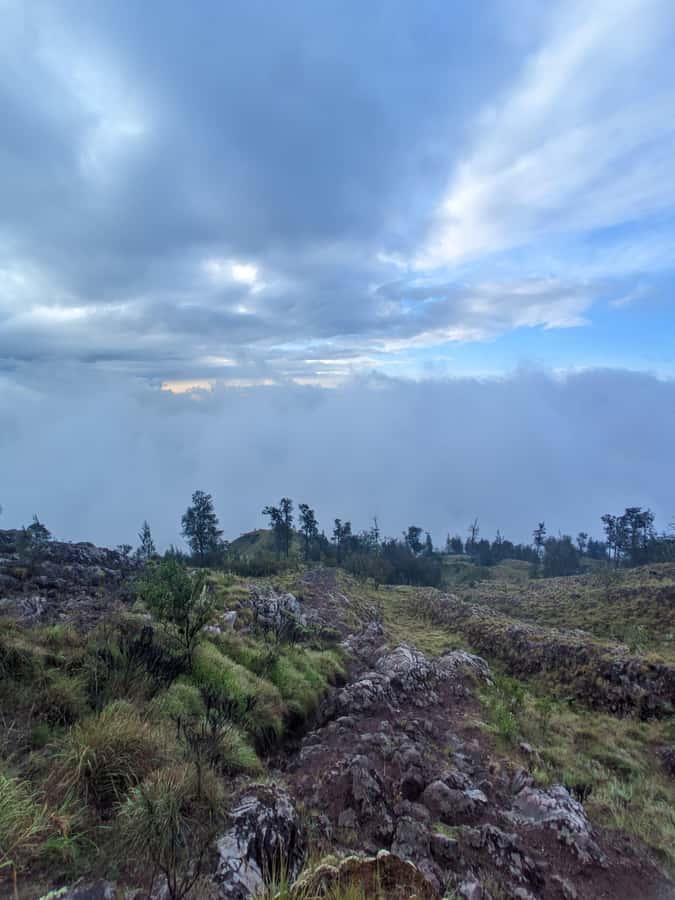
Mount Rinjani is one of Indonesia’s great walking challenges, and this route gives you the mountain in several different moods. You pass through dense tropical forest, camp on a crater rim, sit beside Segara Anak Lake, soak in a hot spring, and climb toward a high summit view.
I like the route because it does not rush straight to the top. The lake and hot spring break up the physical effort and give you a better sense of Rinjani as a large volcanic mountain rather than simply a summit to tick off.
The tradeoff is clear. This is not a gentle three-day holiday with a few scenic walks. You may be walking for eight or nine hours each day, and the final summit push comes after two days of effort. If you want comfort, short stages, or a flexible pace, this program may feel too tough.
The package receives a 4.8 rating from 12 reviews, with especially strong praise for the guides and porters. The available comments repeatedly highlight good guiding and porter support. No guide names are supplied, so you should confirm the assigned guide’s name and group arrangements before departure.
More Hot Springs in Indonesia
- Bali: Mount Batur Sunrise Guided Hike and Natural Hot Spring
★ 4.8 · 9,284 reviews - Bali/Mount Batur: Private Sunrise Jeep Tour & Hot Spring
★ 4.8 · 3,528 reviews - Mount Batur Sunrise Hike and Natural Hot Spring Option
★ 5.0 · 1,927 reviews
Day one: Senaru forest to the crater rim
Your first day begins with hotel pickup in Senaru or Sembalun, followed by a transfer to Senaru Village for the start of the walk. A briefing takes place at the meeting point before the trek, so use this time to ask about the day’s pace, water, meals, rest stops, and where your camp will be set.
From Senaru, the route enters tropical rainforest. You will walk among plantation areas and tall trees, with breaks for snacks along the way. Black or brown monkeys may appear in the forest, so keep your camera ready, but do not treat wildlife sightings as guaranteed.
The forest is important on this first day because it gives you shade and a gradual introduction to the mountain. Even so, the climb takes time. Your guide and porters carry the cooking equipment and camping gear, but you still need to carry your own daily essentials unless you pay for an extra porter for personal luggage.
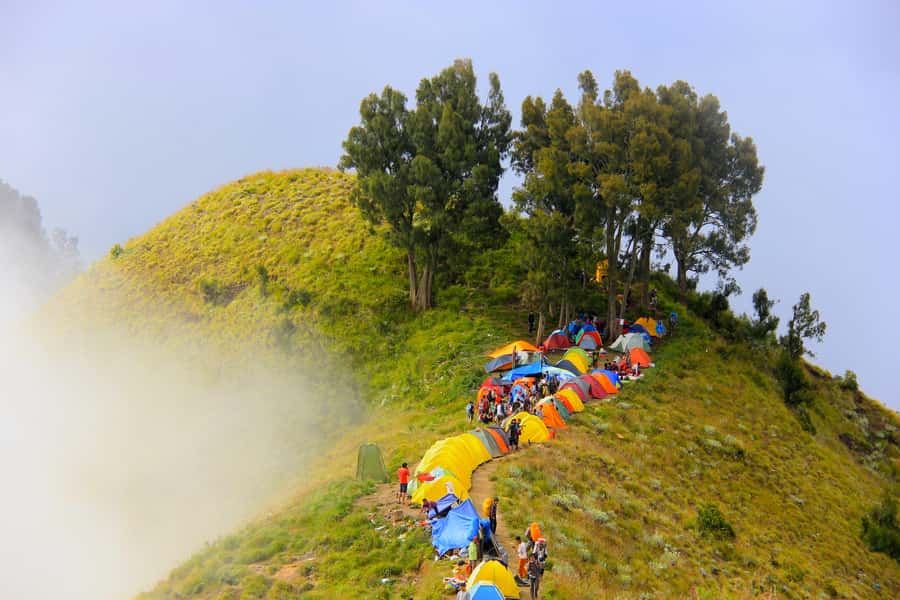
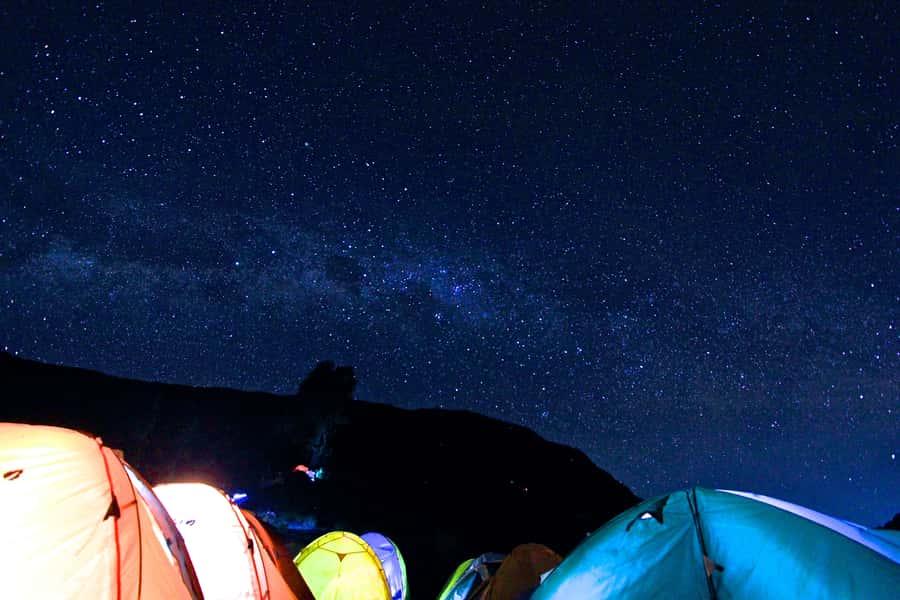
At Senaru crater rim, the crew sets up camp. You sleep in a tent with a mattress and sleeping bag, with a toilet tent and toilet paper supplied. The setting offers open views and a night under the stars, but remember that this is mountain camping. Pack for basic conditions, not hotel comfort.
The first day is also where you learn how your body handles the route. Keep your pace steady rather than trying to stay with the fastest person in the group. Comfortable clothing, gloves, proper trekking shoes, long pants, and a small day pack will make the hours much easier.
Day two: Segara Anak Lake and the hot spring
After a hot breakfast, you hike down toward Segara Anak Lake. The route includes steep and slippery ground, so trekking poles are useful here. Poles are included, which is a worthwhile detail because they help with balance on uneven sections.
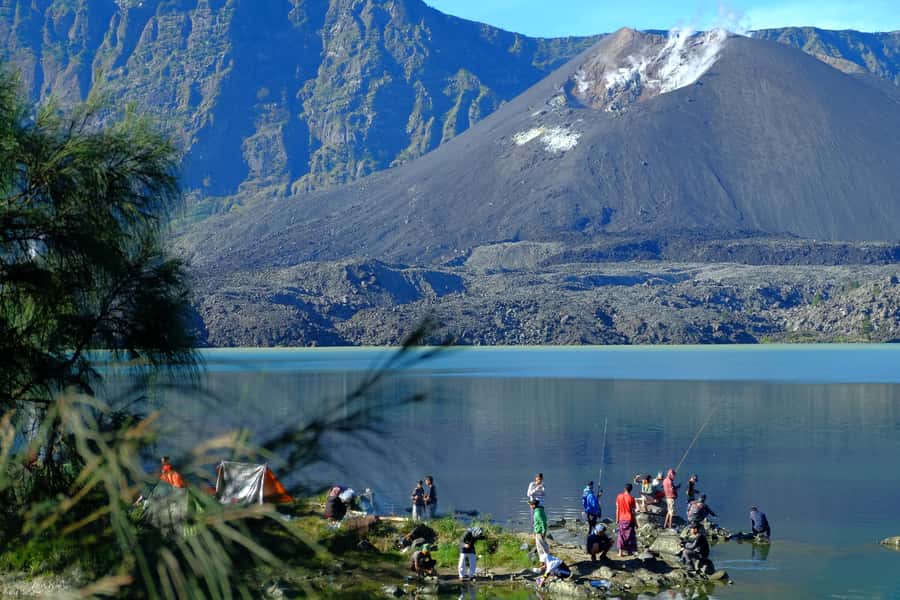
Segara Anak is the visual centerpiece of the middle day. You have time to sit beside the water, eat lunch, and take in the crater setting rather than simply passing through. The lake gives you a welcome pause after the descent from the rim.
Nearby, a natural hot spring offers another break. You can soak your legs and enjoy the warm water before the next major climb. The hot spring is not a small extra squeezed into the schedule. It is one of the few chances to relax during a demanding route.
After lunch and the hot spring, you climb toward Sembalun crater rim. This change of side makes the route feel like a true crossing of Rinjani. You camp again at the crater rim and watch the sunset before an early night.
Day two may be the hardest day for some people because it combines a descent, time by the lake, and another long ascent. The hot spring helps, but it does not remove the effort required to reach the second camp. Listen to your guide, drink regularly, and save energy for the morning.
Food and drinking water are included, with three liters of mineral water per person each day. That is useful on a remote trek, though you should clarify how water is distributed and carry it in a way that feels comfortable. The package includes meals, but the description does not provide menus or dietary options, so mention any food needs before you start.
Day three: the pre-dawn summit climb
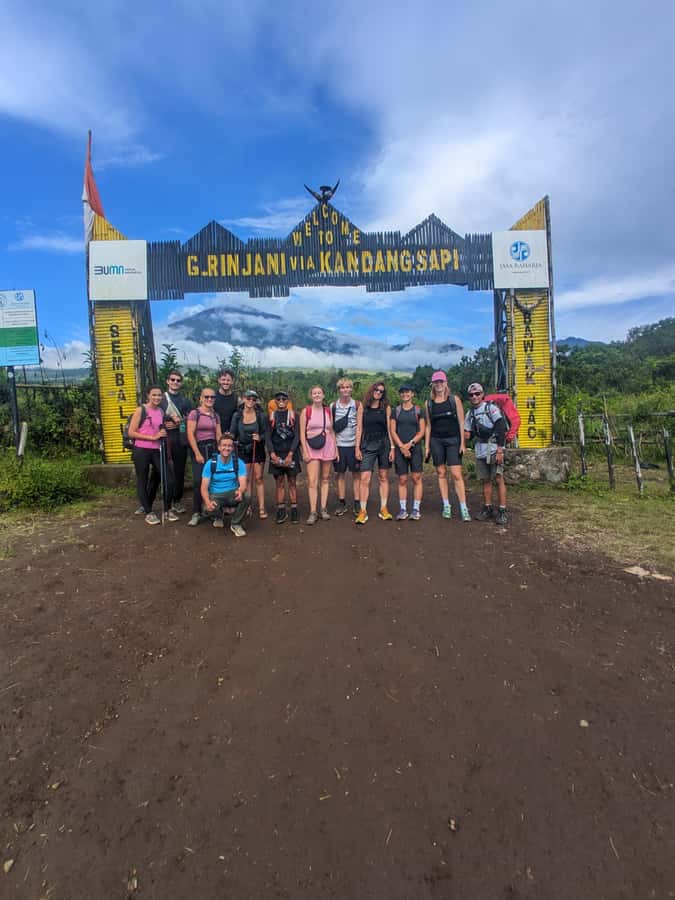
The final day begins with a light breakfast and a climb toward the summit. The exact starting time depends on availability and the day’s arrangements, but you should expect an early departure because the goal is sunrise.
The summit climb is the most demanding part of the trek. The route is steep, and the ground can be loose or slippery. You need a good fitness level and the ability to walk long distances. Gloves, trekking poles, warm clothing, and a headlamp are especially important here.
A headlamp or hand torch is not included. This is one of the most important items to arrange yourself. A phone light may be a poor substitute on dark, uneven ground, so treat a proper headlamp as essential equipment even though it appears on the exclusions list.
At the top, you can look across Lombok, toward Bali and the four Gili Islands, and out to Mount Tambora in Sumbawa. Segara Anak Lake appears below, tying together the places you visited during the previous day.
Sunrise is the emotional payoff, but weather controls how much you see. The program promises the summit attempt and the viewpoints, not a clear sky. Bring a camera, but do not let photography slow you down or leave you cold at the top.
After the summit, you descend to Sembalun crater for a hot breakfast and a rest. The downhill route still requires care, especially after the fatigue of the summit climb. From there, you continue to Sembalun Village for transfer to your next destination.
The day ends back at the meeting point. Transfers after the trek are not included, so arrange your onward transport before you set out. The package handles the trek itself, but not every part of your wider Lombok itinerary.
Same place, a different hour on the table:
- Body Massage Experience in Ubud Traditional Spa
★ 5.0 · 3,506 reviews - From Ubud: Mount Batur Shared Jeep Sunrise & Hot Spring Tour
★ 4.8 · 1,842 reviews - Mount Batur Sunrise Jeep Tour with Optional Activities
★ 5.0 · 1,555 reviews - Bali: Shared Mount Batur Jeep Sunrise with Hot Springs
★ 4.9 · 1,332 reviews
What the $150 price really covers
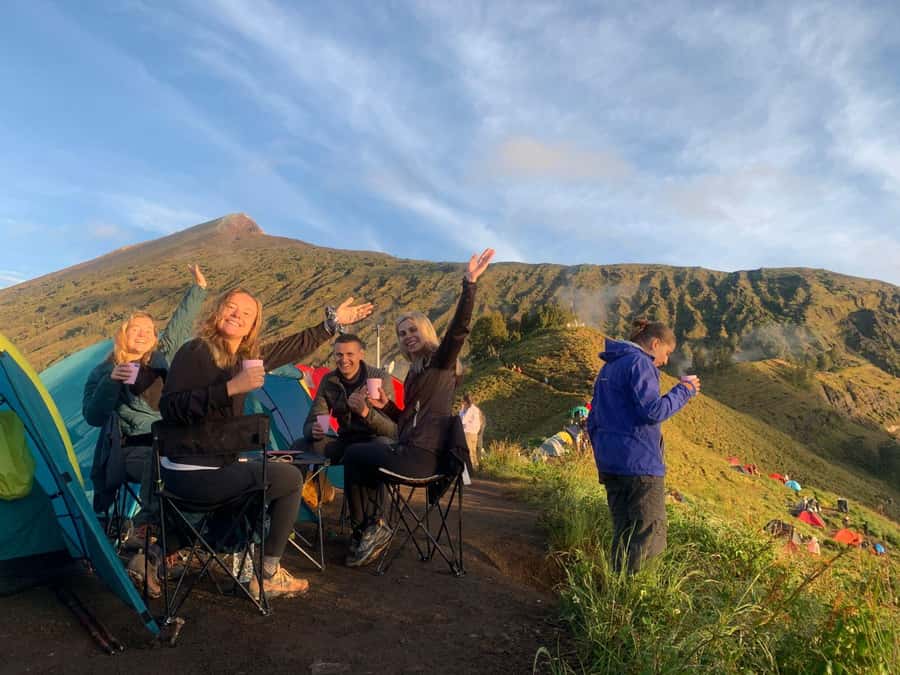
At $150 per person, this trek offers useful value for a guided three-day mountain route. The price includes an English-speaking guide, professional porters, cooking and camping equipment, food, drinking water, tent, toilet tent, paper, sleeping bag, mattress, gloves, and trekking poles.
Those inclusions matter because carrying and organizing camp equipment would add a lot of work to an already difficult walk. You still carry your personal items, but the heavy group supplies are handled by the porters.
The national park entrance fee is extra. The stated charge is IDR 200,000 per person per day, so ask the operator to confirm the current total and how it will be collected for this three-day program. The price also excludes accommodation in Senaru or Sembalun before the trek.
You must bring or arrange a small day pack, trekking shoes, long pants, and a headlamp or hand torch. An extra porter for your own luggage is also not included. These costs can change the real budget, especially if you arrive without proper mountain clothing or need help carrying more than a day pack.
The package offers free cancellation up to 24 hours in advance and a reserve-now, pay-later option. That flexibility is useful when mountain weather can affect plans, but you should still check the latest trail status before traveling.
Fitness, weather, and the limits of the route
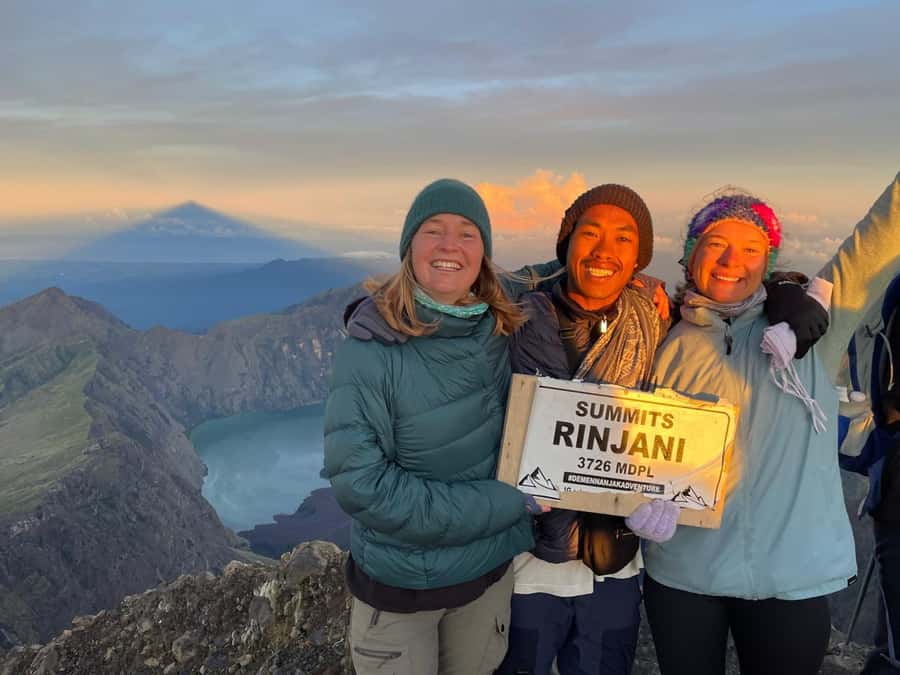
You need to be in good health and able to walk long distances. The program is not suitable for anyone with mountain sickness or a fear of heights, and the route includes steep, slippery, challenging sections.
The minimum age is 10. The activity is not suitable for babies under one year old, and the stated upper age limit is 95. Those age limits do not replace an honest fitness check. A fit older walker may manage well, while a younger person unused to long climbs may struggle.
Weather is a major factor on Rinjani. The supplied information warns of extreme weather between January and March and notes a trail closure through the end of March 2018. That date is clearly old, so do not rely on it as a current closure notice. Ask for the present trail status and weather forecast before booking.
The route is also not designed for strollers, baby carriages, alcohol, or drugs. Alcoholic drinks are not allowed in the vehicle. These rules fit the nature of a high mountain transfer and trek, where space, safety, and physical effort matter.
Packing for three nights on the mountain
The operator supplies a good base of camping gear, but your personal packing list still matters. Bring comfortable clothes, warm layers, gloves, trekking shoes, long pants, and a camera. A downloaded app is listed among the recommended items, though the information does not specify which app or what it is used for.
Your headlamp is the most easily missed item because it is not included. Bring spare batteries if your model uses them. A small daily pack is also excluded, and you need one for water, warm layers, snacks, and personal essentials.
You should also ask about food if you have allergies or dietary restrictions. Meals are included, but no detailed menu is provided. The same applies to baggage: an extra porter can carry personal luggage for an additional fee, but the package does not include that service.
Who will enjoy this trek most
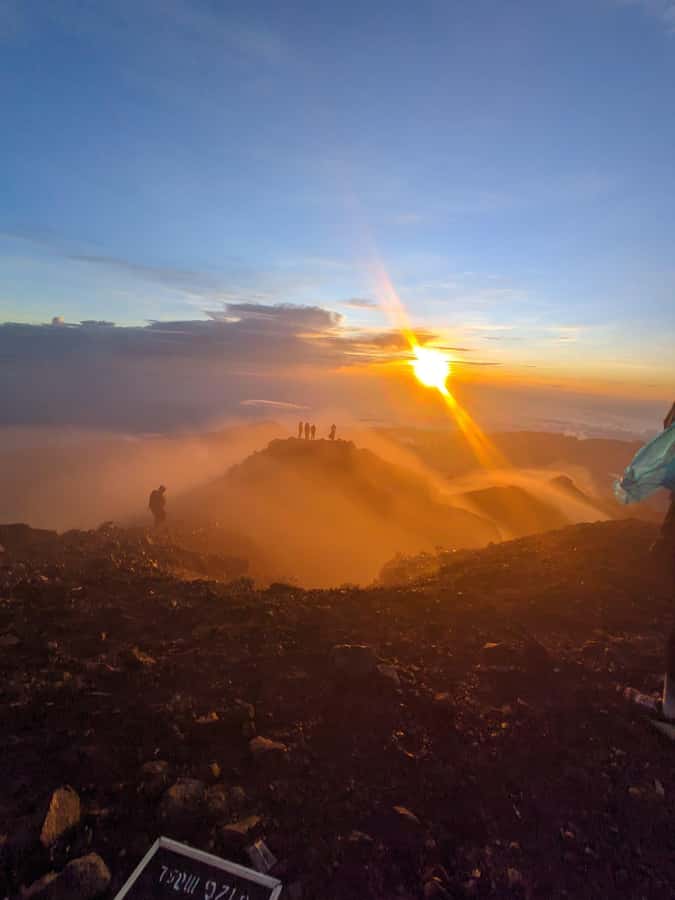
This route suits you if you want a serious three-day mountain experience with support from a guide and porters. You get more than a summit attempt, with rainforest, crater camping, the lake, a hot spring, sunset, and sunrise all built into one route.
It is a good match for someone who values scenery and a structured plan but does not want to carry cooking gear or a full camp. The English-speaking guide can lead the route, while porters handle the shared equipment and supplies.
You should think twice if you dislike basic camping, long walking days, steep descents, or early starts. The hot spring and beautiful lake are appealing, but they come in the middle of a demanding physical schedule, not as easy sightseeing stops.
Families with children aged 10 and over should judge fitness carefully. The minimum age allows participation, but the route still requires endurance and comfort with rough mountain conditions.
Should you book the Mount Rinjani 3D/2N trek?
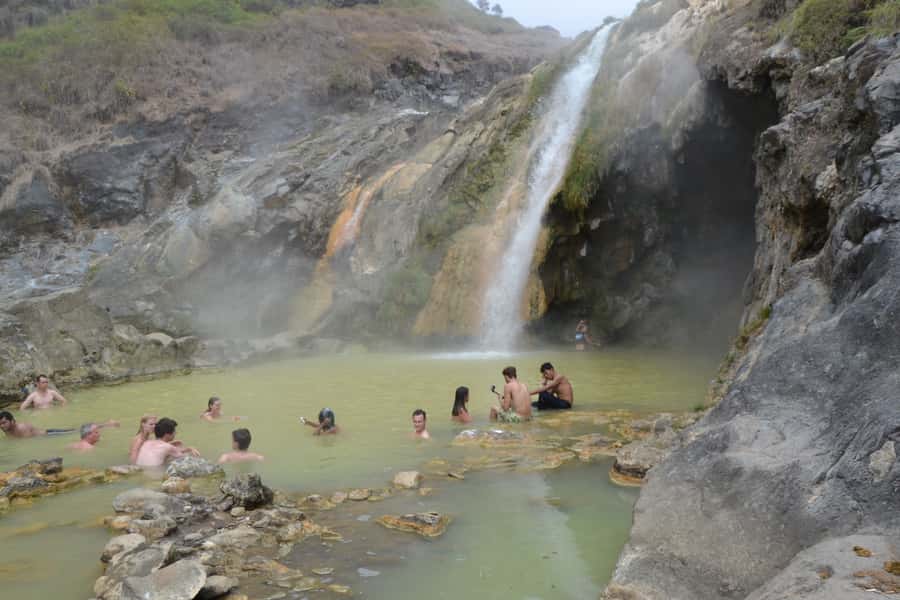
Book this trek if you want the broad Rinjani experience: rainforest, two crater camps, Segara Anak Lake, a natural hot spring, and a sunrise summit. The included guide, porters, meals, water, camping gear, gloves, and trekking poles make the $150 starting price attractive, though you must add the national park fee, personal equipment, and any pre- or post-trek accommodation and transfers.
Skip it if you want a relaxed holiday or have doubts about your health, stamina, mountain sickness, or comfort with heights. Before paying, confirm the current park fee, weather conditions, guide assignment, food arrangements, and onward transfer. If those details suit you, this is a tough but rewarding way to see Mount Rinjani from forest floor to volcanic summit.
FAQ
How long is the Mount Rinjani trek?
The trek lasts three days and includes two nights of camping.
Where does the trek begin?
After pickup from your hotel in Senaru or Sembalun, the trek begins at the stated meeting point, with the Senaru route described for the first day.
Where does the trek finish?
The activity ends back at the meeting point after the trek. On the final day, you descend to Sembalun Village before transferring onward.
Is an English-speaking guide included?
Yes. An experienced English-speaking guide and professional porters are included.
What camping equipment is provided?
The package includes a tent, toilet tent, toilet paper, sleeping bags, mattresses, cooking gear, and camping equipment.
Is food and water included?
Yes. Food and drinking water are included, with three liters of mineral water per person per day.
Is the national park entrance fee included?
No. The stated national park fee is IDR 200,000 per person per day.
What fitness level do I need?
You need good health, a good level of fitness, and the ability to walk long distances. The route is steep, slippery, and challenging, and people with mountain sickness or a fear of heights are not permitted to join.
More walks and climbs around Indonesia
- Private Tour Mount Batur Sunrise Trekking and Natural Hot Spring
★ 5.0 · 431 reviews - Mount Batur Sunrise Hike, Breakfast & Hot Spring
★ 5.0 · 316 reviews - Bali: Mount Batur Sunrise Hike with Breakfast & Hot Spring
★ 4.7 · 146 reviews - Mount Batur Sunrise Trek & Natural Hot Spring Experience
★ 5.0 · 95 reviews
Newly listed around Indonesia
- Seminyak: Spa Treatments at Svaha Spa Seminyak★ 5.0 · 3 reviews
- Seminyak: Relaxing Spa Experience at Svaha Spa Umalas★ 5.0 · 9 reviews
- Seminyak: Relaxing Bali Spa Experience at LLuvia Spa★ 4.8 · 54 reviews
- Bali: Jimbaran Bay Romantic Spa and Seafood Sunset Dinner★ 4.6 · 5 reviews
- Nusa Penida: Luxury Spa & Flower Bath at Tejas Warnakali★ 3.7 · 3 reviews
- Nusa dua: Luxury Spa Bali Massage, Scrub, Flowerbath 2 hour★ 4.9 · 7 reviews
- Nusa Dua: 2-Hour Luxury Warm Stone Massage Spa Treatment★ 4.6 · 7 reviews
- Mt. Batur: 2 Day Camping Trip, Summit Hike, and Hot Springs★ 4.9 · 25 reviews
Hot Springs and Geothermal Pools, compared.
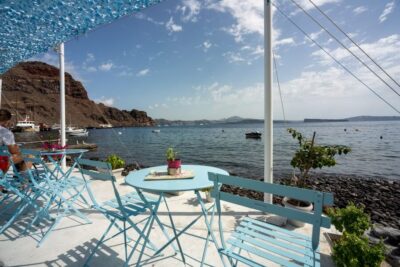
Volcanic Islands Cruise with Hot Springs Visit
Read our review →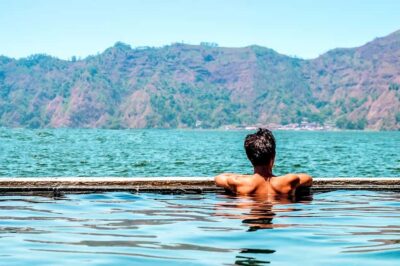
Mount Batur Sunrise Guided Hike and Natural Hot Spring
Read our review →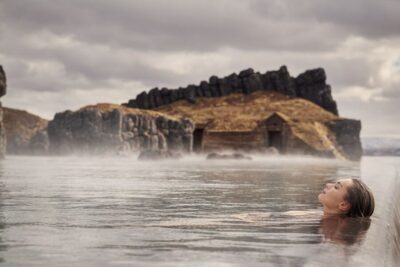
Sky Lagoon Entrance Pass With 7-Step Spa Ritual
Read our review →
Tiger Cave Temple, Emerald Pool and Hot Springs Tour
Read our review →
Zakopane Tour Local Tasting, Cable Car & Hot Springs
Read our review →
Mount Batur: Private Sunrise Jeep Tour & Hot Spring
Read our review →
Mount Batur Sunrise Hike and Natural Hot Spring Option
Read our review →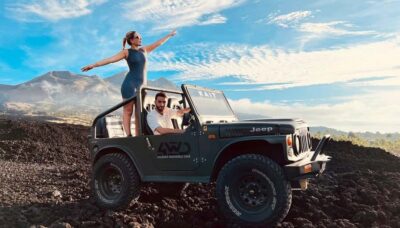
Mount Batur Shared Jeep Sunrise & Hot Spring Tour
Read our review →Browse the lists this tour appears in