
Review · HOT SPRINGS AND GEOTHERMAL POOLS
Rotorua: ‘Thermal Path Tour’ Geothermal half day Tour
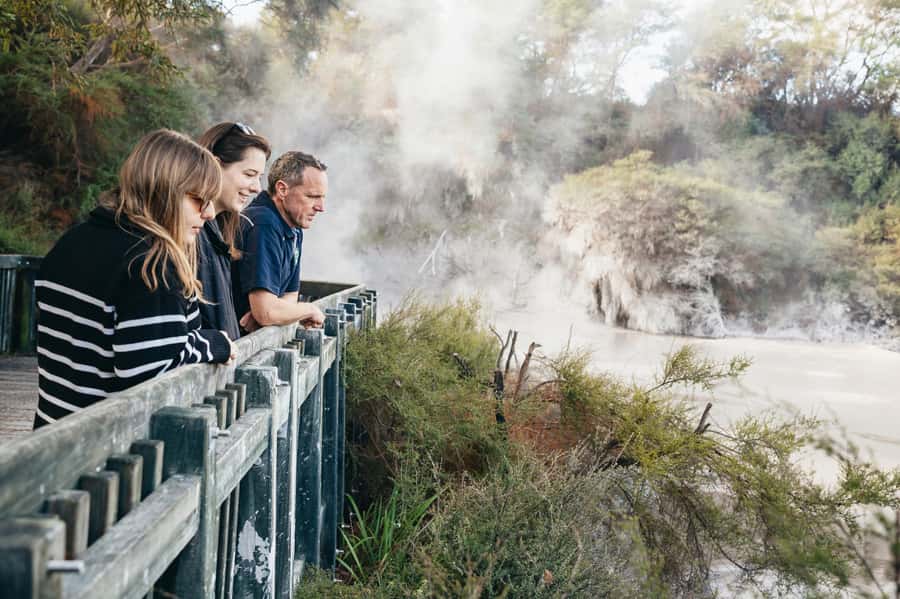
Rotorua’s geothermal country is much more than famous geysers and crowded viewing platforms. This four-hour tour takes you to a hot water lake, a coloured crater lake, a roaring mud pool, and a powerful spring, with a local guide helping you understand what you’re seeing. The day ends with a soak at Waikite Valley Thermal Pools.
I like the small group of no more than eight, which gives the guide room to adjust the pace and answer questions. I also like the mix of short walks, unusual geothermal sights, and a proper hot-pool finish. The main drawback is that the tour is not a gentle sightseeing drive: you’ll walk up to two kilometres on uneven, rocky, and sometimes slippery ground.
Key points
- Start with Rotorua’s largest hot water lake, a striking introduction to the forces beneath the region.
- Walk through native forest at Rainbow Mountain to see plants shaped by geothermal conditions.
- Watch the region’s largest active mud pool, where gases and steam push bubbles through the thick surface.
- Visit Te Manaroa Spring, where boiling water rises through a setting of native vegetation.
- Finish at Waikite Valley Thermal Pools, with entry included in the $89 price.
- Travel in a group of up to eight, with an English-speaking local guide and air-conditioned transport.
Why this four-hour route works
Rotorua can be hard to understand if you only stop at one geothermal attraction. A geyser shows you sudden force. A mud pool shows slow, bubbling activity. A hot spring reveals water moving up from below, while a crater lake and hot water lake show how much the region has been shaped over time.
This tour brings those pieces together in half a day. I like that it does not spend the whole outing at one large attraction. Instead, you move through several distinct places, each with a different mood and appearance.
The route also makes good use of the final hour or so. After walking over rough ground and standing near steaming pools, you finish in warm bathing water rather than simply returning to town. That gives the outing a clear rhythm: look, walk, learn, then rest.
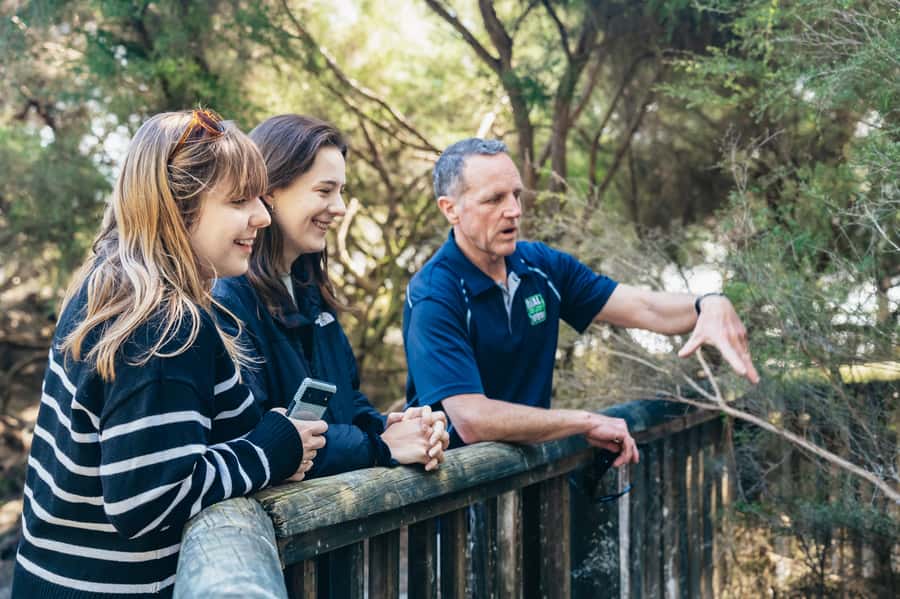
The small vehicle matters here. With a maximum of eight participants, you are not part of a large coach group moving from one marked viewpoint to another. The guide can explain details as you go, and the experience can feel more personal. Stephen is praised for his explanations, kindness, and attention to individual interests. His name also appears as Steve or Steven, so you may see those versions when booking or reading information about the tour.
More Hot Springs in New Zealand
- Polynesian Spa Rotorua: Deluxe Lake Spa Hot Spring Bathing
★ 4.5 · 358 reviews - Polynesian Spa Rotorua: Deluxe Lake Spa Hot Spring Bathing
★ 4.5 · 227 reviews - Polynesian Spa Rotorua: Pavilion (12+ yrs) Hot Pool Bathing
★ 4.5 · 154 reviews
Rotorua’s largest hot water lake
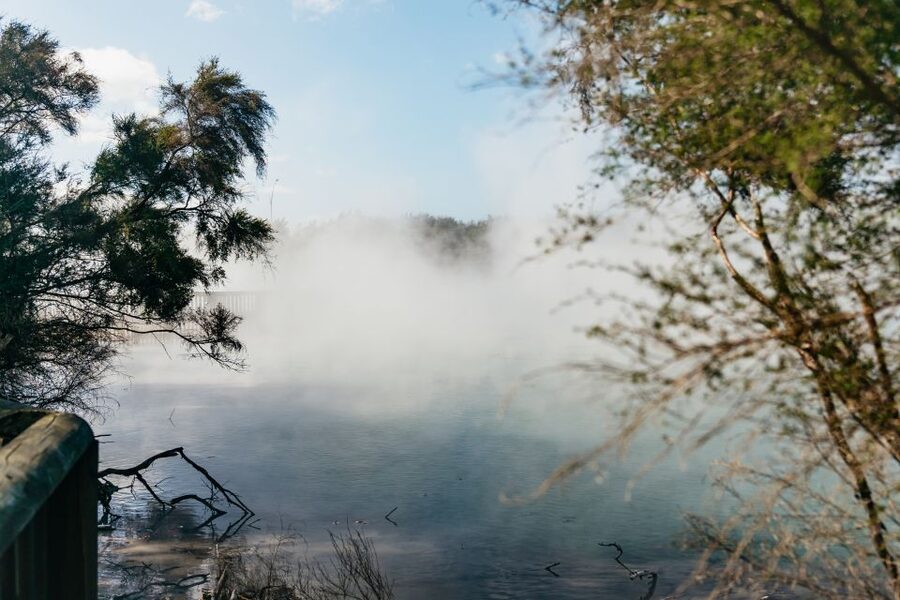
The first stop introduces you to Rotorua’s geothermal character without asking you to begin with a long walk. You visit the largest hot water lake in Rotorua, where the water itself gives you a sense of the heat below the ground.
This is a useful opening because it sets the scale. Geothermal activity is not limited to a small steaming hole or a single plume. Here, hot water collects in a large body, showing how underground heat, water, and volcanic rock interact across the region.
Your guide’s role is especially useful at this point. Without explanation, a hot lake can look like an unusual body of water. With some context, you begin to notice the signs of heat and understand why vegetation, water, and ground conditions change so sharply from one place to the next.
The stop is more about orientation than physical effort. It gives you time to look closely and ask questions before the walking sections begin.
Rainbow Mountain’s forest and coloured crater lake
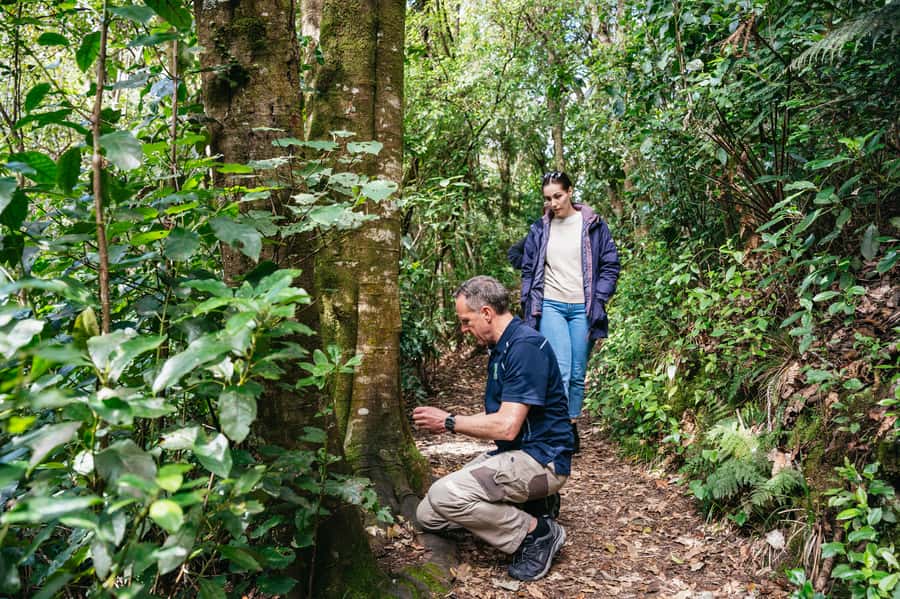
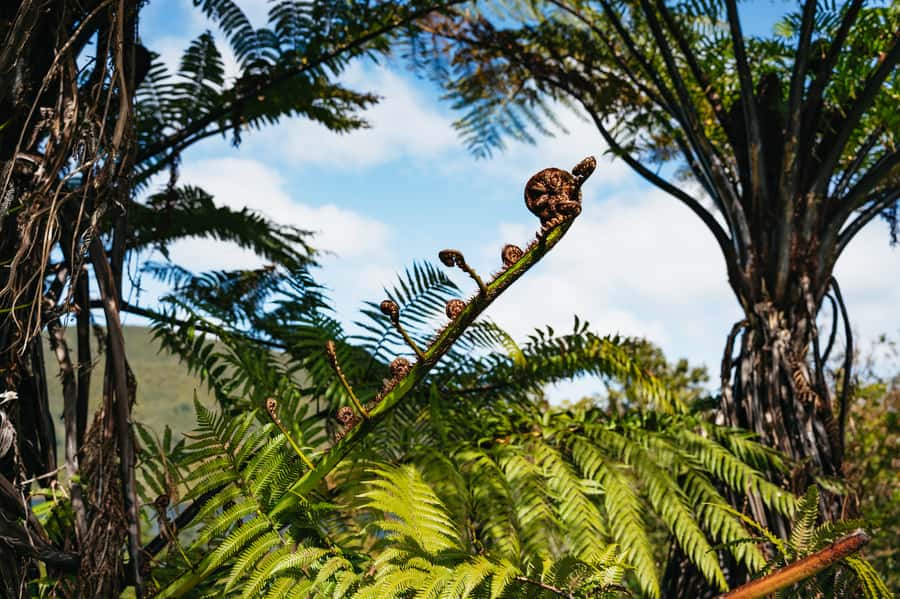
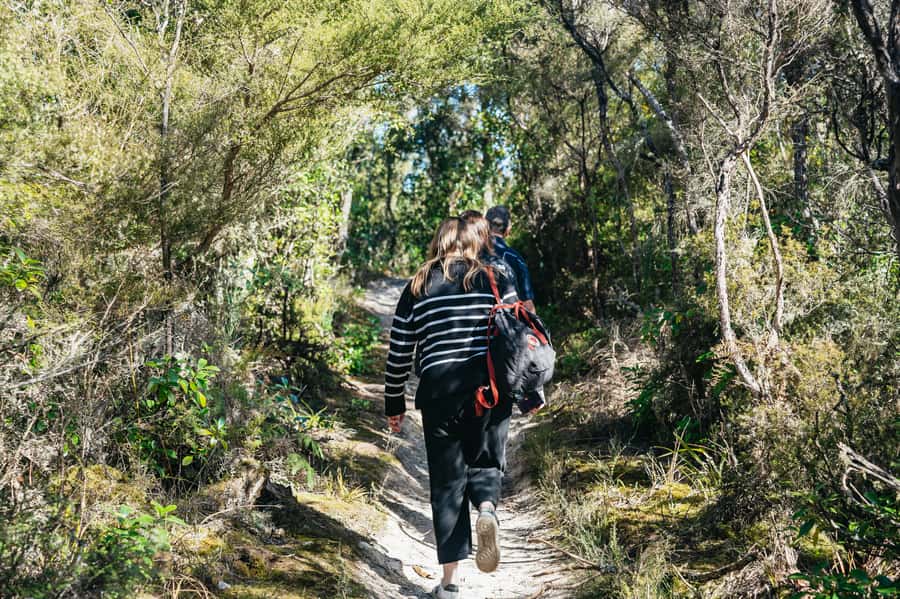
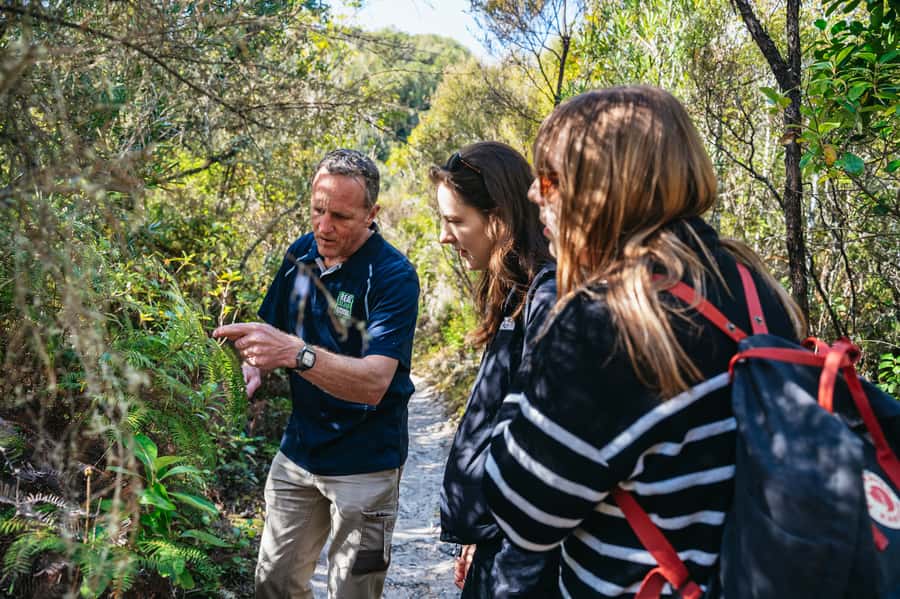
Next, you head to Rainbow Mountain. The walk passes through native forest before reaching a beautifully coloured crater lake. This section brings together two things that are easy to miss if you only look at geothermal features from a roadside viewpoint: the plant life and the ground beneath it.
The forest shows how native vegetation can grow in an area shaped by heat and mineral activity. You are not simply walking through ordinary woodland on the way to a lake. The vegetation is part of the story, and the guide can point out the unusual conditions found in this part of Rotorua.
Then the path reaches the crater lake, where colour becomes the main attraction. The exact appearance of geothermal water can change with minerals, heat, and light, so this is a stop where you should take time rather than rush through for a quick photograph.
You need a reasonable sense of balance for this walk. The tour information warns of tree roots, rocks, uneven ground, and slippery surfaces. Comfortable closed-toe shoes are essential. This is not the place for sandals with poor grip or city shoes that you would dislike getting dirty.
The walking distance across the tour can total up to two kilometres. That is manageable for many active visitors, but the surface matters as much as the distance. If you have a low fitness level, mobility impairment, or difficulty walking on rough ground, this outing is not a good match.
The region’s largest active mud pool
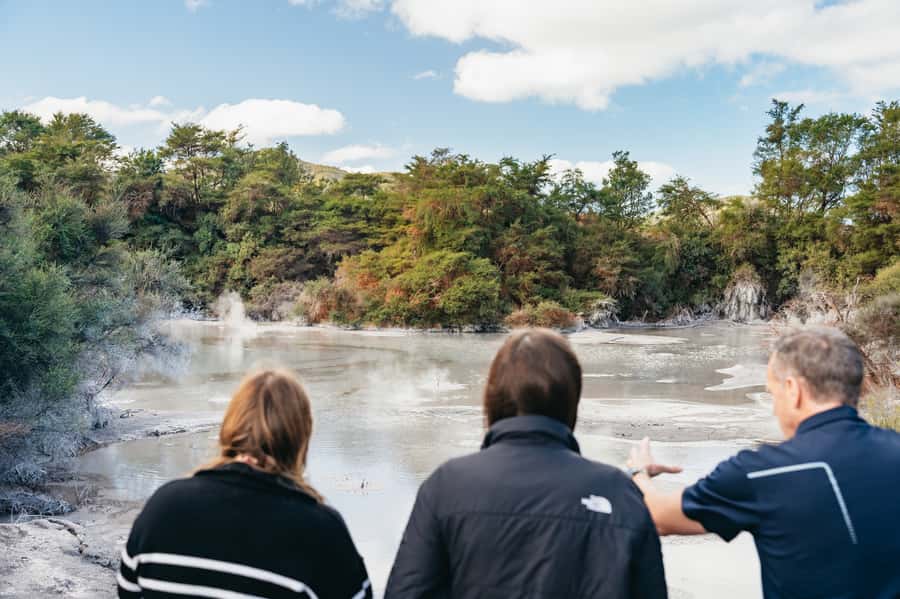
After Rainbow Mountain, a short drive brings you to a huge mud pool, described as the largest and most active in the area. This is one of the tour’s most distinctive stops because the movement is constant but not explosive.
Steam and gases rise through the thick mud. Bubbles form, swell, and break across the surface, creating a slow, irregular rhythm. The pool feels alive in a way that a still crater lake does not, but it also demands respect. You are near hot fluids and gases, not a harmless puddle.
This is where a local guide adds real value. The sights are strange enough to hold your attention, yet the explanation helps you connect the bubbling surface with the underground activity that drives it.
Stay on the formed paths and follow instructions closely. Geothermal ground can have a thin crust, and stepping away from the trail can expose you to hot fluids or dangerous gases. The risk is serious, not theatrical. Carbon dioxide and sulphide gases can cause severe injury, asphyxiation, or death in the wrong conditions.
You will want to keep your camera ready, but do not let photography pull your attention away from the path. The mud pool is a good example of why this tour is best for people who enjoy nature with a clear set of safety rules.
More Hot Springs in Rotorua:
- Wai Ariki Hot Springs and Spa Restorative Journey (2hrs)
★ 4.5 · 73 reviews - Rotorua: Lakefront Hot Springs & Spa – Luxury Māori Wellness
★ 4.8 · 58 reviews - Polynesian Spa Rotorua: Family Hot Pools and Freshwater Pool
★ 4.8 · 17 reviews - Rotorua: Wai Ariki Hot Springs & Spa 1hr Restorative Bathing
★ 4.8 · 16 reviews
Te Manaroa Spring and its boiling water
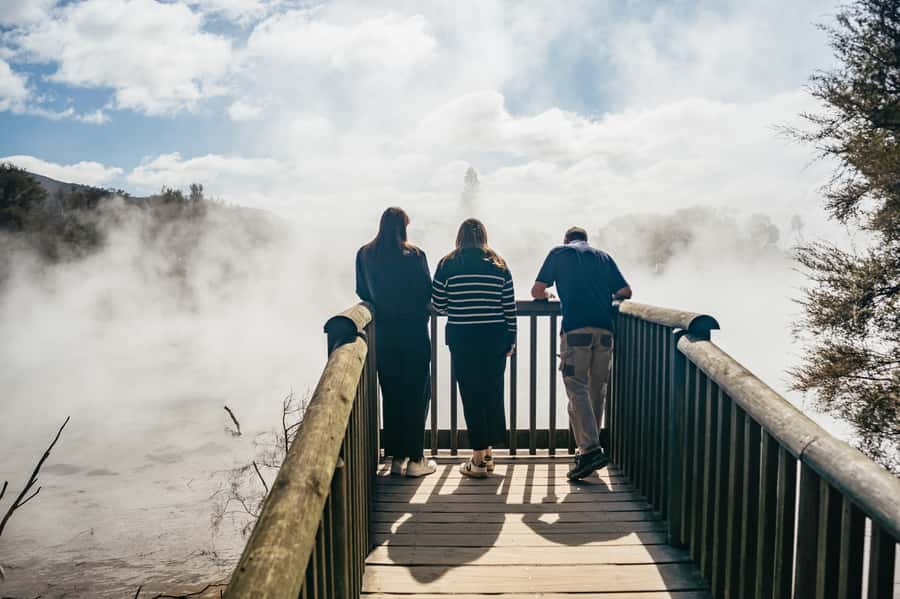
The next stop is Te Manaroa Spring, reached by a short walk. It is Rotorua’s largest hot water spring, with boiling water surging from underground and vegetation around it.
This stop feels different from the mud pool. The mud pool moves through bursts and bubbles, while the spring has a more forceful upward action. Seeing both in one outing helps you compare the forms geothermal water can take.
The surrounding vegetation also softens the setting. You are not looking at bare rock alone. Hot water and plant life exist close together, though that does not make the area safe to leave the path.
Once again, closed shoes and steady footing help. Roots, rocks, and damp surfaces can make short walks more demanding than they sound. Give yourself time, keep your hands free where possible, and listen to the guide’s instructions.
The Waikite Valley soak
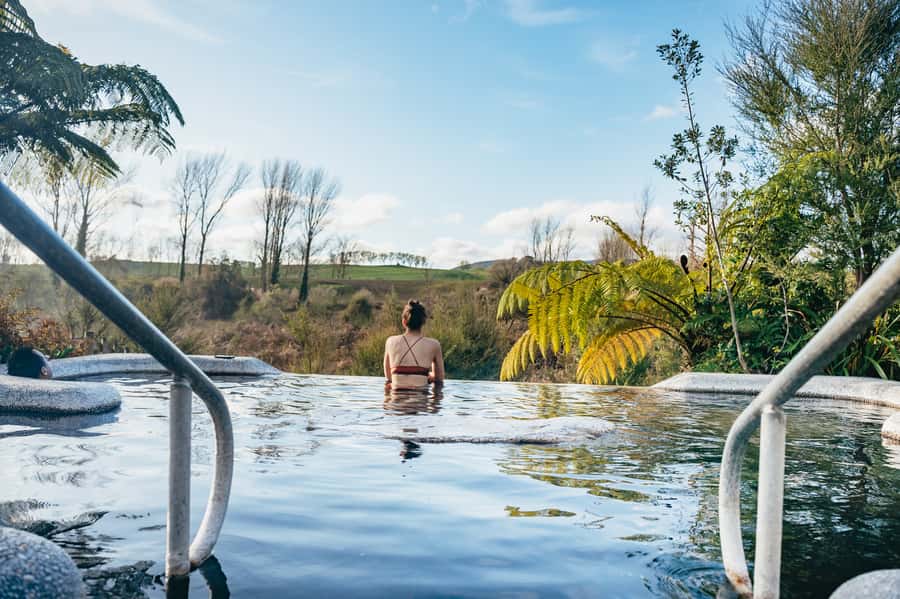
The final stop is Waikite Valley Thermal Pools, and this is more than a quick foot bath. Entry to the complex is included, so you can end the tour with a proper soak in silica-rich thermal water.
I like this finish because it changes the pace completely. The earlier stops ask you to watch, walk, and pay attention to hazards. Waikite Valley gives you time to slow down and let your legs recover.
Bring swimwear, a towel if one is required for your own plans, and comfortable clothing for after the soak. The supplied information specifically lists swimwear as something to bring. You should also keep your head above the water at all times because of the risk of contracting potentially fatal amoebic meningitis.
There is one important practical caution here. The route has not always operated exactly as planned. One past booking involved a late program change, and the Waikite Valley bathing stop could not take place. The guide still provided an informative geothermal outing, but the hot pools had been the main priority for that participant. If the soak is the single reason you want to book, confirm the current program and pool access before setting out.
What the $89 price includes
At $89 per person, this tour is priced above a simple self-guided drive between public viewpoints, but it includes several things that are hard to arrange as neatly on your own.
You receive:
- Four hours of guided touring
- Air-conditioned transportation
- An English-speaking local guide
- A small group limited to eight people
- Entry to Waikite Valley Thermal Pools
The value comes from the combination. You are not paying only for transport or only for pool admission. You are getting a route through less obvious geothermal locations, interpretation along the way, and a final soak.
Driving yourself may cost less if you already have a car and want to choose only one or two stops. But you would need to identify the locations, plan the timing, understand the access arrangements, and miss the benefit of a guide who can connect the sights. For a visitor with only half a day in Rotorua, $89 is a fair price if you want variety and do not want to handle the planning.
Food and drinks are not included, so eat beforehand or carry what you need. The tour lasts four hours, and the schedule depends on the available starting time.
The walking and safety reality
This is a small-group outing, but it is not a soft adventure with no physical demands. You may walk up to two kilometres, and the ground can include uneven surfaces, roots, rocks, and slippery sections.
You should be comfortable with:
- Walking on formed but uneven trails
- Maintaining balance near rocks and roots
- Following strict path rules
- Standing outdoors around steam and geothermal features
- Changing into swimwear for the final pool visit
The tour is not suitable for children under six, wheelchair users, people with mobility impairments, or people with a low level of fitness. Those limits are practical, not minor technicalities.
Geothermal areas require extra care. Keep to marked trails, never test the ground, and do not approach hot water beyond the approved viewing area. The tour operator uses a safety system audited to New Zealand standards, but good procedures do not remove the natural hazards. Your part is to stay alert and follow the guide.
Who will enjoy this tour most
I would choose this outing if you want to see several kinds of geothermal activity in one morning or afternoon, especially if you prefer small groups to large coach excursions.
It suits you if:
- You want less familiar geothermal locations
- You enjoy short walks rather than a single roadside stop
- You value explanations from a local guide
- You want a hot-pool visit included at the end
- You are comfortable on uneven ground
- You have only four hours available
It may not suit you if the Waikite Valley soak is non-negotiable and you cannot tolerate a possible program change. It is also a poor choice if you need step-free access or prefer a purely vehicle-based tour.
The pace appears flexible enough for personal attention. Stephen has been praised for adapting to interests and adding personal touches, and one booking went ahead even with only two participants. That suggests the small-group format can feel genuinely personal rather than simply being a smaller bus.
Booking, cancellation, and what to bring
You can cancel up to 24 hours before the tour for a full refund, and a reserve-now, pay-later option is available. Check the starting times for your date because the tour lasts four hours and availability controls the schedule.
Wear comfortable clothes and sturdy closed-toe shoes. Bring swimwear for Waikite Valley. You do not need to pack food as part of the tour, but meals and drinks are not supplied, so plan accordingly.
Allow extra care when choosing footwear. A comfortable shoe with reliable grip will help far more than a fashionable shoe with a smooth sole.
Should you book the Thermal Path Tour?
Book it if you want a compact, well-shaped introduction to Rotorua’s geothermal world, with more variety than a single attraction and a relaxing soak at the end. The strongest reasons are the small group, the unusual mix of hot lake, crater lake, mud pool, and spring, and the guide’s personal explanations.
Skip it if you need guaranteed pool access above all else, cannot manage uneven ground, or want a completely passive sightseeing ride. For most active visitors who have half a day and want to see Rotorua beyond its best-known stops, the $89 price is sensible, especially with transport, guiding, and Waikite Valley entry included.
FAQ
How long does the Thermal Path Tour last?
The tour lasts four hours.
How much does the tour cost?
The price is $89 per person.
How many people are in the group?
The group is limited to eight participants.
What language is the tour conducted in?
The live tour guide speaks English.
Is Waikite Valley Thermal Pools entry included?
Yes. Entry to Waikite Valley Thermal Pools is included in the tour price.
What should I bring?
Bring comfortable clothes, comfortable closed-toe shoes, and swimwear.
How much walking is involved?
The tour includes walks of up to two kilometres.
Is the tour suitable for wheelchair users or people with mobility impairments?
No. The tour is not suitable for wheelchair users, people with mobility impairments, or people with a low level of fitness. It is also not suitable for children under six.
Newly listed around Rotorua
- Rotorua: Lakefront Hot Springs & Spa – Luxury Māori Wellness★ 4.8 · 58 reviews
- Rotorua: Wai Ariki Hot Springs & Spa 1hr Restorative Bathing★ 4.8 · 16 reviews
- Rotorua: Secret adventure kayaking to natural hot springs★ 3.8 · 3 reviews
- Polynesian Spa Rotorua: Family Hot Pools and Freshwater Pool★ 4.8 · 17 reviews
- Polynesian Spa Rotorua: Sky View Private Pools Experience★ 4.5 · 6 reviews
- Polynesian Spa Rotorua: Lake View Private Pools Experience★ 4.4 · 11 reviews
- MITAI MAORI VILLAGE Night XP & Polynesian Spa from Auckland★ 5.0 · 3 reviews
- HELL’S GATE Mud Spa, Rotorua – Group Day Tour Ex Auckland★ 4.4 · 10 reviews
Hot Springs and Geothermal Pools, compared.
Volcanic Islands Cruise with Hot Springs Visit
Read our review →
Mount Batur Sunrise Guided Hike and Natural Hot Spring
Read our review →
Sky Lagoon Entrance Pass With 7-Step Spa Ritual
Read our review →
Tiger Cave Temple, Emerald Pool and Hot Springs Tour
Read our review →
Zakopane Tour Local Tasting, Cable Car & Hot Springs
Read our review →
Mount Batur: Private Sunrise Jeep Tour & Hot Spring
Read our review →
Mount Batur Sunrise Hike and Natural Hot Spring Option
Read our review →
Mount Batur Shared Jeep Sunrise & Hot Spring Tour
Read our review →Browse the lists this tour appears in