
Review · HIKING & TREKKING
Saturnia’s thermal waters a hike through history
Saturnia’s best feature is not only its famous hot water. It is the link between Roman engineering and a natural bath that still welcomes you today. This walk leads from Poggio Murella’s ancient cistern to the warm pools at Cascate del Mulino, with a broad view stretching from the mountains toward the sea.
I like two things in particular. First, the route gives you a reason to look beyond the bathing pools, with archaeology and local stories along the way. Second, the finish is wonderfully practical: you can step into 37°C thermal water after the walk and end about 100 metres from the car park.
The main consideration is the physical effort. You need moderate fitness for roughly two hours of walking, and beachwear plus a towel are mandatory if you want to bathe. This is not simply a quick stop at the pools.
Key points to know before booking
- The Roman cistern at Poggio Murella: Visit the Castellum Aquarum, an ancient water complex tied to Saturnia’s long bathing tradition.
- A guide-led walk with Lorenzo: The route includes history, archaeology, local traditions, and explanations that give the countryside more meaning.
- A 37°C finish at Cascate del Mulino: The walk ends at Saturnia’s famous thermal falls, where you can bathe in the warm water.
- Views from mountain to sea: Poggio Murella provides a wide viewpoint over the surrounding area and toward the distant coast.
- A small group of no more than 15: The limited size should make it easier to hear the guide and ask questions.
- Bring your own bathing kit: Swimwear and towels are not included, and they are required for the thermal-water portion.
Why this Saturnia walk is more than a visit to hot springs
Saturnia is easy to reduce to a photograph: pale stone pools, warm water, and a cascade that has become one of Tuscany’s most recognizable sights. This experience gives you a different way in. You walk through the area first, learn how people used its water, and only then settle into the pools.
That order matters. The visit is not built around a long lecture followed by a rushed photo stop. About two hours are spent walking toward Poggio Murella, followed by about an hour at Cascate del Mulino. The total time is listed as roughly two to three hours, so you get a modest outing rather than a full-day commitment.
I like this format for anyone who wants more context without giving up the pleasure of bathing. The Roman remains are not a separate museum visit. They are part of the route, placed in the countryside where the water system once mattered to daily life and public bathing.
The experience is led by a fully licensed guide. Lorenzo is named as the guide associated with the tour, and the route’s explanations cover history, archaeology, and local customs. The strongest praise centers on his ability to explain the identity of the places along the way, not just point out objects and dates.
That distinction is useful. You are not only being shown an old cistern. You are being helped to understand why the water, the settlement, and the view belong together.
More walks and climbs around Italy:
- Bali: Mount Batur Sunrise Guided Hike and Natural Hot Spring
★ 4.8 · 9,284 reviews - Mount Batur Sunrise Hike and Natural Hot Spring Option
★ 5.0 · 1,927 reviews - Private Tour Mount Batur Sunrise Trekking and Natural Hot Spring
★ 5.0 · 431 reviews
Starting at SP10 and walking toward Poggio Murella
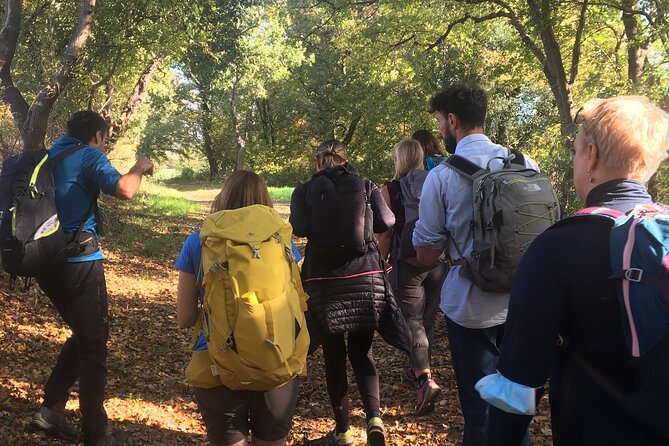
The meeting point is on SP10 in the Manciano area of Tuscany. From there, the route heads toward Poggio Murella, a small village overlooking Saturnia’s baths. The first section takes about two hours, so you should plan for a proper walk rather than a gentle stroll between nearby sights.
The exact trail conditions are not specified, so sensible footwear is important. The tour asks you to have a moderate level of physical fitness, which is the clearest indication that the route may include uneven ground, changes in elevation, or a sustained walking pace. I would not book this as a purely relaxing spa outing if walking is difficult for you.
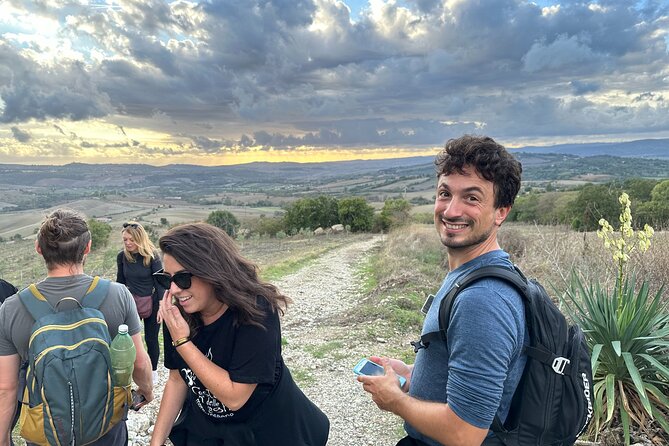
The reward is the setting. Poggio Murella offers a viewpoint that reaches from the mountains toward the sea. That gives you a useful sense of place before you reach the water. Saturnia is not just an isolated thermal site. It belongs to a wider stretch of southern Tuscany, with settlements, hills, and distant horizons all tied into the experience.
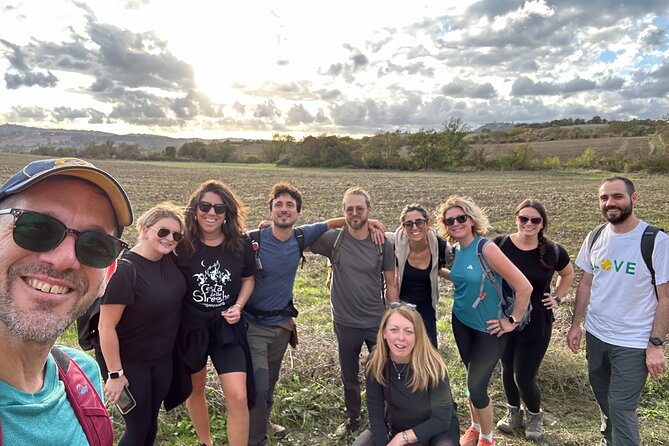
Small groups help here. With a maximum of 15 people, you should have a reasonable chance to hear Lorenzo’s explanations and pause for questions. It also keeps the walk from feeling like a large procession through the countryside.
The route is most appealing to people who like to walk at a purposeful pace and stop for stories. If you mainly want to soak, you could spend your time and money more simply at the thermal pools. If you want to know what you are looking at, this opening section is the main reason to book.
The Castellum Aquarum and Saturnia’s Roman water system
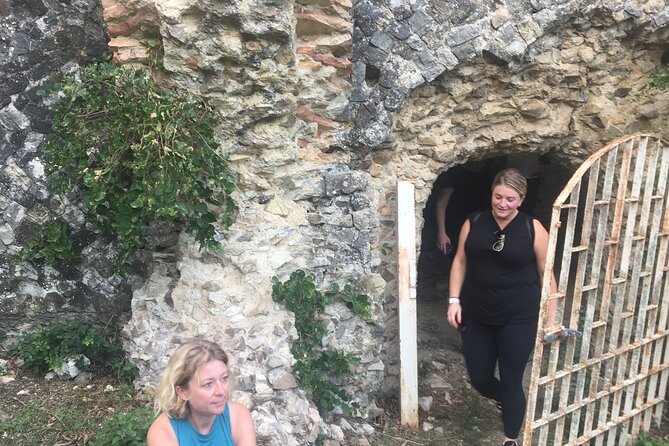
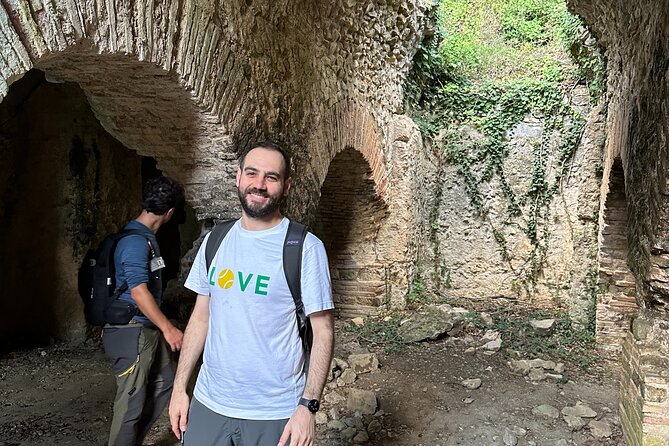
The archaeological centerpiece is an ancient Roman cistern at Poggio Murella, referred to as the Castellum Aquarum. The name identifies it as a water-distribution structure, and its presence adds real substance to the walk.
You should not expect a large Roman monument with rows of intact columns. The appeal is different. This is an ancient water complex connected to the practical work of collecting, managing, and directing water. At Saturnia, that is especially meaningful because the thermal spring remains the central feature of local life and tourism.
The cistern helps explain that people have valued these waters for more than two thousand years. The bathing tradition is not a modern wellness trend placed onto an old setting. It has a long human history, and the Roman remains give that history a physical point of reference.
This is also where Lorenzo’s role matters most. A ruin can be easy to pass without context. With a guide, you can connect the structure to Roman engineering, the nearby village, and the thermal waters you will use later. The experience is strongest when the archaeology is treated as part of the area’s identity rather than as an isolated stop.
Allow some patience here. The visit works because you have walked to the cistern and reached it with the surrounding view in mind. You are not simply checking off an ancient site. You are seeing how a place built around water developed over time.
Admission for the stops is listed as free, while the licensed guide is included. That makes the archaeological portion a useful part of the price rather than an extra charge added along the way.
Looking from mountain to sea at Poggio Murella
The viewpoint at Poggio Murella is one of the tour’s quieter pleasures. The description emphasizes a horizon stretching from mountain to sea, which means you get more than a close view of Saturnia’s pools.
I like stops such as this because they slow the route down. A thermal visit can become very focused on getting into the water, taking a photograph, and leaving. From above, you can understand the position of the baths within the wider Tuscan countryside.
The view also gives the guide room to explain local geography and traditions. The supplied comments about Lorenzo highlight his focus on helping people move from passive sightseeing to a fuller understanding of the area. In plain terms, he is expected to explain what you are seeing and why it matters.
The viewpoint will appeal most to people who enjoy a walk with pauses. It may be less satisfying if you want constant movement or a packed list of major monuments. This is a small-scale experience, built around the character of the place rather than a long series of formal attractions.
Because the tour lasts only two to three hours, you will not spend an entire afternoon at the viewpoint. The stop is part of a compact route that uses the view to connect Poggio Murella, the Roman cistern, and the baths below.
More history on the itinerary around Italy:
- Istanbul Gedikpasa Historical Turkish Bath with Privacy Option
★ 5.0 · 1,285 reviews - Istanbul: Acemoglu Historical Turkish Bath w/Private Options
★ 4.6 · 1,190 reviews - Istanbul: Gedikpasa Historical Hammam with Privacy Add-On
★ 4.8 · 918 reviews - Acemoglu Historical Turkish Bath with Private Options
★ 4.5 · 150 reviews
Ending at the 37°C Cascate del Mulino
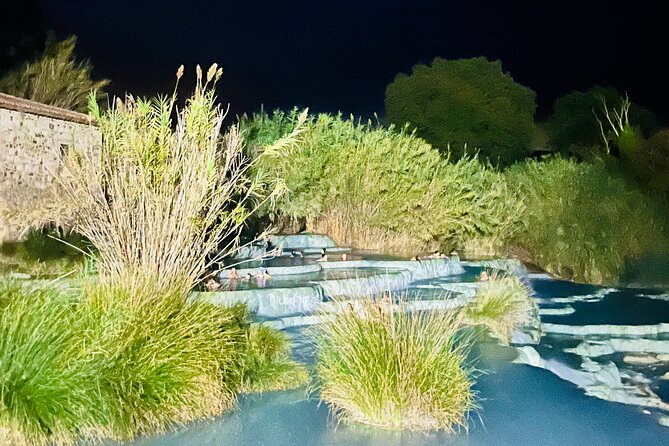
The final stop is Cascate del Mulino on Strada Vicinale Molino del Bagno. This is where the historical walk turns into a bathing experience. The water is about 37°C, close to body temperature, and is intended to soothe tired muscles after the route.
You will need swimwear and a towel. They are not included, and bathing is not practical without them. Pack those items before leaving your car, since the walk ends at the water and you will want them ready.
The thermal pools are the scenic payoff. Cascate del Mulino is described as one of Saturnia’s most attractive viewpoints, with warm water moving through naturally formed pools. The experience is less formal than entering a paid spa facility. The emphasis is on the open-air setting and the pleasure of sitting in naturally warm water.
An hour is allocated here. That is enough time to bathe and relax, but it is not an unlimited spa session. If you are hoping to spend several hours in the water, this tour will feel short. If you like the idea of earning a soak through a historical walk, the timing is well judged.
The end point is about 100 metres from the parking area where you left the car. That is a helpful detail. You do not have to arrange a separate pickup or repeat the entire route after bathing. The walk finishes close to your vehicle, which makes the practical side much easier.
Use care with your belongings, and bring only what you need for the water. The supplied information does not specify changing facilities, lockers, or towel service, so you should not assume those are provided.
Is $102.33 a fair price for two to three hours?
At $102.33 per person, this is not the cheapest way to see Saturnia’s thermal water. The pools themselves and the Roman sites are listed with no admission charge, so you are mainly paying for the licensed guide, the planned route, and the interpretation.
That value depends on what you want. If you only need directions to Cascate del Mulino, the price will feel high. You can reach the thermal area without paying for a guided historical walk. If you want someone to connect the Roman cistern, the village, the viewpoint, and the baths, the fee becomes easier to justify.
The small maximum of 15 helps. A private guide would cost more, while a large coach group would usually offer less personal contact. This sits between those two options. You get a structured route and a guide without committing to a private tour.
The price also includes an experience that would be difficult to reproduce by simply arriving at the pools. You would still see the water, but you might miss the Castellum Aquarum and the explanation of how Saturnia’s thermal identity developed.
Group discounts are available, which may improve the value for people booking together. Since the bathing items are not included, budget for your own swimwear and towel, though these are ordinary packing costs rather than tour supplements.
Who will enjoy this experience most?
I would recommend this walk to people who enjoy three things at once: history, moderate outdoor activity, and a relaxing finish. It suits couples, friends, and small groups who want more substance than a quick stop at the thermal falls.
It is also a good fit for anyone interested in archaeology but not keen on spending a full day in formal museums. The Roman cistern is part of an active route, and the guide’s local explanations keep the focus on the place itself.
You should think twice if you have limited mobility or dislike uneven walking. The required fitness level is moderate, and the main first stop takes about two hours to reach. Service animals are allowed, but the available information does not describe trail surfaces or specific accessibility arrangements.
Families and mixed-interest groups may find the structure useful because the walk and the bath offer different kinds of appeal. Still, children and adults alike need to be prepared for the walking portion before the water appears.
This is not the right choice if your priority is luxury. The price pays for guiding and interpretation, not a resort setting, private changing room, or managed spa service. You are choosing a public thermal setting with a historical walk attached.
Booking details that affect your day
The experience is often booked about 55 days ahead, so advance planning may be sensible, especially if you have a fixed Tuscany schedule. Confirmation is received at booking, and mobile tickets are supported.
Free cancellation is available up to 24 hours before the local start time. Cancellations made less than 24 hours ahead are not refunded, and changes inside that window are not accepted. The walk depends on good weather. If poor weather cancels it, you are offered another date or a full refund.
The start point is SP10, 58014 Manciano GR, Italy. The finish is Cascate del Mulino, Strada Vicinale Molino del Bagno, 9/a, 58014 Manciano GR, Italy. Since you return to within about 100 metres of the parked car, driving is the simplest arrangement based on the information provided.
Plan your clothing around both parts of the day. Wear comfortable walking clothes, carry swimwear and a towel, and do not leave the bathing kit in the vehicle if the route does not return to the exact starting point before the final stop.
Should you book Saturnia’s historical thermal walk?
Book it if you want Saturnia to be more than a hot-water photo stop. The Roman cistern, Poggio Murella viewpoint, and Lorenzo’s explanations give the area a story, while the 37°C pools provide a satisfying finish.
Skip it if you only want the shortest route to the baths, need a fully accessible outing, or expect a polished spa with changing services. At $102.33, the value comes from the guide and the complete experience, not from admission to the sites.
For people with moderate fitness who enjoy archaeology, local traditions, and an outdoor soak, this is a well-shaped half-day activity. Pack your towel, accept the walking, and you get a thoughtful way to understand Saturnia before you bathe in it.
FAQ
How long does the Saturnia thermal-waters experience last?
The experience lasts approximately two to three hours. About two hours are spent walking toward Poggio Murella, followed by about one hour at Cascate del Mulino.
What is visited during the walk?
The route visits Poggio Murella, an ancient Roman water cistern known as the Castellum Aquarum, and a viewpoint with views from the mountains toward the sea. It finishes at Cascate del Mulino.
Can I bathe in the thermal water?
Yes. The tour ends at Cascate del Mulino, where you can bathe in water at about 37°C. Beachwear and a towel are mandatory if you want to enter the water.
Is a guide included?
Yes. A fully licensed guide is included. Lorenzo is the named guide associated with the experience.
How many people can join the group?
The activity has a maximum of 15 people.
What happens if bad weather cancels the tour?
If the experience is canceled because of poor weather, you will be offered a different date or a full refund. You can also cancel up to 24 hours before the start time for a full refund.
Newly listed around Italy
- Saturnia Thermal & Wellness from Civitavecchia Port★ 5.0 · 8 reviews
- Favignana inflatable boat tour, wine tasting, snorkeling and relaxation★ 5.0 · 51 reviews
- Thermal Baths natural hot spring and Greek Temple of Segesta★ 5.0 · 34 reviews
- Exclusive Wellness Path★ 5.0 · 21 reviews
- Wellbeing landscapes: Fonteverde Spa in San Casciano dei Bagni★ 5.0 · 7 reviews
- Full day experience | Umbria wine tasting and SPA relax★ 5.0 · 2 reviews
- Saturnia Thermal Spring Small Group Day Trip from Rome with Lunch★ 5.0 · 13 reviews
- Private Tibetan Spa Experience with Massage in Rome★ 4.5 · 11 reviews
Hiking & Trekking, compared.
Mount Batur Sunrise Guided Hike and Natural Hot Spring
Read our review →
Mount Batur Sunrise Hike and Natural Hot Spring Option
Read our review →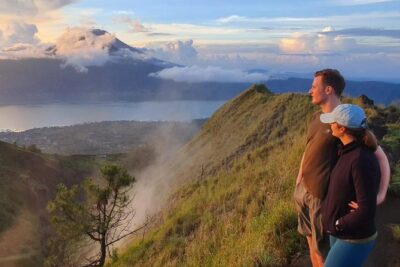
Private Tour Mount Batur Sunrise Trekking and Natural Hot Spring
Read our review →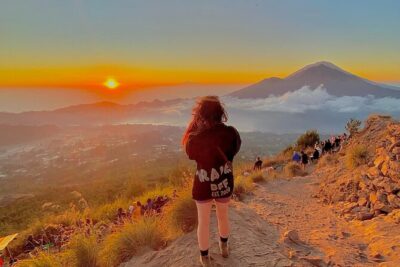
Mount Batur Sunrise Hike, Breakfast & Hot Spring
Read our review →
National Park Hike & Finnish Smoke Sauna Experience with Campfire Lunch
Read our review →
Mount Batur Sunrise Hike with Breakfast & Hot Spring
Read our review →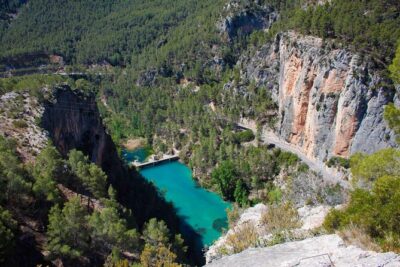
Montanejos Hiking Tour & Thermal Pools from Valencia
Read our review →
Landmannalaugar Hike and Hot Springs from Reykjavik & Hella
Read our review →Browse the lists this tour appears in