Review · TOURS
Tskhaltubo Old Soviet Spa Tour
Tskhaltubo is not a polished spa town frozen in its Soviet heyday. It is a place of grand, fading sanatoriums, warm mineral springs, and long empty halls where the scale of the old resort still surprises you. I like this tour for its clear historical context and for the chance to see several buildings that you would be unlikely to locate and understand on your own. I also like guide Akaki’s personal touch, especially his care with safety and his eye for strong photo angles.
The main caution is communication. One booking went badly because the start time changed without proper notice and a tour advertised as private became a group outing. Confirm the 2 p.m. start, pickup details, and private format before setting off, particularly if you are booking for one person.
Key points to know before booking
- Tskhaltubo’s Soviet spa past: Learn why Moscow trains once brought visitors to this Georgian resort every day.
- Several former sanatoriums: The buildings differ in design and former purpose, giving the tour more variety than a single ruin visit.
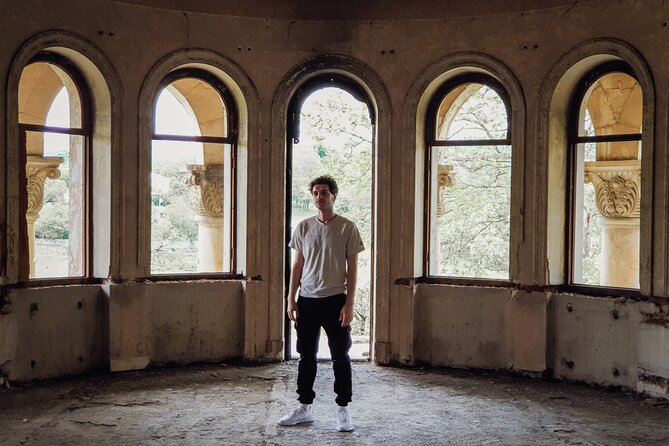
- Akaki as guide: He provides local history, helps with photographs, and pays attention to safety inside the old complexes.
- A 3.5-hour afternoon outing: The tour begins at 2 p.m. and returns to the meeting point in Kutaisi.
- Private-tour details need confirmation: The activity is presented as private, but one booking was handled as a group.
- $78.27 for one person: The price makes the most sense if you value transport, interpretation, and access to several sites rather than a quick look at one abandoned building.
Why Tskhaltubo is worth the short trip from Kutaisi
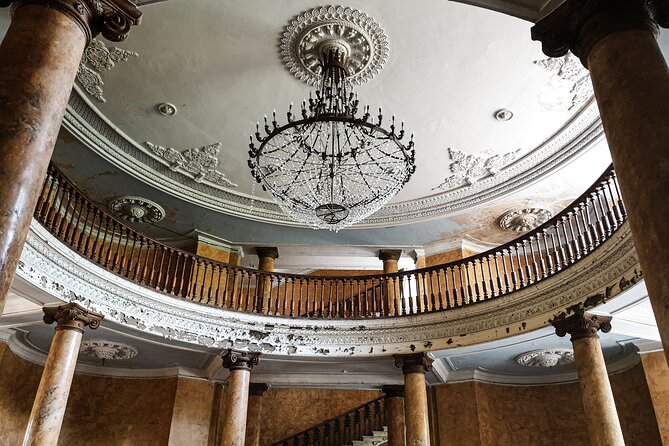
Tskhaltubo gives you a different window on Georgia. Kutaisi is known for churches, markets, and nearby cave sites, but Tskhaltubo tells the story of a large state-run health resort built around mineral water. Its appeal is not just the worn concrete and peeling interiors. The town shows how medicine, architecture, and Soviet holiday culture once worked together.
The springs had a reputation long before the Soviet Union. Foreign researchers wrote about their healing qualities from the 18th century onward. In 1920, the territory became state property and was developed as a balneology resort. Balneotherapy means treating medical conditions through bathing in mineral-enriched water, and Tskhaltubo’s springs became the center of that work.
By the 1950s, the resort had become an important Soviet spa destination. Construction on its 18 sanatoriums had begun in the 1920s, and by the 1980s trains arrived daily from Moscow. That detail helps you picture the resort at its busiest. These were not small village bathhouses. They were part of a large public health and holiday system serving people from across the Soviet Union.
I find that context essential. Without it, an abandoned sanatorium can look like a dramatic but empty shell. With it, the broad plans, formal entrances, and oversized public spaces begin to make sense. You are looking at the remains of a place built to receive large numbers of patients and holidaymakers, not merely an old hotel.
More ways to unwind around the world:
- Budapest: Széchenyi Spa Day Ticket with Optional Upgrades
★ 4.3 · 23,911 reviews - Santorini: Volcanic Islands Cruise with Hot Springs Visit
★ 4.4 · 10,869 reviews - Krakow–Zakopane: Cable Car, Chocholow Baths, Cheese & Vodka
★ 5.0 · 10,720 reviews
The mineral springs behind the resort
The water is one of the most interesting parts of Tskhaltubo’s story. It emerges at a comfortable bathing temperature, so it can be transferred directly from the springs to the baths without additional heating or cooling. The water was used in treatments for problems involving the limbs, peripheral nervous system, skin, heart, and blood vessels.
The tour information describes these medical claims as part of Tskhaltubo’s spa tradition. You should treat them as historical context, not as medical advice or a promise of treatment today. The point of the visit is to understand why the resort was built and why it mattered, not to arrive expecting a working health cure.
This natural feature also explains the town’s unusual scale. Once the springs gained a reputation, the resort needed accommodation, treatment facilities, dining areas, and public spaces. The buildings you see are the physical result of that system. The water is the starting point for the whole story.
What you see during the three-and-a-half-hour visit
The listed itinerary centers on Tskhaltubo rather than a long series of unrelated attractions. Over about three hours, you visit several former sanatoriums and spa complexes. Each has a different appearance and former function, so the experience is not simply a repeat of one ruined corridor after another.
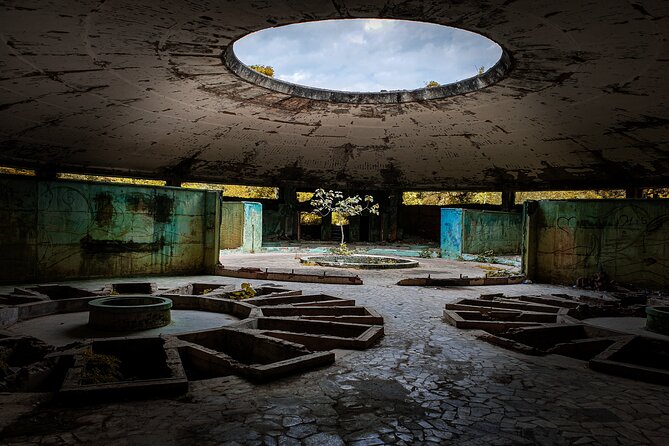
You should expect an exploratory visit rather than a polished museum tour. The old buildings are defunct, and the appeal comes from seeing their remaining architecture in place. Details from the past may survive in the form of large halls, decorative elements, institutional layouts, or traces of the resort’s former purpose. The supplied information does not promise restored interiors or a formal exhibit, so come prepared for decay and incomplete spaces.
That difference matters. If you want clean floors, signs, and a carefully preserved historic site, this will not fit. If you enjoy reading a place through its architecture and asking how it once functioned, the visit has much more to offer.
Akaki’s role is important here. He can explain the Soviet background as you move between the complexes, rather than leaving you to guess what each building was for. The strongest praise for the experience centers on his warmth, preparation, and broad understanding of Soviet-era history. He is also described as attentive to safety inside the buildings, a practical quality that matters when visiting abandoned structures.
Why the guide makes a difference
I would not treat this as a simple ruin photography outing. The historical explanation is a major part of the value. Akaki helps connect Tskhaltubo’s buildings to the wider Soviet resort system, including the daily Moscow trains and the state role in developing the springs.
He also adapts his explanations to the group. One particularly useful feature is his help with photo positions. The old sanatoriums are visually striking, but good images depend on angles, scale, and knowing where you can safely stand. A guide who knows the buildings can save you time and keep you from making a careless choice inside an unstable or unfamiliar space.
The personal format can make the tour more useful for people with specific interests. You might want to ask about Soviet architecture, health resorts, post-Soviet decline, or the way the town changed after its peak. A private group should have more room for those questions than a fixed, large sightseeing party.
Still, confirm that private format in advance. The activity is described as private, but one person was told shortly before the scheduled visit that four additional people would join. That same booking also involved a time mix-up and a complaint about the listed price. This appears to be a serious service problem rather than the normal experience, since other accounts describe punctual pickup and attentive guiding, but it is too specific to ignore.
Same place, a different hour on the table:
- Bali: Mount Batur Sunrise Guided Hike and Natural Hot Spring
★ 4.8 · 9,284 reviews - Reykjavik: Sky Lagoon Entrance Pass With 7-Step Spa Ritual
★ 4.8 · 6,166 reviews - Krakow: Zakopane, Thermal Springs, Cable Car, Local Tasting
★ 4.8 · 5,419 reviews - Chiang Mai: Chiang Rai Temples, Karen Tribe and Hot Springs
★ 4.7 · 5,401 reviews
Timing, pickup, and the practical shape of the afternoon
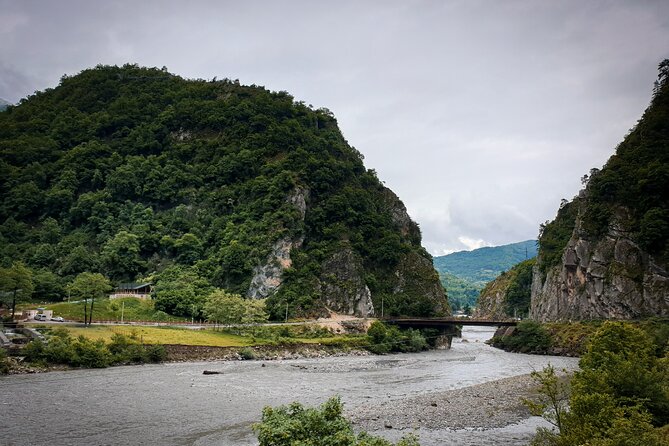
The stated start time is 2 p.m., and the total duration is about three hours and 30 minutes. The meeting point is Free Walking Tour Kutaisi at Gelati Kutaisi in Kutaisi. The activity ends back at that meeting point.
Pickup is offered, which can simplify the start, especially if you are staying somewhere in Kutaisi and do not want to sort out local transport before an afternoon excursion. The information also places the meeting point near public transportation. Since the exact pickup arrangement can matter, I would confirm it when you book rather than assume the guide will collect you from your accommodation.
The schedule is a good fit for a day when you have already explored Kutaisi in the morning. It does not require a full-day commitment, and the return to the starting point makes it easier to plan dinner or another evening activity. At the same time, three and a half hours is long enough for the buildings and their history to receive proper attention.
You need a moderate level of physical fitness. This is not presented as a fully accessible, level-ground attraction, and the abandoned setting may involve uneven or awkward areas. The supplied details do not specify stairs, surfaces, or accessibility arrangements, so ask before booking if mobility is a concern.
The experience also requires good weather. If poor conditions force a cancellation, you are offered another date or a full refund. That policy is useful, but it means you should leave some flexibility in your Kutaisi schedule if Tskhaltubo is important to you.
Is $78.27 a fair price?
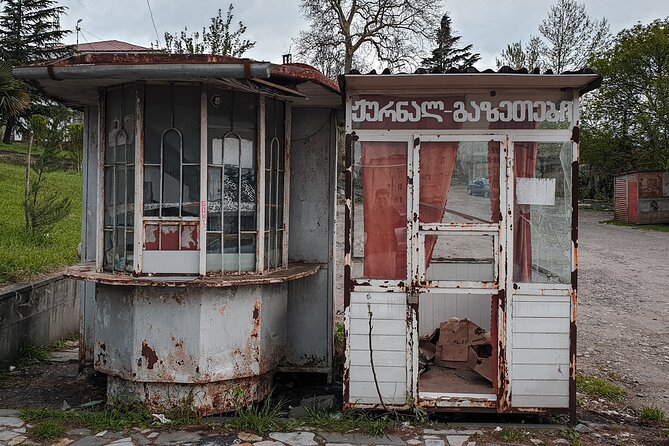
At $78.27 per person, this is not the cheapest way to spend an afternoon around Kutaisi. The value depends on what you want from the visit. You are paying for a guided experience lasting roughly three and a half hours, a route through several former sanatoriums, historical interpretation, and the convenience of offered pickup.
I think the price is easier to justify for a private booking or a small group that wants to ask questions and take photographs at its own pace. It is harder to justify if you only want to see one abandoned building from the outside or if you are comfortable researching Tskhaltubo independently.
The free admission noted for the Tskhaltubo stop does not mean the tour itself is free. It means there is no separate entry charge listed for that stop. Your payment goes toward the guide service and the organized outing rather than a museum ticket.
The price also makes group size important. If the booking is truly private, the cost buys a more focused experience. If the operator adds other people, the value changes. I would send a short message before the day of the tour asking three direct questions: Is the booking private, is the start time 2 p.m., and is pickup included for my location? Clear answers remove the biggest uncertainty.
Who will enjoy this experience most
I would recommend this tour to you if you like recent history, architecture, photography, and places that have not been polished for easy sightseeing. It should also suit anyone curious about the Soviet Union’s public health system and the role of spa resorts in everyday life.
Fans of post-apocalyptic film and television may enjoy the atmosphere, but the experience is more than a backdrop for photographs. The buildings are tied to real medical and social history. You get more from them if you take time to understand the people and institutions they once served.
This is also a good choice if you want a local guide rather than a self-guided visit. The abandoned complexes are not presented as a standard city attraction with a clear route and explanatory signs. Akaki’s explanations and sense of safe viewing points can make the difference between a thoughtful visit and a confusing one.
I would hesitate if you dislike rough conditions, need guaranteed accessibility details, or want a conventional spa treatment. The tour is about former Soviet sanatoriums and their history. It is not described as a current bathing experience, and the old buildings are not presented as restored facilities.
Booking details and cancellation terms
Confirmation is provided at booking, and the activity is offered in English with a mobile ticket. Free cancellation is available if you cancel at least 24 hours before the scheduled start time. Cancellations or changes made inside that 24-hour window are not refunded.
The tour may also be canceled if the minimum number of participants is not reached. In that case, you are offered a different date or experience, or a full refund. Keep the local start time in mind when calculating the cancellation deadline.
Because one booking involved poor communication, I would save the meeting details and send a confirmation message shortly before the outing. That is not a substitute for reliable planning by the operator, but it is a sensible precaution for an activity with a fixed afternoon start.
Should you book the Tskhaltubo Old Soviet Spa Tour?
Book it if you want the story behind Tskhaltubo, not just photographs of abandoned buildings. The combination of several sanatoriums, Soviet spa history, and Akaki’s guidance gives the afternoon real substance. His attention to safety and photography adds useful value, especially for a private group.
Before paying, confirm the start time, pickup, and private status in writing. If those details are settled, I think this is one of the more distinctive outings you can make from Kutaisi. If you prefer restored attractions, modern comfort, or a guaranteed low price for a solo outing, you may find the cost harder to defend.
FAQ
Where does the tour start?
The tour starts at Free Walking Tour Kutaisi, Gelati Kutaisi, Kutaisi 4600, Georgia. The stated start time is 2 p.m., and the activity ends back at the meeting point.
How long does the Tskhaltubo tour last?
The experience lasts approximately three hours and 30 minutes, with about three hours listed for the Tskhaltubo visit itself.
Is pickup available?
Yes, pickup is offered. Confirm the exact pickup arrangement and location when booking.
Is the tour private?
The activity is advertised as a private tour for your group only. However, one booking was changed into a group outing, so confirm the private format before the tour date.
What language is the tour offered in?
The tour is offered in English.
Can I cancel for a full refund?
Yes. You can cancel for a full refund up to 24 hours before the experience start time. Poor-weather cancellations and cancellations caused by failure to meet the minimum number of participants also provide the choice of another date or experience, or a full refund.
Newly listed around the world
- ATV & Bamboo Rafting With Limestone Foot Massage.★ 5.0 · 14 reviews
- Bamboo Rafting and Limestone Foot Massage with Ricks Cafe Private Tour★ 5.0 · 5 reviews
- Bamboo Rafting Tour with Limestone Foot Massage in Montego Bay★ 5.0 · 23 reviews
- Private Bamboo River Rafting & Foot Massage from Montego Bay★ 5.0 · 24 reviews
- Bamboo River Rafting Limestone Foot Massage & Bottle of Rum Punch★ 5.0 · 22 reviews
- Jamaica Bamboo Rafting Tour Limestone Foot Massage★ 5.0 · 37 reviews
- Lethe River Bamboo Rafting & Limestone Foot Massage Experience★ 5.0 · 16 reviews
- Montego Bay Bamboo River Rafting and Limestone Massage★ 3.5 · 3 reviews
Tours, compared.
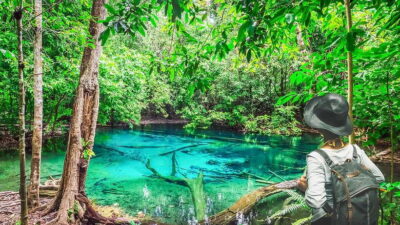
Tiger Cave Temple, Emerald Pool and Hot Springs Tour
Read our review →
Zakopane Tour Local Tasting, Cable Car & Hot Springs
Read our review →
Mount Batur: Private Sunrise Jeep Tour & Hot Spring
Read our review →

Mount Batur Shared Jeep Sunrise & Hot Spring Tour
Read our review →
Mount Batur Sunrise Jeep Tour with Optional Activities
Read our review →
Santorini Caldera Cruise Tour (Volcano, Hot Springs, Thirassia)
Read our review →