
Review · THERMAL BATHS AND SPAS
National Roman Museum and Diocletian Thermal Baths Walking Tour
Rome’s ancient art is often overshadowed by the Colosseum and Forum. That is a shame. At Palazzo Massimo alle Terme, you get close to some of the city’s finest Roman statues, mosaics, frescoes, coins, and jewelry without fighting through a packed museum. The tour then can continue to the enormous Baths of Diocletian, where Michelangelo reshaped part of the old bathing complex into a church.
I like the skip-the-line entry and the calm pace of a private tour. I also like the way a good guide connects an object in the museum to daily Roman life, art, and architecture. Guides named Matteo, Mattia, Serena, and Damiano received especially strong praise for their clear English and lively explanations. The main caution is the price, $323.21 per person, and one review reported a late start and a tour that felt too short.
Key points to know before booking
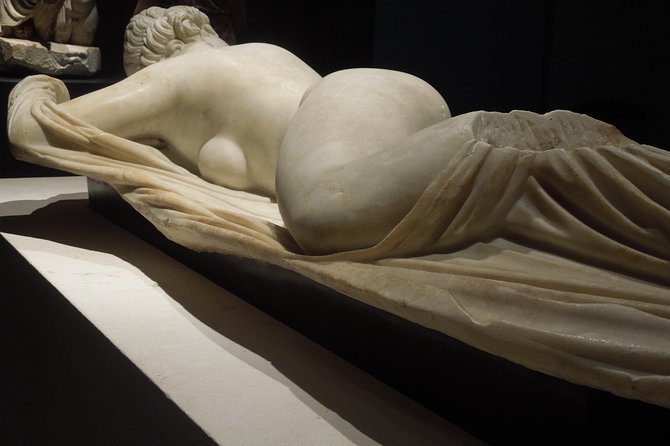
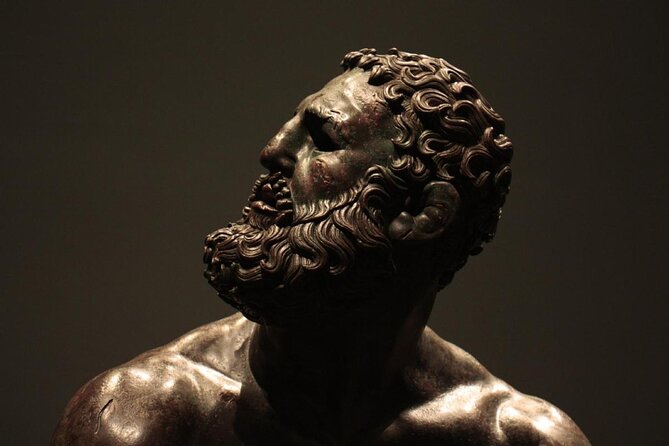
- Palazzo Massimo is the real prize: See the Boxer at Rest, Discus Thrower, Sleeping Hermaphrodite, Roman coins, jewelry, mosaics, and frescoes.
- The Baths of Diocletian add scale: The ancient complex could hold up to 3,000 people and included gyms, libraries, and a swimming pool.
- A private guide makes the difference: Your group receives direct attention, with no strangers shaping the pace or questions.
- Michelangelo appears in an unexpected place: Basilica of St. Mary of the Angels occupies part of the former bath complex.
- The museum is usually a peaceful stop: The collection is often much quieter than Rome’s headline sights.
- The price demands interest in Roman art: At $323.21 per person, this is best for visitors who want guided depth, not a quick look at statues.
Why Palazzo Massimo deserves time in Rome
Palazzo Massimo alle Terme holds one of Rome’s most important collections of classical art. Its four floors trace Roman artistic culture from the second century BC through the fifth century AD, giving you a useful indoor guide to the civilization you later see in ruins around the city.
I especially like this order of sightseeing. Roman ruins can leave you guessing about color, decoration, furniture, and everyday life. Here, you see the art first: painted rooms, patterned floors, portraits, coins, precious objects, and sculpture. The ancient world becomes less like a pile of weathered stone and more like a lived-in society.
The museum is only a few steps from Republic Square, so it fits neatly into a day near Termini Station. You meet at the Palazzo Massimo ticket office on Largo di Villa Peretti, 2. The guide handles the skip-the-line admission, which matters when a queue forms outside and you have a tight Rome schedule.
More Thermal Baths in Italy
- Chianciano Terme: Theia Thermal Pools Entrance Ticket
★ 4.4 · 185 reviews - Merano: Terme Merano Pools and Sauna Entry Ticket
★ 4.5 · 133 reviews - Milan: De Montel Thermal Bath Entrance Ticket
★ 4.6 · 89 reviews
The first hour: Roman art at Palazzo Massimo
The museum stop lasts about one hour. That is enough for a focused route through the best-known rooms, but not enough to inspect every gallery at length. If you enjoy taking photographs or reading labels, tell your guide early so the pace can be adjusted.
The statue highlights include the Boxer at Rest, a powerful bronze figure that feels more human than idealized. The battered face, tired posture, and signs of exertion offer a different picture of ancient athletics than the polished bodies often associated with Greek and Roman sculpture.
You will also see the Discus Thrower, another familiar athletic subject, and the Sleeping Hermaphrodite, a work known for its unusual pose and shifting visual effect. These pieces are not simply famous names to tick off. A good guide can explain how Roman collectors valued Greek artistic models and how later viewers shaped the meaning of these works.
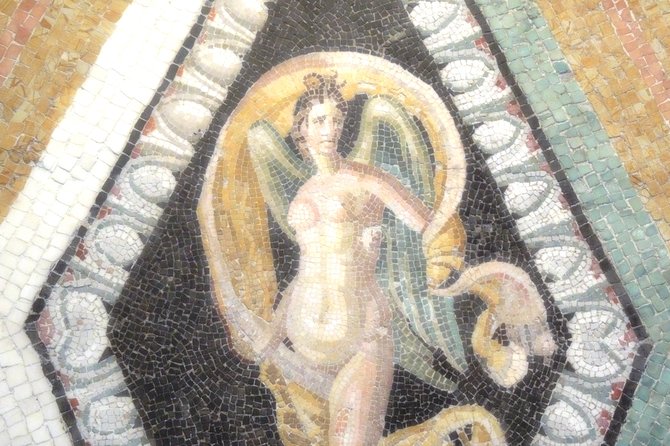
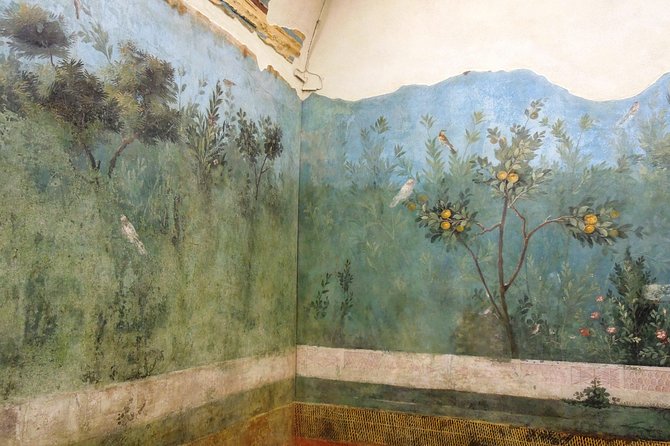
Palazzo Massimo is not only a statue museum. The mosaics and frescoes may be the most memorable part for you, especially if you like evidence of ordinary domestic life. The collection includes richly decorated rooms connected with Empress Livia. Their wall paintings and garden imagery show how Roman interiors used art to create an elegant, controlled version of nature indoors.
The museum also holds ancient coins, jewels, and goldsmith work. These smaller objects help fill in details that grand monuments cannot provide. Coins point to rulers, public messages, and trade. Jewelry shows personal taste and status. Together, the displays help you picture the people who commissioned the villas, used the baths, and paid for the monuments you see elsewhere in Rome.
Why a private guide matters here
The museum has enough material to overwhelm you. A private guide can narrow the route to the pieces that best match your interests, then explain why they matter. If you care about sculpture, you can spend more time with the Boxer at Rest and Discus Thrower. If painted interiors interest you, ask for extra attention to the frescoes and mosaics.
The strongest guide comments in the supplied feedback point to this kind of personal interpretation. Mattia was praised for adding stories and context to statues, while Serena was noted for linking the museum’s architecture and objects to modern Roman life. Damiano, who works at a university in art, was singled out for bringing Roman and Greek sculpture, frescoes, and mosaics to life.
Matteo also received repeated praise for enthusiasm, friendly conversation, and excellent English. Names can change depending on the date you book, so you should not assume a particular guide will lead your tour. Still, the pattern is useful: this experience depends heavily on the individual guide, and the best ones turn a collection into a conversation rather than a lecture.
There is also a practical advantage. A private tour lets you ask basic questions without feeling rushed or self-conscious. If ancient art is not your main interest, the right guide can make the statues easier to understand by explaining the stories, physical details, and social setting behind them.
The Baths of Diocletian: Rome on a massive scale
If your booking includes the second stop, you continue to the Baths of Diocletian. The bath complex was built in AD 298 and was the largest thermal facility in ancient Rome. It could accommodate up to 3,000 people at one time and included more than bathing areas. The complex had gyms, libraries, and a swimming pool, making it a place for exercise, social life, reading, and relaxation.
This is where the tour changes character. Palazzo Massimo gives you close views of portable art and decorated interiors. The baths give you scale. You begin to understand how much land, labor, water, and engineering were required to create a public facility for thousands of people.
The stop lasts about one hour. You should expect large rooms and traces of the original structure, along with the later changes made to the site. The guide can help you separate ancient Roman construction from the Christian and Renaissance additions. Without that explanation, the building’s many layers may be difficult to read.
The baths also offer a useful lesson in Roman social customs. Bathing was not merely a private chore. It was part of public life, and the size of the facility reflects the importance of shared spaces in the city. Your guide’s explanation of the bathing traditions can make the surviving walls feel more purposeful.
Same place, a different hour on the table:
- Milan: QC Termemilano Spa Admission Ticket
★ 4.6 · 685 reviews - Ischia: Giardini Poseidon Thermal Park Official Entry Ticket
★ 4.8 · 464 reviews - Day Pass to the QC Termetorino Luxury Spa in Turin
★ 3.0 · 207 reviews - Pre Saint Didier Luxury Evening Spa Entry Ticket
★ 3.0 · 179 reviews
Michelangelo’s church inside the bath complex
Part of the Baths of Diocletian was transformed into the Basilica of St. Mary of the Angels by Michelangelo in 1561. This is one of the tour’s most surprising transitions. You move from an ancient Roman bathing complex into a church that uses the old building rather than replacing it.
Look for the way the later church fits into the earlier Roman structure. The vast proportions and architectural details of the baths remain part of the experience, even as the building serves a different religious purpose. A guide can point out which features belong to the Roman bath and which reflect Michelangelo’s intervention.
I like this stop because it makes Rome’s history feel layered rather than neatly divided into ancient, Renaissance, and modern sections. The building carries several identities at once. You are not just seeing a church or an archaeological site. You are seeing how later Romans adapted an older monument for new needs.
The sacred atmosphere also provides a quiet contrast to the museum’s rows of objects. If you have already visited the Colosseum and Forum, the Baths of Diocletian can give you another view of Roman public life, one centered on comfort, social contact, and grand civic design.
Timing, meeting point, and tour format
The advertised duration is about two to three hours. The planned route gives roughly one hour at Palazzo Massimo and one hour at the Baths of Diocletian, with time needed to meet the guide and move between the sites.
You meet at the Palazzo Massimo ticket office on Largo di Villa Peretti, 2, near Republic Square. The activity information lists the end back at the meeting point, while the tour description says you say goodbye at the Baths of Diocletian. Because those details do not fully match, confirm the final meeting and departure arrangement before you go.
The tour is offered in English. It is described as a private activity, so only your group participates. The general information also refers to a choice between private and small-group formats and to an option that adds the Baths of Diocletian. Check the exact version you are booking, since the inclusions and route depend on that choice.
There is no hotel pickup or drop-off. The meeting point is near public transportation, which makes it practical if you are staying near Termini or elsewhere in central Rome. Children must be accompanied by an adult, and most people can take part.
Is $323.21 per person a fair price?
At $323.21 per person, this is an expensive museum visit. The price makes more sense if you are booking a private tour for a small group and want a specialist guide to interpret the art rather than simply enter the building.
The skip-the-line access has real value on a busy day, but it is not enough by itself to justify the cost. The stronger reason to book is the guide’s interpretation. A skilled guide can show you which objects deserve your limited time, explain the links between Greek and Roman art, and make the Baths of Diocletian easier to understand.
You may find the cost harder to justify if you mainly want a quick look at the famous statues. The tour runs for only two to three hours, and one person felt that too much time was given to the baths when the museum deserved longer. If you know you want an extended museum visit, ask about the pace at the start.
Group discounts may help lower the cost. For a couple or family already planning several private tours, this can be a worthwhile splurge. For a solo visitor or budget-conscious pair, a self-guided visit may offer better value if you are comfortable choosing your own route.
The best fit for this Rome experience
I would choose this tour if you enjoy ancient art, Roman architecture, or the quieter side of Rome. It suits you especially well if the Colosseum and Forum have left you wanting more context about the objects, homes, and public buildings behind the ruins.
It is also a good pick for someone who does not usually love museums but responds to stories. Guides such as Serena, Mattia, Matteo, and Damiano were praised for making the material approachable, connecting individual works to wider Roman life, and adjusting the pace for questions and photographs.
You should think twice if statues are not your thing. One person enjoyed the mosaics and frescoes but cared less for the many sculptures. The tour’s strongest sections are still art-heavy, even though the Baths of Diocletian add architecture and social history.
Free cancellation is available if you cancel at least 24 hours before the start time. Cancellations or changes made later are not accepted for a refund. Confirmation arrives at booking, and the experience is available in English.
Should you book the National Roman Museum and Baths tour?
Book it if you want a private, guide-led look at Roman art away from Rome’s biggest crowds. Palazzo Massimo is the main reason to go, with the Boxer at Rest, Discus Thrower, Sleeping Hermaphrodite, frescoes, mosaics, coins, and jewelry providing a fuller picture of Roman culture than ruins alone.
Add the Baths of Diocletian if you want grand architecture and a clear example of Rome’s changing religious and civic life. At $323.21 per person, I would reserve it for visitors who value expert explanation and personal attention. If that sounds like you, this can be one of Rome’s most rewarding specialist tours. If you want only a fast museum visit, the price and limited time may not suit you.
FAQ
Where does the tour begin?
The tour begins at the Palazzo Massimo alle Terme ticket office on Largo di Villa Peretti, 2, Rome, near Republic Square.
Where does the tour end?
The activity information lists the end back at the meeting point. The tour description says you bid farewell to your guide at the Baths of Diocletian. Confirm the exact departure arrangement when booking.
How long does the tour last?
The experience lasts approximately two to three hours.
Is the tour offered in English?
Yes. The tour is offered in English.
Is this a private tour?
Yes. The activity is described as private, meaning only your group participates. The general tour information also refers to private and small-group choices, so check the exact option selected.
Does the tour include skip-the-line entry?
Yes. Skip-the-line entry to Palazzo Massimo is included, and the tour is designed to bypass the long entrance line.
Are the Baths of Diocletian included?
The Baths of Diocletian are included when you select the option that adds that visit. The itinerary lists admission to the baths as free.
Is hotel pickup included?
No. Hotel pickup and drop-off are not included.
What is the cancellation policy?
You can cancel up to 24 hours before the experience starts for a full refund. Cancellations or changes made less than 24 hours before the start time are not accepted for a refund.
More outings on foot around Italy
- Rotorua: Hell’s Gate Outdoor Mud Spa & Guided Walk
★ 4.7 · 1,140 reviews - From Krakow: Slovakia Treetop Walk, Zakopane & Thermal Spa
★ 4.7 · 110 reviews - Kinabalu Park & Poring Hot Spring & Canopy Walk
★ 4.5 · 80 reviews - Arenal Hanging Bridges, Guided Walk, Hot Springs Optional
★ 5.0 · 80 reviews
More museum visits around Italy
- From Sofia: Rila Monastery and Optional Museum, Cave or Spa
★ 4.6 · 270 reviews - Budapest Card: Free Public Transport, Spa & Museums with Delivery
★ 3.5 · 241 reviews
Newly listed around Italy
- Rome: QC Termeroma Spa Admission Ticket★ 4.8 · 46 reviews
- Private SPA Massage Experience in Rome★ 5.0 · 14 reviews
- Private Full-day Cascate del Mulino Hot Springs from Rome★ 5.0 · 31 reviews
- ARGILLARIUM EXPERIENCE – RITUS OTIUM + MANUS (120 minutes)★ 5.0 · 65 reviews
- Chianciano Terme: Sensory Spa Admission Ticket★ 4.1 · 74 reviews
- Milan: De Montel Thermal Bath Entrance Ticket★ 4.6 · 89 reviews
- Day SPA like an ancient Roman★ 3.5 · 106 reviews
- Merano: Terme Merano Pools and Sauna Entry Ticket★ 4.5 · 133 reviews
Thermal Baths and Spas, compared.
Zakopane: Cable Car, Chocholow Baths, Cheese & Vodka
Read our review →
Zakopane, Thermal Springs, Cable Car, Local Tasting
Read our review →
From Thessaloniki: Pozar Thermal Baths and Edessa Day Trip
Read our review →
Krakow to Zakopane: Funicular, Tasting and Thermal Baths Day Trip
Read our review →
Zakopane, Tatra Mountains, Cable Car & Thermal Baths
Read our review →
Zakopane Tour, Thermal Springs, Cable Car & Hotel Pickup
Read our review →Browse the lists this tour appears in