
Review · HOT SPRINGS AND GEOTHERMAL POOLS
Pokhara: 7-Day Annapurna Base Camp Via PoonHill & Hot Spring
The best part of this seven-day trek is the route itself: you get Poon Hill sunrise early in the journey, then continue into the Annapurna Sanctuary and finish at Annapurna Base Camp, 4,130 meters above sea level. It packs two major Himalayan goals into one demanding week.
I like the mix of mountain views and village life, especially the rhododendron forests, stone paths, river crossings, and tea-house nights. I also like the practical finish at Jhinu Dada Hot Spring, where you can soak tired legs before returning to Pokhara. The catch is simple: this is a hard trek with long walking days, rapid altitude gain, and little spare time if your body needs a slower pace.
Key points
- Poon Hill at sunrise: Reach 3,210 meters for an early view of the Annapurna range before breakfast.
- Annapurna Base Camp: Spend the fifth day reaching the dramatic mountain amphitheater at 4,130 meters.
- A route with variety: Move from jeep roads and villages to forests, rivers, high mountain paths, and glaciers.
- Private guiding: English, Hindi, and Nepali guiding is available, with guides such as Mahesh and Prakash named in past trips.
- Hot spring finale: Stop at Jhinu Dada for about two hours before taking a jeep back toward Pokhara.
- Strong package value: Permits, accommodation, guide costs, transport, and government taxes are covered, while meals are included on the full-package option.
Why This Seven-Day Annapurna Route Works
This is a fast, ambitious version of one of Nepal’s best-known treks. Instead of walking only to Annapurna Base Camp, you first approach through Ghorepani and Poon Hill. That gives you a famous sunrise viewpoint and a taste of the lower Annapurna hills before the route turns toward the base camp.
You will cover a lot in seven days. The itinerary includes a three-hour jeep ride, several five- to six-hour walking days, and a final drive back to Pokhara. The route is not built around leisurely mornings or extra rest days.
That pace suits you if you have limited time and want the broadest possible experience in one booking. It is less suitable if you prefer short walks, flexible days, or a gentle introduction to trekking. At 4,130 meters, altitude is not a small detail, and you should arrive ready for sustained uphill and downhill walking.
More Hot Springs in Nepal
- Pokhara: 5 Day Annapurna Base Camp Trek & Natural Hot Spring
★ 4.9 · 44 reviews - From Pokhara: 5-Day Annapurna Basecamp Trek with Hot Springs
★ 4.9 · 26 reviews - Pokhara: 7-Day Annapurna Base Camp Trek & Natural Hot Spring
★ 5.0 · 11 reviews
Day One: Pokhara to Ghorepani by Jeep and Trail
Your first morning begins with hotel pickup in Pokhara and a drive toward Nayapul. From there, the route continues by four-wheel-drive jeep through small villages, beside streams, and into the foothills.
The road climbs toward Ulleri, cutting through areas known for rhododendron forest. The jeep saves you a considerable amount of walking, but the ride is part of the adventure. Mountain roads can be rough, and the comfort level depends on the road and vehicle conditions.
From Ulleri, you walk for about four hours to Ghorepani at 2,840 meters. This is your first serious test. You gain height quickly, and the day combines a long drive with a substantial climb.
Ghorepani is a useful overnight stop because it places you close to Poon Hill. You stay in a tea house, with accommodation arranged as part of the package. Since the next morning starts early for sunrise, keep your headlamp, jacket, and camera close at hand rather than buried in your luggage.
Day Two: Poon Hill Sunrise and the Forest Trail to Chuile
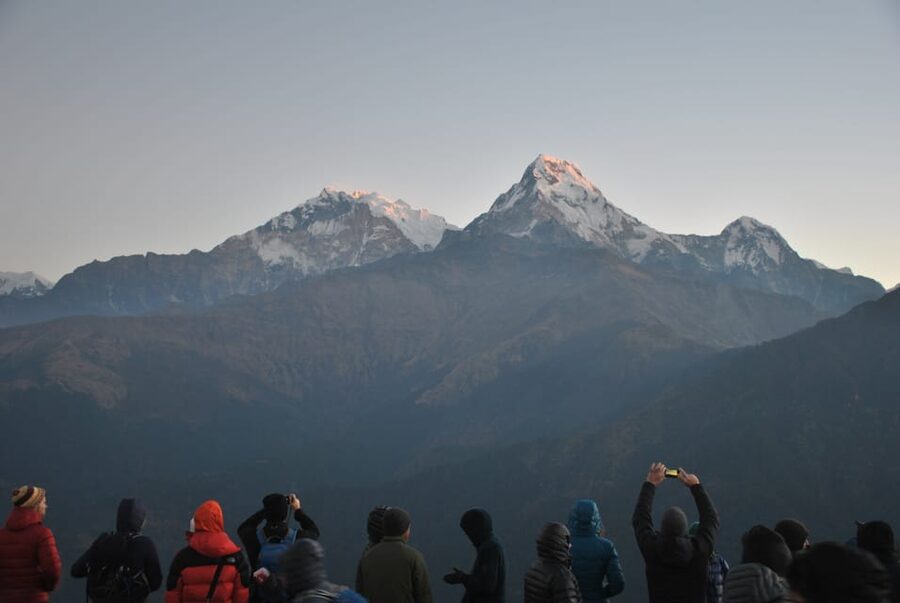
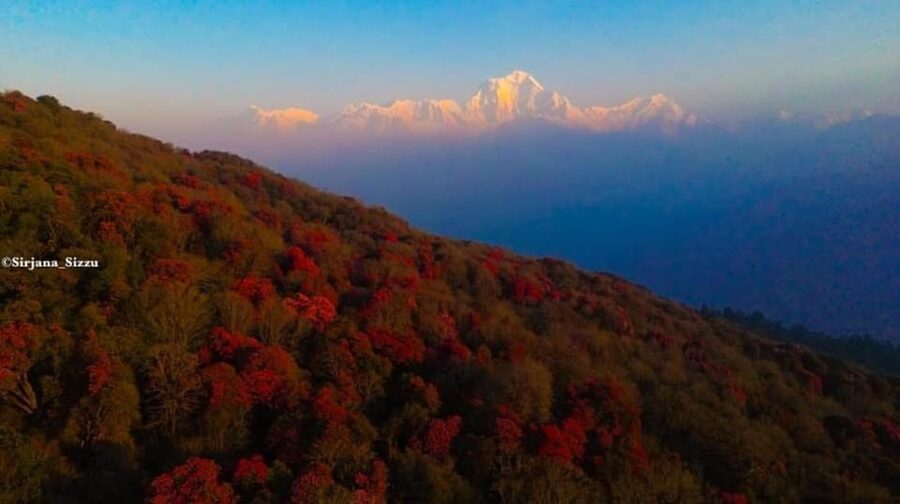
Day two begins before breakfast with the climb to Poon Hill at 3,210 meters. This viewpoint is one of the main reasons to choose this route. At sunrise, you can look across the Annapurna range and surrounding peaks as the light changes over the mountains.
The early start is worth planning for, but it also makes the day longer. After returning to Ghorepani for breakfast, you descend toward Tadapani and then continue to Chuile, reaching about 2,400 meters.
The route passes through forest and village country. The change from the open viewpoint at Poon Hill to shaded paths gives the day a pleasing rhythm, but the descent can be tough on knees after the morning climb.
You sleep in a hotel in Chuile. This lower elevation also gives you a chance to recover before the route turns more directly toward Annapurna Base Camp. I would treat this as a full trekking day, not a relaxed sightseeing stop.
Day Three: Rivers, Forests, and the Approach to Sinuwa
From Chuile, you continue toward Sinuwa at 2,170 meters. The walk takes about five hours and brings you to the meeting point of the Kumrung and Modi Rivers.
This is one of the more appealing sections for anyone who likes the physical side of a trek. The river becomes a constant companion, and the sound of moving water breaks up the long walking stretches. You are not simply ticking off a destination. You are following the route deeper into the Annapurna region.
Sinuwa is lower than the previous nights, which can help your body adjust before the higher sections ahead. Even so, do not read the lower elevation as a free day. The trail still involves climbs and descents, and your legs will already have two demanding days behind them.
The private format is useful here. A guide can adjust the walking rhythm to your abilities and expectations, a detail that was especially important to Karolina, who traveled with guide Mahesh and porters Bishal and Avinesh. Porters are not included in the listed price, so arrange and pay for that service separately if you need help carrying your bag.
Same place, a different hour on the table:
- Whole Day Massage & Spa With Lunch
★ 5.0 · 54 reviews - Shirodhara and Sound Healing Spa Experience in Kathmandu
★ 5.0 · 52 reviews - 6 Hours Spa Package in Kathmandu (Massage, Sauna, Steam, Jacuzzi)
★ 5.0 · 43 reviews - 21 days Himalayan yoga retreat in Nepal in Kathmandu
★ 5.0 · 28 reviews
Day Four: Sinuwa to Deurali Through Bamboo and Rhododendron
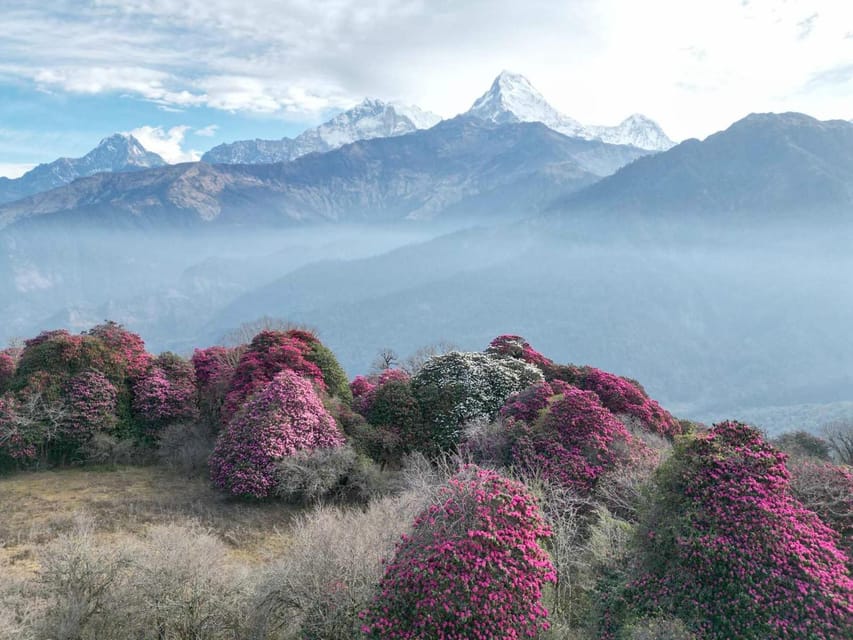
Day four takes you from Sinuwa to Deurali at 3,200 meters, a walk of about six hours. The trail passes through bamboo and rhododendron forest, with views toward Annapurna and Machhapuchhre along the way.
You also pass Dovan before continuing to Deurali. The route now feels more remote and more serious. The trees and river corridors still provide shelter and variety, but the altitude is rising and the walking becomes part of your preparation for base camp.
This is a day when pacing matters. You do not gain much by racing ahead, since the next stage takes you to 4,130 meters. Keep drinking the water you have arranged, eat enough at meal stops, and tell your guide promptly if you feel unwell.
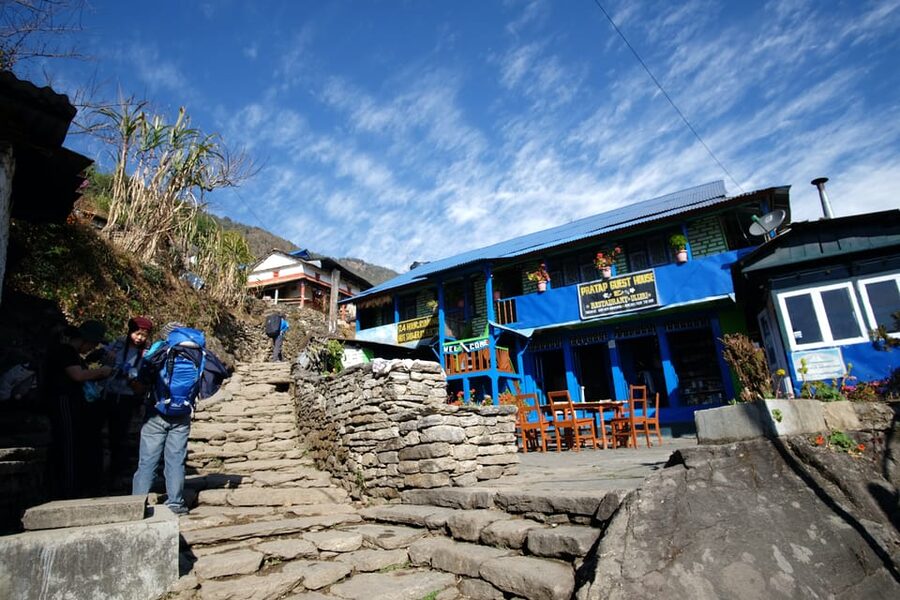
Accommodation is described as available during the trek, but the specific tea houses or room arrangements are not fixed in the information provided. Expect basic mountain lodging rather than hotel comfort. Showers, hot water, phone use, battery charging, and bottled or boiled water are personal expenses.
Day Five: The High Point at Annapurna Base Camp
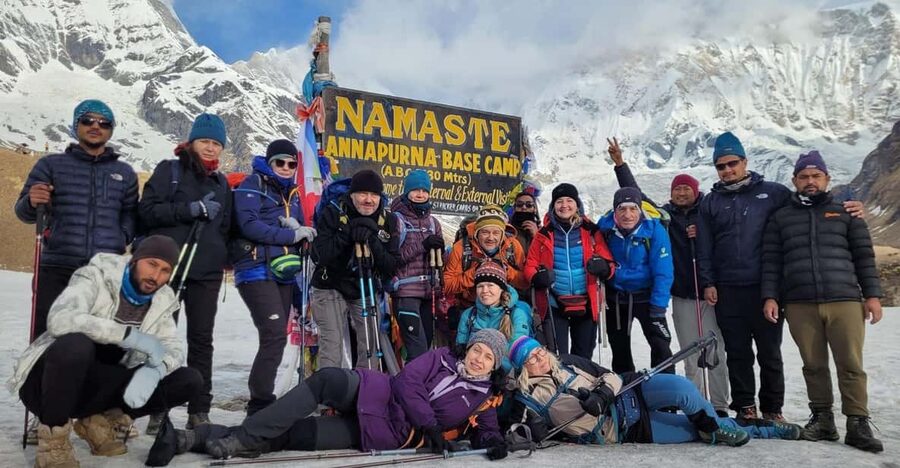
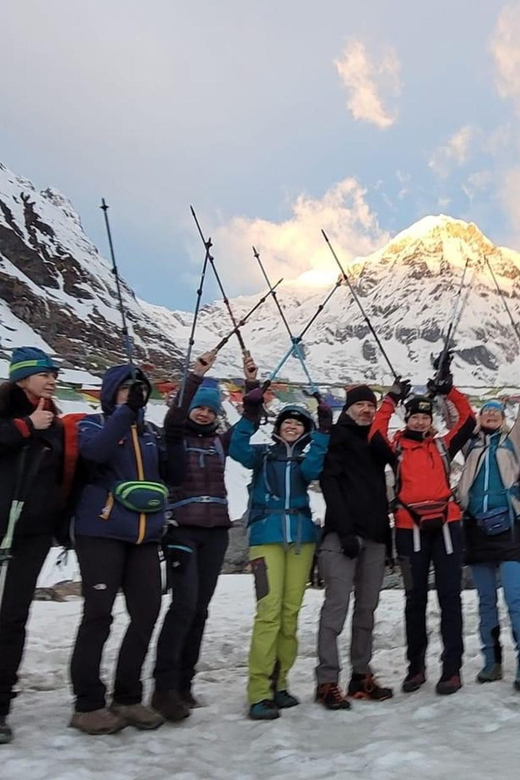
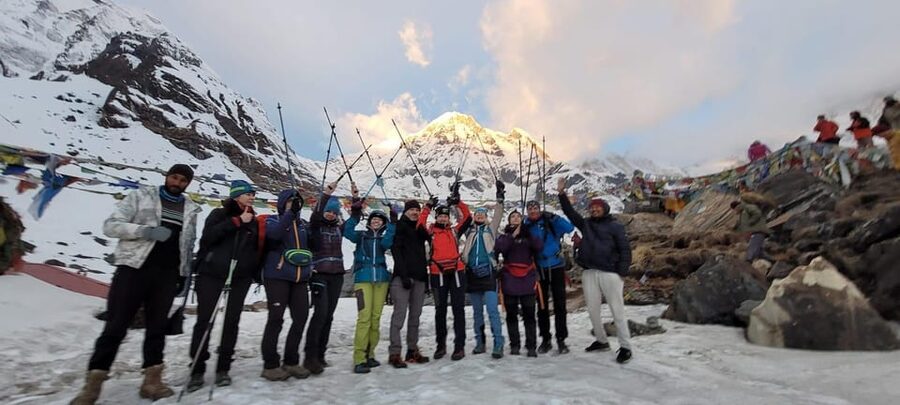
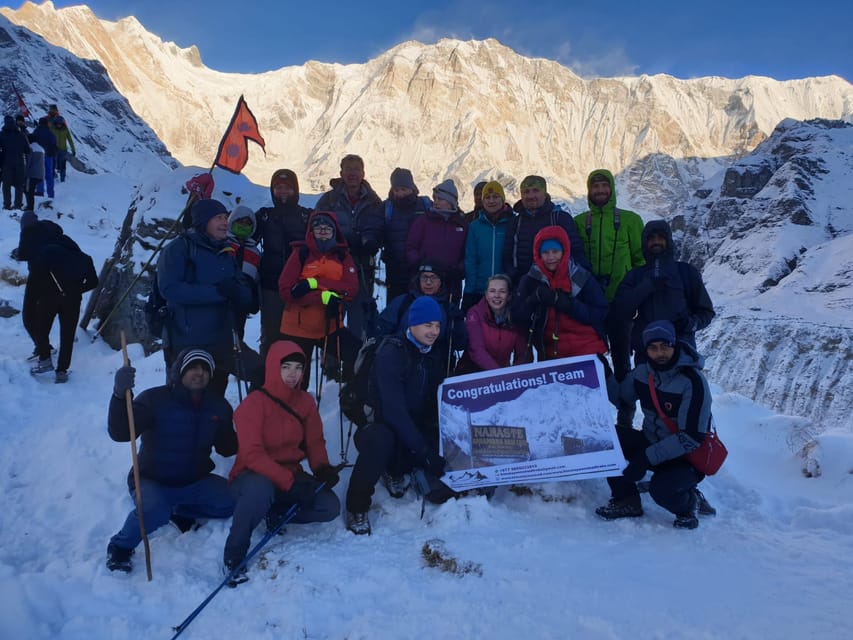
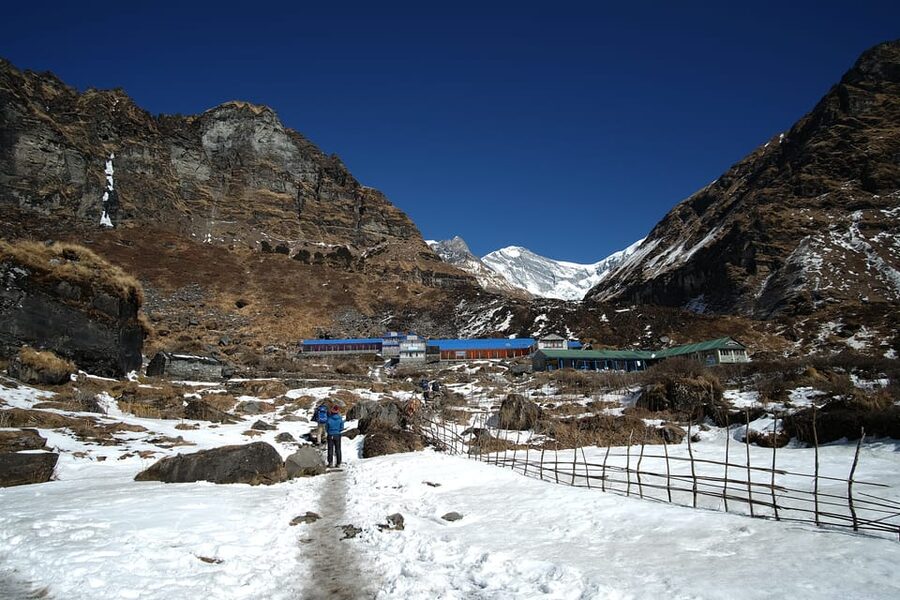
The fifth day is the central goal: Deurali to Annapurna Base Camp, a walk of roughly six hours. You will reach 4,130 meters and enter the mountain amphitheater formed by the Annapurna range and nearby peaks.
The setting changes as you climb. Forest gives way to more exposed high mountain terrain, with snow-capped summits and dramatic glacier views around the sanctuary. The appeal here is not one single viewpoint. It is the feeling of being surrounded by mountains on every side.
This is also the day when altitude can turn a scenic walk into a real physical challenge. The itinerary does not include an extra acclimatization day, so you need to take the symptoms of altitude seriously. Tell your guide if you develop a headache, nausea, unusual fatigue, dizziness, or breathing trouble. A beautiful destination is not worth ignoring a health problem.
At base camp, take time to appreciate the achievement rather than rushing through photographs. The route has already included Poon Hill, several forest days, and a steady rise toward the sanctuary. Reaching ABC is the payoff, but it is also only halfway through the return walk.
Day Six: Back Down to Bamboo
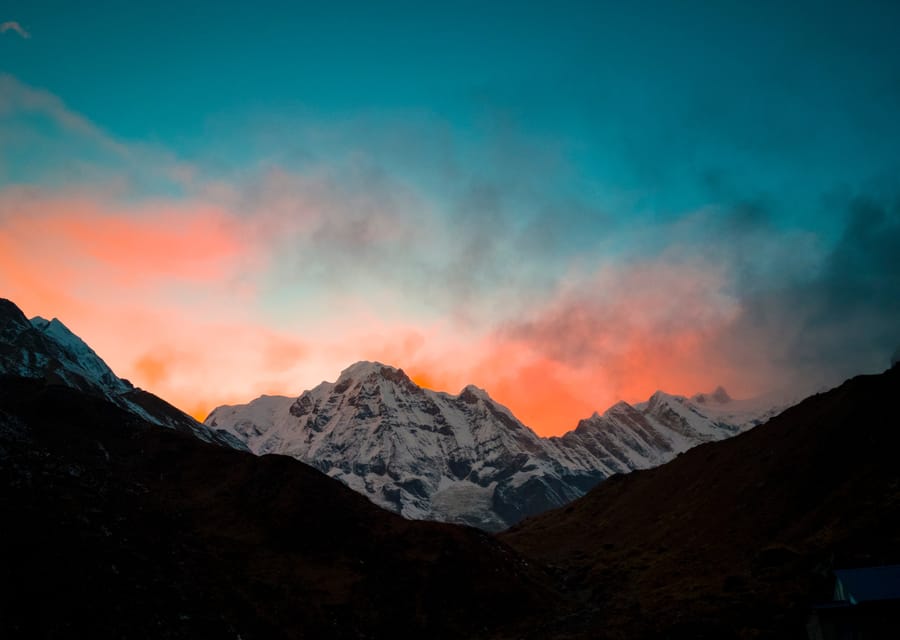
After time at Annapurna Base Camp, you retrace the route to Bamboo at 2,300 meters. This is another six-hour walking day, but now the direction is downhill.
Descending can feel easier on your lungs, yet it may be harder on tired knees and ankles. Trekking poles would be a sensible item to bring, although the supplied equipment list does not specify what is provided. A jacket, comfortable clothing, trekking gear, sunglasses, sunscreen, and a sleeping bag are all listed as things to bring.
The return route lets you see familiar sections with a different eye. You may notice details missed on the ascent, especially in the forests and along the river corridors. Bamboo provides a practical overnight stop before the final descent and drive.
Day Seven: Jhinu Dada Hot Spring and the Return to Pokhara
Your last day begins with the descent from Bamboo to Jhinu Dada, at about 1,600 meters. You then have around two hours to use the natural hot spring.
This is a smart ending. After several long walking days, warm water gives you a chance to rest before the final transfer. Bring swimwear and a small towel if you plan to use the spring, though these items are not specifically listed in the required gear.
After Jhinu Dada, you trek for about 30 minutes to Samrung and take a jeep toward Lakeside Pokhara. The drive takes about two and a half hours. The final combination is about five hours of trekking and driving, so do not assume you will be back in Pokhara early enough for a full afternoon of sightseeing.
The hot spring is not just a pleasant extra. It gives the route a clear ending: mountain effort, a period of rest, then a practical return to town.
What the $267 Price Covers
At $267 per person, the package offers good value if you use the inclusions fully. It covers hotel pickup and drop-off, trekking permits, required paperwork, the Trekkers’ Information Management System fee, government taxes, accommodation during the trek, and four-wheel-drive transport according to the itinerary.
It also covers the guide’s salary, meals, accommodation, equipment, insurance, and transport. That matters because guide costs can add up quickly on a private trek.
Meals are included for the full-package option. Confirm that you are booking that version if you expect breakfast, lunch, and dinner to be covered. Soft drinks, hard drinks, bottled or boiled water, showers, phone calls, laundry, charging, and bar bills are extra.
The price does not include a porter. You can purchase porter service separately, and the experience with Mahesh, Bishal, Avinesh, Prakash, and Sujal shows how much a strong support team can add to a demanding route. The porter cost should be part of your budget if you do not want to carry your main bag.
International flights, the Nepalese visa, travel and rescue insurance, and extra nights in Pokhara are also excluded. Travel and rescue insurance is especially important for a high-altitude trek.
Guides, Group Style, and Practical Support
This is a private group experience, not a large fixed departure. You can request guiding in English, Hindi, or Nepali. The named guides connected with past departures include Mahesh and Prakash, and the guiding style described by the experience is attentive and adaptable.
That matters because the walking days are not identical. A private guide can help set a realistic pace, explain the area, and respond to how you are feeling. The strongest praise has focused on guide care, route adjustments, communication before departure, and good support from porters.
Still, you should confirm the assigned guide and porter arrangements before setting out. The exact staff member may vary. You should also ask what equipment is supplied, since a sleeping bag and trekking gear appear on the bring list, while the guide’s included equipment is not described in detail.
Pickup is optional, and if you choose it, you should wait in your hotel lobby 10 minutes before the arranged time. Free cancellation is available up to 24 hours in advance, and the reserve-now, pay-later option keeps the initial booking flexible.
Who Should Choose This Trek
I would recommend this route to you if you want a high-value, time-efficient Himalayan trek and are comfortable with long days. It suits hikers who want both Poon Hill and Annapurna Base Camp rather than choosing between them.
It is also a good match if you value private guiding, arranged transport, and a package that handles permits and guide costs. The mix of English, Hindi, and Nepali support gives you useful language options.
I would think twice if you are new to strenuous walking, dislike early starts, or need several rest days to adjust to altitude. Pregnant women should not book this activity, as it is specifically listed as unsuitable for them.
The route is physically demanding even though the price makes the arrangements simple. You still need to arrive with suitable shoes, a jacket, sun protection, warm layers, a sleeping bag, and a level of fitness that matches five- to six-hour mountain walking days.
Should You Book the Annapurna Base Camp Via Poon Hill Trek?
Book it if you have seven days, want a private group, and prefer a full Annapurna experience over a slow schedule. The combination of Poon Hill sunrise, forest trails, mountain rivers, Annapurna Base Camp, and Jhinu Dada Hot Spring gives the week a strong sense of progression.
The main warning is the pace. There is no spare acclimatization day in the schedule, and the route reaches 4,130 meters. Buy travel and rescue insurance, consider adding a porter, and confirm the full-package meal option before paying.
If you can handle the effort, $267 is a sensible price for the included permits, guide expenses, lodging, transfers, and transport. This is not a soft adventure, but it is a well-packed way to see a remarkable stretch of the Annapurna region.
FAQ
How long is the Annapurna Base Camp via Poon Hill trek?
The trek lasts seven days, beginning and ending in Pokhara.
What is the highest point on the route?
The highest point is Annapurna Base Camp at 4,130 meters. Poon Hill reaches 3,210 meters.
Is sunrise at Poon Hill included?
Yes. Day two begins with a climb to Poon Hill for sunrise and mountain views before breakfast in Ghorepani.
What languages can the guide speak?
Guiding is available in English, Hindi, and Nepali.
Is this a private group trek?
Yes. The activity is arranged for a private group.
Are meals included?
Breakfast, lunch, and dinner are included during the trek with the full-package option. Drinks and personal purchases are not included.
Is a porter included in the price?
No. Porter service is available for an additional purchase.
Is transport from Pokhara included?
Yes. Hotel pickup and drop-off are included, along with four-wheel-drive transport according to the route. On the final day, you trek to Samrung and take a jeep back toward Pokhara.
More week-long stays around Nepal
- 7 Days Thai Yoga Massage Training and Retreat in Begnas Nepal
★ 5.0 · 6 reviews - 7-Day TaiChi & Qigong Wellness Retreat in China
★ 5.0 · 20 reviews - Bali: 7 Day Solo Traveler’s Yoga Retreat In Ubud
★ 5.0 · 3 reviews
Newly listed around Nepal
- Pokhara: 5-Day Annapurna Base Camp Trek with Hot Spring★ 5.0 · 3 reviews
- Kathmandu: Full-Day Yoga, Body Massage and Pedicure Package★ 5.0 · 3 reviews
- Kathmandu: Spa Package with Massage, Facial and Bath★ 4.1 · 11 reviews
- 21 Day Ayurveda & Yoga Retreat in the Himalayan country, Nepal★ 5.0 · 19 reviews
- 10 Days Ayurveda & Yoga Retreat in Kathmandu, Nepal★ 5.0 · 24 reviews
- 7 Days Thai Yoga Massage Training and Retreat in Begnas Nepal★ 5.0 · 6 reviews
- Shirodhara and Sound Healing Spa Experience in Kathmandu★ 5.0 · 52 reviews
- Whole Day Massage & Spa With Lunch★ 5.0 · 54 reviews
Hot Springs and Geothermal Pools, compared.
Volcanic Islands Cruise with Hot Springs Visit
Read our review →
Mount Batur Sunrise Guided Hike and Natural Hot Spring
Read our review →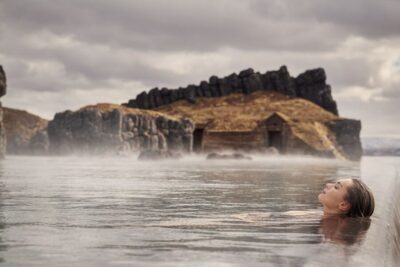
Sky Lagoon Entrance Pass With 7-Step Spa Ritual
Read our review →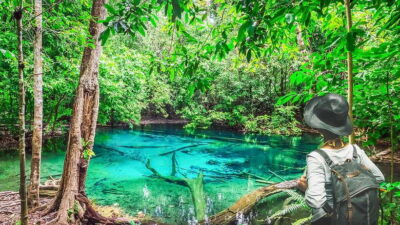
Tiger Cave Temple, Emerald Pool and Hot Springs Tour
Read our review →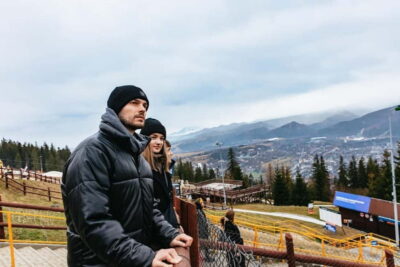
Zakopane Tour Local Tasting, Cable Car & Hot Springs
Read our review →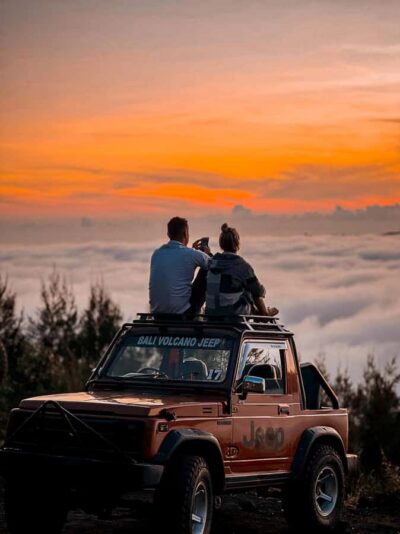
Mount Batur: Private Sunrise Jeep Tour & Hot Spring
Read our review →
Mount Batur Sunrise Hike and Natural Hot Spring Option
Read our review →
Mount Batur Shared Jeep Sunrise & Hot Spring Tour
Read our review →Browse the lists this tour appears in