
Review · HOT SPRINGS AND GEOTHERMAL POOLS
7 Days Annapurna Base Camp Trek from Pokhara with Hot Spring
Annapurna Base Camp is the prize here, but the route earns it the old-fashioned way: steep stone steps, forest paths, river crossings, avalanche zones, and changing mountain views. I like the combination of high Himalayan scenery and ordinary village life, especially the time around Chhomrong and the Modi Khola valley.
I also like that the Jhinu hot spring gives your legs a useful reward after the climb. The main concern is the schedule: seven days is short for this route, and several days call for five or six hours of walking, with steep uphill and downhill sections. You need a moderate level of fitness and a willingness to sleep in simple tea houses.
Key points to know before booking
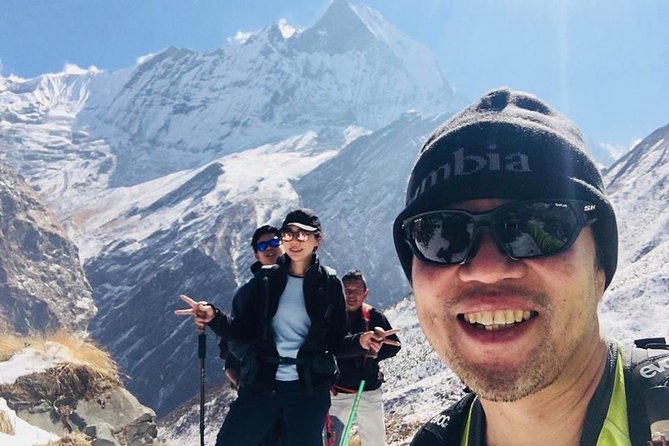
- Annapurna Base Camp at about 4,130 meters: Reach the famous mountain sanctuary after passing Machhapuchhare Base Camp and an avalanche-prone section of trail.
- Jhinu’s natural hot spring: Walk about 20 minutes downhill from the lodges to pools reported at roughly 105°F.
- Tea house lodging: Sleep in basic mountain lodges rather than hotels, with meals and drinks paid separately.
- Pokhara pickup and return: The trip starts with a 9:15 am meeting time and includes transport to the trailhead and back to your Pokhara hotel.
- Small group size: The group is limited to a maximum of 15 people, with a guide provided.
- A steep seven-day route: Expect long walking days, stone stairs, forest trails, and a demanding descent from the base camp area.
Why this seven-day route works
This is a compact version of the Annapurna Base Camp trek from Pokhara. It takes you from the road at Nayapul into the Modi Khola valley, then upward through villages and forest to the high mountain basin below Annapurna.
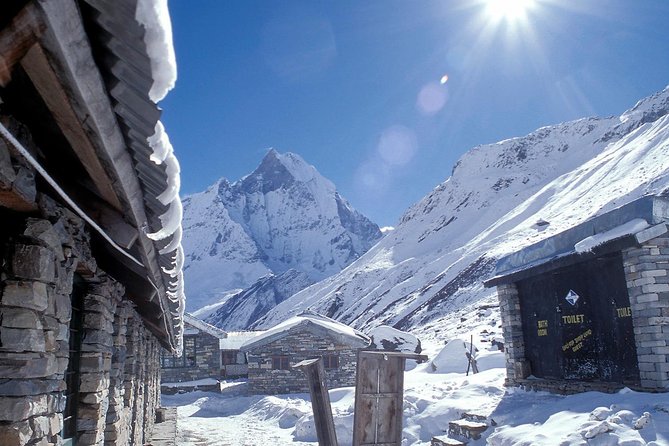
The route gives you three kinds of Nepal in one trip. You begin among farmland, rivers, small villages, and local lodges. The middle section runs through rhododendron and bamboo forest. The upper section turns colder and more exposed, with snowy rock, glacier-fed streams, avalanche traces, and enormous peaks around you.
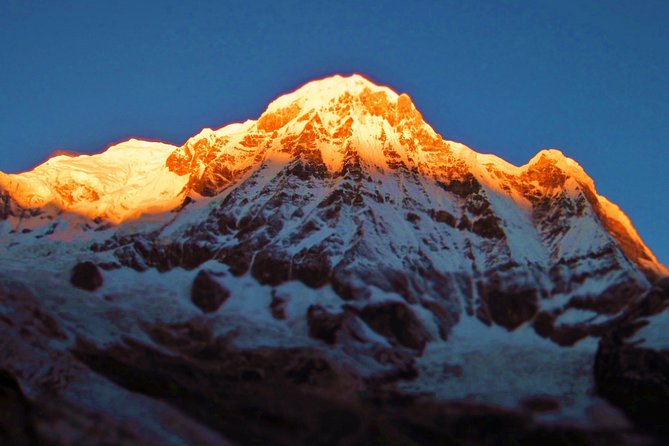
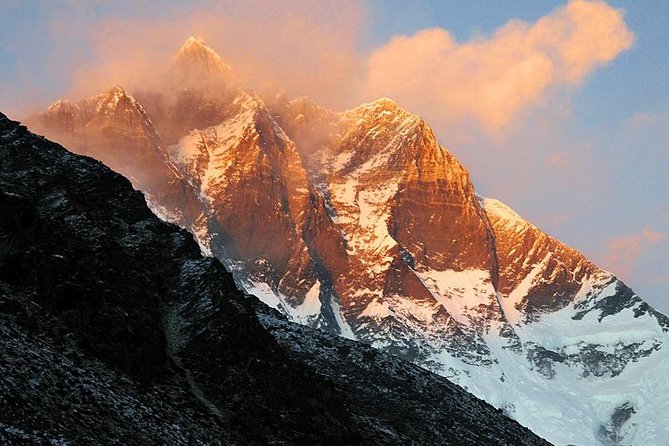
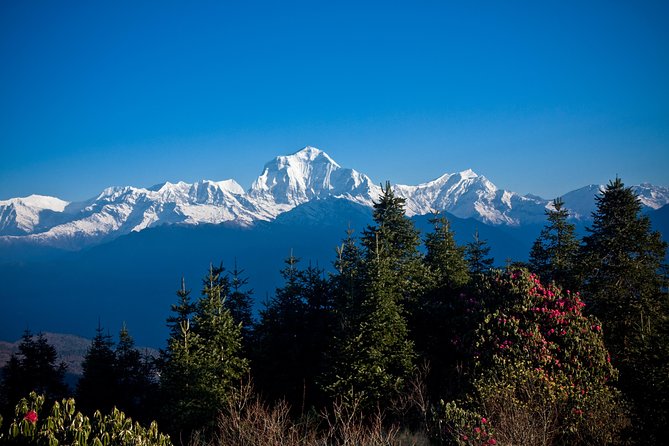
The mountain views include Annapurna South, Hiuchuli, Gangapurna, and Machhapuchhare, also known as Fishtail. The scenery does not arrive all at once. It appears and disappears behind trees, bends, ridges, and clouds. That changing rhythm makes the walk more interesting than a route with one fixed viewpoint.
You should also understand what the price covers. At $450 per person, the package includes tea house accommodation, a trekking guide, conservation and entry paperwork, hotel transfers, government tax, and service charges. It does not include breakfast, lunch, dinner, drinks, a porter, or tips.
That makes the price reasonable for the organization and permits, but not all-inclusive. Your final spending will be higher once you add meals, bottled or other drinks, and any porter service. You should ask the provider for current meal costs before setting your budget.
More Hot Springs in Nepal
- Pokhara: 5 Day Annapurna Base Camp Trek & Natural Hot Spring
★ 4.9 · 44 reviews - From Pokhara: 5-Day Annapurna Basecamp Trek with Hot Springs
★ 4.9 · 26 reviews - Pokhara: 7-Day Annapurna Base Camp Trek & Natural Hot Spring
★ 5.0 · 11 reviews
Day 1: Pokhara to Jhinu Danda
After breakfast, pickup from your Pokhara hotel takes you toward Nayapul, the trek’s starting point. The road transfer puts you directly into the route instead of making you arrange a separate taxi and worry about where the walking begins.
At Birethanti, about 30 minutes into the journey described for the day, your trekking permit and Annapurna Conservation Area permit are checked. From there, the path follows the Modi Khola, passing small villages, waterfalls, rivers, and crossings before climbing toward Jhinu Danda.
This first day is listed at roughly five hours. It is not simply a warm-up stroll. The path gains height toward Jhinu, and the combination of transport, permits, walking, and uneven ground makes for a full opening day.
Jhinu Danda is a useful overnight stop because it sets up the hot spring visit later in the trip. You stay in a tea house lodge, where the setting is practical rather than luxurious. Meals are not included in the package, so plan to pay locally for dinner and breakfast.
Day 2: Chhomrong, Sinuwa, and Bamboo
Day two is one of the route’s more demanding sections. The trail climbs steeply to Chhomrong, a large village with shops, farms, and homes that show the local way of life.
Chhomrong is more than a place to pass through. It is a good point to pause, look back toward the Annapurna and Fishtail views, and understand how quickly the route is gaining height. After Chhomrong, the trail drops sharply to the Chhomrong Khola before climbing again toward Sinuwa.
This repeated up and down is a useful warning. Mountain distance can be misleading. A day may look short on a map, but a descent to a river followed by another climb taxes your knees and lungs.
After lunch, the route continues toward Bamboo through forest. The shaded trail is pleasant, with birds and thick vegetation providing a change from the open village paths. The day is estimated at about six hours, so wear shoes with secure grip and keep water within easy reach.
You sleep at a tea house in Bamboo. The accommodation is basic and tied to the route, which is part of the experience but also means comfort and facilities may be simpler than what you have in Pokhara.
Day 3: Bamboo through the Modi Khola valley
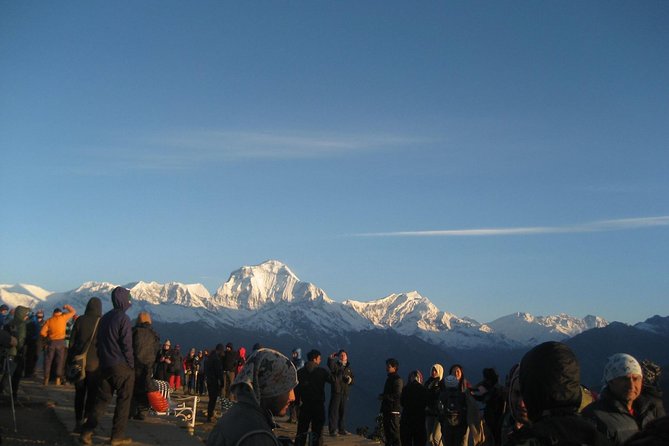
From Bamboo, the trail continues through forest along the Modi Khola valley. The day is again listed at about six hours, with a steady climb toward Deurali.
Bird sounds and forest cover make this section feel quieter than the village stages. Mountain views appear through gaps in the trees, then vanish again. That hide-and-show quality is normal here, so do not judge the day by how much time you spend staring at peaks.
The route also passes areas marked by past avalanches. This adds a more serious edge to the scenery. You are no longer just walking between villages. You are moving through a high valley shaped by snow, ice, rockfall, and seasonal water.
Lunch is taken somewhere along the route, then you continue gradually toward Deurali. The advice here is simple: keep your pace slow and steady. The schedule is already designed around long walking days, and rushing early can make the next morning harder.
Deurali is your overnight base before the route reaches Machhapuchhare Base Camp and Annapurna Base Camp. This is the point where the surroundings become more exposed and the weather can matter more.
Same place, a different hour on the table:
- Whole Day Massage & Spa With Lunch
★ 5.0 · 54 reviews - Shirodhara and Sound Healing Spa Experience in Kathmandu
★ 5.0 · 52 reviews - 6 Hours Spa Package in Kathmandu (Massage, Sauna, Steam, Jacuzzi)
★ 5.0 · 43 reviews - 21 days Himalayan yoga retreat in Nepal in Kathmandu
★ 5.0 · 28 reviews
Day 4: Machhapuchhare Base Camp to Annapurna Base Camp
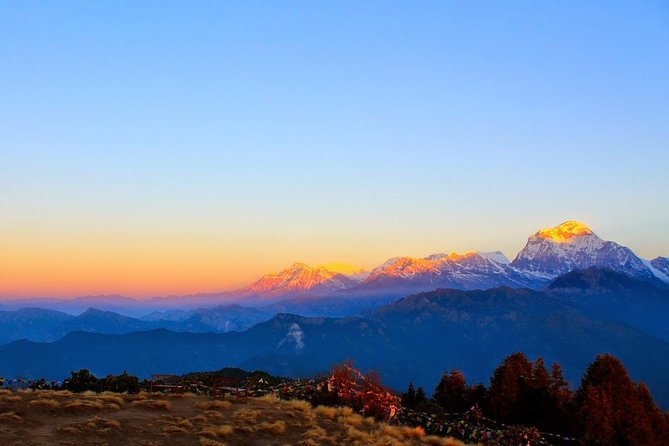
Day four is the central achievement of the trek. After leaving Deurali, the path crosses streams and passes several areas with signs of avalanche activity before reaching Machhapuchhare Base Camp.
From there, the route follows an ablation valley, a hollow formed between a glacier and the mountain side. The trail crosses low hills and climbs again into Annapurna Base Camp. Walking time is described as approximately five to six hours.
The final approach is rewarding because the view keeps changing as you gain height. At Annapurna Base Camp, the mountains surround the sanctuary in a broad, dramatic sweep. This is where you see the route’s major reward: a 360-degree setting of high peaks rather than a single mountain viewed from far away.
The named highlights include Annapurna South, Hiuchuli, and Gangapurna, with Machhapuchhare part of the approach. Weather can affect what you see, so keep expectations flexible. The base camp location remains worthwhile even if clouds cover part of the range.
You spend the night in a tea house lodge at altitude. This is an important practical point. It is a high overnight stop after several climbing days, and the accommodation is simple. Your guide will be the person to follow for pace and general trekking decisions, especially if conditions change.
Day 5: The hard descent to Bamboo
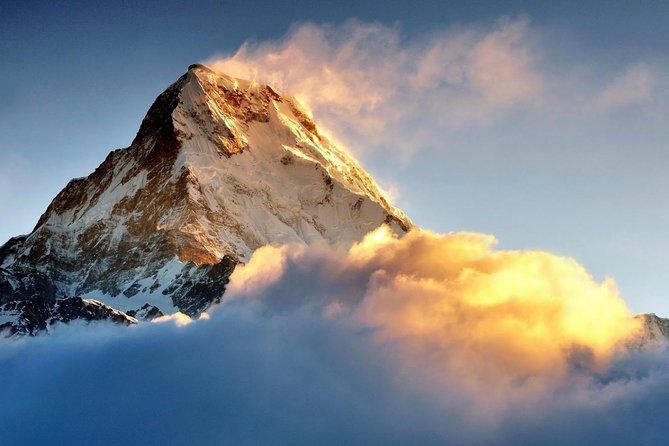
The route out of the Annapurna Sanctuary uses the same corridor in reverse. There is only one main way in and out, so day five retraces familiar ground, but the views feel different when you are walking downhill.
The descent to Bamboo drops about 1,600 meters from Annapurna Base Camp. That is a serious loss of height in one day and can be harder on your knees than the climb was on your lungs.
The scenery shifts as you go. Snowy rock and base camp terrain give way to rhododendron, bamboo, thick foliage, and rivers. This change is one of the best parts of the route because it lets you watch the mountain environment transform over a single day.
The day is estimated at around six hours. Use trekking poles if you have them, shorten your stride, and do not race downhill. The itinerary also describes a ridge walk through forest, with views of Dhaulagiri appearing through the trees.
By the time you reach Bamboo, you will likely appreciate the simple tea house stop. This is not a sightseeing day in the usual sense. It is a demanding return from the high point, but it gives you a fuller understanding of the valley and its changing vegetation.
Day 6: Chomrong and the Jhinu hot spring
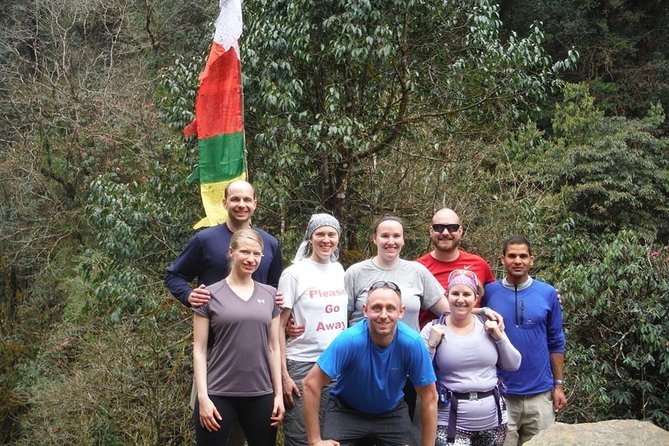
Day six takes you farther down the valley on a gently undulating path before a steep descent to the Chomrong Khola. From the river, the trail climbs sharply to Chomrong, then descends again to Jhinu.
The repeated climbs and drops make this another day when distance alone tells you very little. Walking time is described as about four and a half to six hours. Your legs have already dealt with the base camp climb and the long descent, so this section may feel more tiring than the schedule suggests.
Jhinu’s hot spring is the day’s reward. The pools are about a 20-minute walk downhill from the lodges, with water described at roughly 105°F. A soak can be welcome after the steep route, but remember that you must walk back uphill to your tea house afterward.
Bring or wear a swimming costume. The advice is practical and respectful, since the hot springs are shared. This stop also gives the trek a pleasant change of pace. You are still in the mountains, but the focus shifts from reaching a high point to resting beside warm water.
You spend the night at a tea house in Jhinu. If you are choosing this trek mainly for the hot spring, keep your expectations in proportion. It is a short stop within a demanding mountain journey, not a full spa visit.
Day 7: Nayapul and the return to Pokhara
The final walking section descends through woodland and then farmland near the river. The route continues gently downhill to Nayapul, where a vehicle takes you back to your hotel in Pokhara.
Walking time is described as approximately four hours, although the day information also gives a six-hour total. Either way, this is the shortest walking stage in spirit, and the gradual descent provides a calm finish after the harder upper route.
The return transfer is included, which is useful after seven days on foot. You do not need to arrange a separate ride from Nayapul or negotiate transport while tired.
What the lodging and meals are really like
Tea house lodging is included, but food is not. That distinction matters. You have a place to sleep in the mountain villages, yet you will pay separately for breakfast, lunch, dinner, and drinks throughout the trek.
The tea houses provide a practical base along the trail. You should not book this package expecting hotel-style rooms or a wide list of included services. The supplied information does not specify room arrangements, bathroom facilities, or heating, so ask the operator for current details before departure.
A porter is also not included. If carrying your own bag for seven days sounds unpleasant, ask about adding porter service and confirm the additional cost. Tips are not mandatory, but they are expected by guides and porters, so include gratuity in your budget if the service is good.
Guides, group size, and flexibility
A trekking guide is provided, and the maximum group size is 15 people. That is small enough to keep the group manageable, though your experience will still depend on the guide’s pace and how many people join the departure.
Names connected with the provider’s team include Hari, guide Niema, and porter Nara. One account of the service specifically credits Hari with handling last-minute changes and describes Niema and Nara as humble and helpful. That suggests the company may be able to adjust plans when needed, but you should never treat changes as guaranteed.
Pickup begins at 9:15 am. Confirmation is provided at booking, and the activity is near public transportation. The basic fitness requirement is moderate, but the steep climbs, high altitude, long descent, and repeated stone steps make this unsuitable for anyone seeking an easy walking holiday.
Free cancellation is available if you cancel at least 24 hours before the local start time. Cancellations within 24 hours are not refunded, and late changes are not accepted.
Is $450 good value?
The $450 price covers several costs that are easy to underestimate in Nepal: a guide, permits, conservation paperwork, tea house lodging, hotel pickup, trailhead transfer, return transport, tax, and service charges.
It does not cover the daily cost of eating and drinking, and the lack of a porter may matter if you prefer to walk with a light daypack. I see this as a fair organized-trek price for the structure provided, but not a final trip budget.
The value is strongest if you want a ready-made route from Pokhara and do not want to arrange permits, transfers, lodging, and a guide on your own. The value is weaker if you already have a guide, equipment, and transport arranged, or if you expected every meal and porter service to be included.
Who should book this trek?
I would choose this trip if you have seven days available, want a direct route from Pokhara, and are comfortable with simple lodging and long mountain days. It suits people who want more than a viewpoint tour, since the route includes village life, forest, rivers, avalanche areas, and a high mountain sanctuary.
It is less suitable if you need hotel comfort, dislike steep descents, or want a relaxed schedule with spare days for bad weather. The short format leaves little room for delays, and the itinerary is physically demanding even though the overall duration is only a week.
Should you book it?
Book it if your priority is reaching Annapurna Base Camp with a guide, included permits, tea house accommodation, and transport from Pokhara. The hot spring at Jhinu, the local villages, and the changing scenery give the route more variety than a simple out-and-back climb.
Before paying, confirm meal costs, porter availability, room details, and how the operator handles weather or altitude problems. If you accept the hard walking and extra daily expenses, this is a strong seven-day introduction to the Annapurna region.
FAQ
How long is the Annapurna Base Camp trek from Pokhara?
The experience lasts approximately seven days, beginning and ending in Pokhara.
What time does the trek start?
The listed meeting time is 9:15 am. Pickup is offered from your hotel in Pokhara.
Is accommodation included?
Yes. Tea house lodge accommodation in the mountains is included.
Are meals included?
No. Breakfast, lunch, dinner, alcoholic drinks, and non-alcoholic drinks are not included.
Is a guide provided?
Yes. A trekking guide is included. Porter service is not included.
Can I cancel for a full refund?
Yes, if you cancel at least 24 hours before the experience start time. Cancellations made within 24 hours are not refunded.
More week-long stays around Nepal
- Pokhara: 7-Day Annapurna Base Camp Via PoonHill & Hot Spring
★ 5.0 · 6 reviews - 7 Days Thai Yoga Massage Training and Retreat in Begnas Nepal
★ 5.0 · 6 reviews - Pokhara: 7-Day Annapurna Base Camp Trek & Hot Spring
★ 4.0 · 3 reviews - 7-Day TaiChi & Qigong Wellness Retreat in China
★ 5.0 · 20 reviews
More walks and climbs around Nepal
- Short Day Trip Hiking with 1 Hour Spa Massage in Kathmandu
★ 5.0 · 11 reviews - 5 Days Hiking, Tour, Meditation and Yoga Retreat in Kathmandu, Nepal
★ 5.0 · 10 reviews - Pkr/Kathmandu: 5-Day Annapurna Base Camp & Hot spring Trek
★ 5.0 · 6 reviews - Pokhara: Amazing 7-Day ABC Trek with Natural Hot Spring
★ 5.0 · 5 reviews
Newly listed around Nepal
- 1-Hour Swedish Massage in Pokhara with Pick Up★ 5.0 · 2 reviews
- Facial Treatment with Fruits in Pokhara with Hotel Pickup★ 5.0 · 3 reviews
- Unlimited Sauna Steam and Jacuzzi★ 5.0 · 2 reviews
- Retreat day tour : Massage and Yoga★ 5.0 · 2 reviews
- Trekkers & Hikers Spa Package by Heritage Spa★ 5.0 · 9 reviews
- Ghorepani Ghandruk Wellness Yoga Trek★ 5.0 · 3 reviews
- Short Day Trip Hiking with 1 Hour Spa Massage in Kathmandu★ 5.0 · 11 reviews
- Singing Bowl Therapy + Full Body Massage at Ayurveda Health Home★ 5.0 · 2 reviews
Hot Springs and Geothermal Pools, compared.
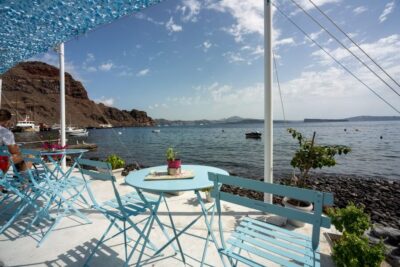
Volcanic Islands Cruise with Hot Springs Visit
Read our review →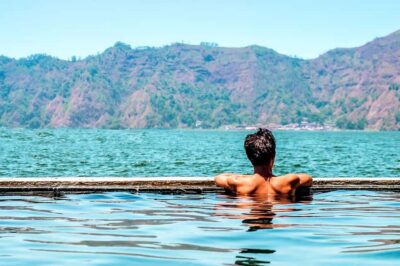
Mount Batur Sunrise Guided Hike and Natural Hot Spring
Read our review →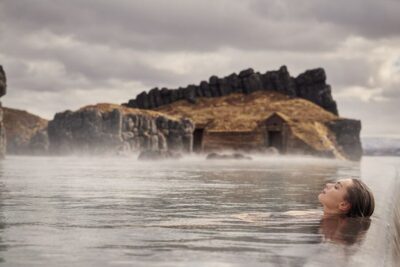
Sky Lagoon Entrance Pass With 7-Step Spa Ritual
Read our review →
Tiger Cave Temple, Emerald Pool and Hot Springs Tour
Read our review →
Zakopane Tour Local Tasting, Cable Car & Hot Springs
Read our review →
Mount Batur: Private Sunrise Jeep Tour & Hot Spring
Read our review →
Mount Batur Sunrise Hike and Natural Hot Spring Option
Read our review →
Mount Batur Shared Jeep Sunrise & Hot Spring Tour
Read our review →Browse the lists this tour appears in